Micrathene whitneyi
Elf owl
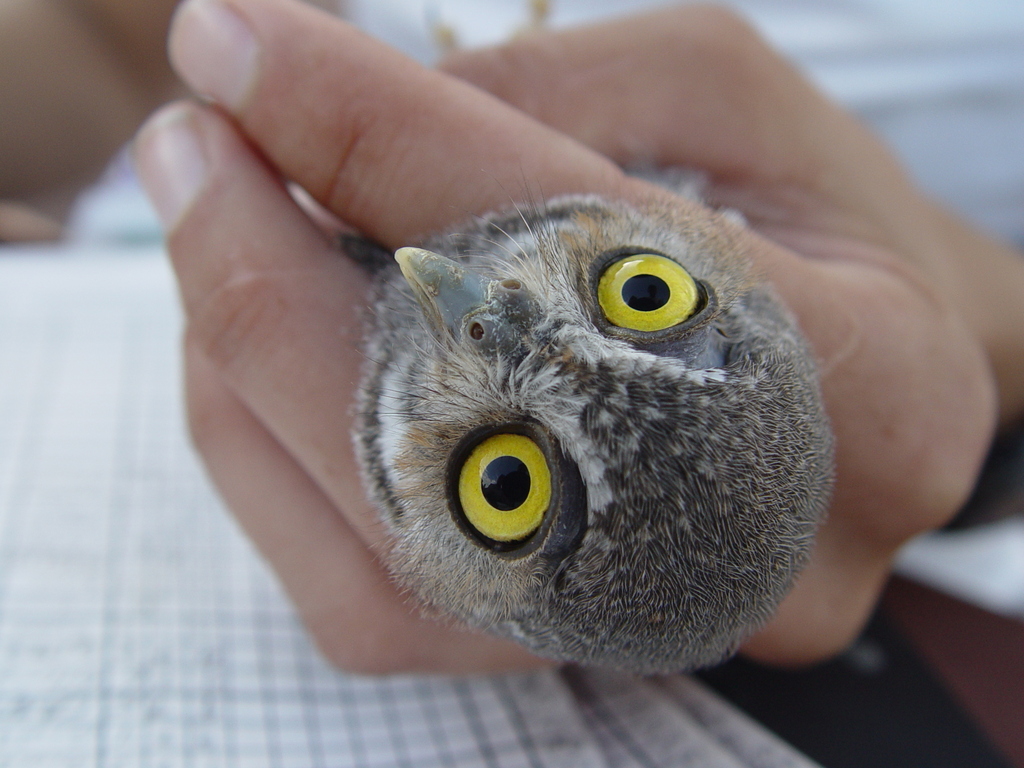
(c) Cole Wolf, some rights reserved (CC BY) · licence
Family: Strigidae · Class: Aves · Order: Strigiformes
Conservation status: SE · G5 S1
Micrathene whitneyi (Elf owl) is a California animal in the Strigidae family.
The elf owl is North America's smallest owl species, measuring 12.5 to 14.5 centimeters (5 to 5.7 inches) in length and weighing 35 to 44 grams (1.2 to 1.6 ounces). Adults display grayish-brown upperparts with white spotting and pale buff underparts with fine brown streaking. The facial disc is pale with prominent white eyebrows, and the eyes are bright yellow. The species lacks ear tufts, distinguishing it from screech owls. The tail is short and rounded, with white-tipped feathers creating a barred appearance. Historically, elf owls occurred in the Lower Colorado River Valley, including areas near Blythe in Riverside County and along the Colorado River in Imperial County. The species was documented nesting in the region until the mid-20th century but has since been extirpated from California. Current populations exist in Arizona, New Mexico, western Texas, and northwestern Mexico, with the closest breeding populations now found in Arizona's Sonoran Desert. Elf owls inhabit desert riparian woodlands dominated by cottonwoods and willows, as well as desert uplands with saguaro cacti, organ pipe cacti, and other columnar cacti. In California's historical range, they occupied mature cottonwood-willow forests along the Colorado River. The species requires large trees or cacti with suitable cavities for nesting, typically at heights of 4 to 10 meters (13 to 33 feet) above ground. Elevation ranges from sea level to 2,100 meters (6,900 feet), though California populations occurred primarily in low-elevation riparian zones. Elf owls are strictly nocturnal and highly insectivorous, feeding primarily on moths, beetles, crickets, and other arthropods. They capture prey through aerial hawking and gleaning from vegetation surfaces. The species is partially migratory, with northern populations moving south for winter. Breeding occurs from April through July, with pairs often using cavities excavated by Gila woodpeckers or gilded flickers. Females lay 2 to 4 white eggs, which are incubated for 24 days. Young fledge after 28 to 35 days but remain dependent on adults for several weeks. The elf owl is listed as endangered in California with a state rank of S1, indicating extreme rarity with typically five or fewer occurrences. The species has been extirpated from California primarily due to habitat loss along the Colorado River. Extensive dam construction, water diversions, and riparian forest clearing eliminated most suitable nesting habitat by the 1960s. According to the California Department of Fish and Wildlife, no confirmed breeding records exist in the state since the 1960s, though occasional vagrant individuals may still appear during migration. Recovery would require extensive riparian habitat restoration along the Colorado River corridor. The species remains relatively stable in core Arizona populations but faces ongoing threats from habitat fragmentation and climate change throughout its range.
Classification
Class: Aves · Order: Strigiformes · Family: Strigidae
Conservation status
SE · G5 S1
Frequently asked questions
How is Micrathene whitneyi classified?
Micrathene whitneyi belongs to class Aves, order Strigiformes, family Strigidae.
What family does Micrathene whitneyi belong to?
Micrathene whitneyi is in the Strigidae family.
Is Micrathene whitneyi protected or of conservation concern?
Micrathene whitneyi carries the following status: SE · G5 S1.
What is Micrathene whitneyi?
The elf owl is North America's smallest owl species, measuring 12.5 to 14.5 centimeters (5 to 5.7 inches) in length and weighing 35 to 44 grams (1.2 to 1.6 ounces).
Is Micrathene whitneyi found in California?
Yes. Micrathene whitneyi is recorded in California in The California Species Project's catalogue.
Related species
Other California species in the same genus, family, or bioregion.
Data from The California Species Project — 14,000+ California species with verified data from CNPS, CDFW, USFWS, and more.