Micrathetis triplex
Triplex Cutworm Moth
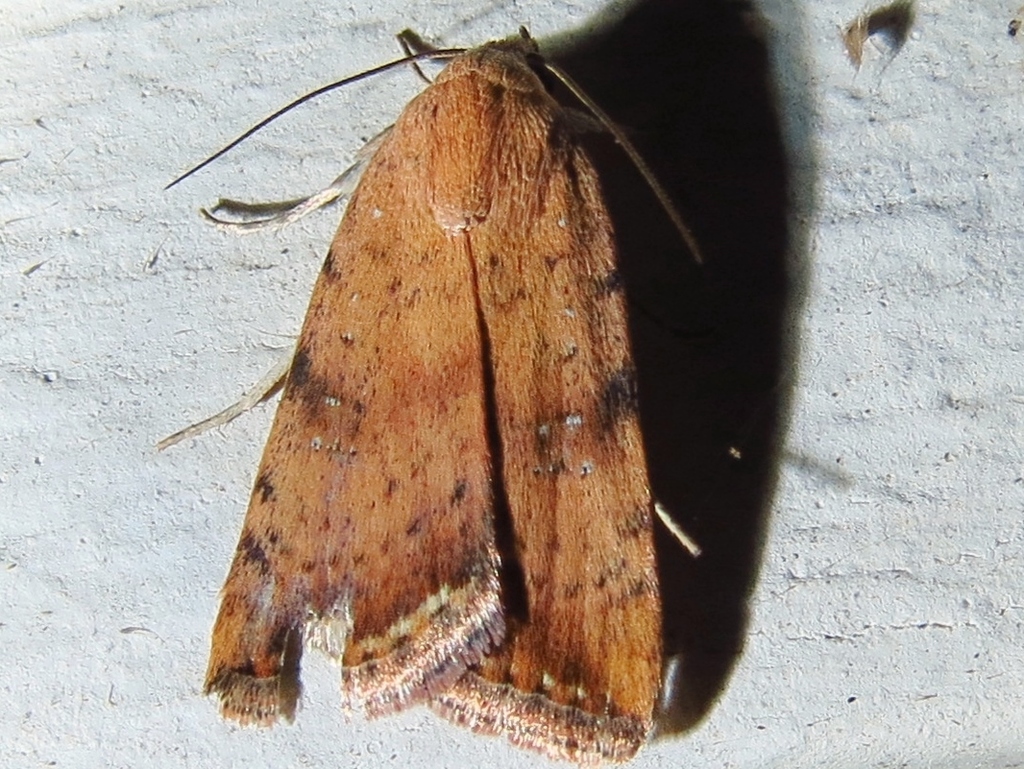
(c) Annika Lindqvist, some rights reserved (CC BY) · licence
Family: Noctuidae · Class: Insecta · Order: Lepidoptera
Micrathetis triplex (Triplex Cutworm Moth) is a California animal in the Noctuidae family.
The Triplex Cutworm Moth (Micrathetis triplex) is a nocturnal moth in the family Noctuidae, part of the diverse cutworm and dart moth group. Adults have a wingspan of approximately 25-30 mm (1.0-1.2 inches), with forewings displaying a mottled pattern of brown, gray, and tan coloration. The forewings typically show characteristic reniform and orbicular spots common to noctuids, along with transverse lines that create the complex patterning suggested by the common name "triplex." The hindwings are generally paler, ranging from whitish to light brown with darker marginal areas. This species occurs in western North America, with records from California, Oregon, Washington, and potentially extending into British Columbia. In California, Micrathetis triplex has been documented from various counties, though specific distribution data is limited. The moth appears to have a relatively restricted range compared to more widespread noctuid species. The Triplex Cutworm Moth inhabits diverse habitats including oak woodlands, chaparral, and mixed coniferous forests. Adults are typically found at elevations ranging from sea level to approximately 1,500 meters (4,920 feet). The species shows preference for areas with native vegetation and may be associated with specific plant communities that support larval development. Adults are active during late spring through early fall, with peak flight periods varying by location and elevation. Like other noctuids, adults are attracted to artificial lights and sugar baits. Mating occurs during nighttime hours, with females subsequently depositing eggs on or near host plants. Larvae, known as cutworms, feed on various herbaceous plants and likely overwinter as pupae in soil chambers. The larval stage typically involves multiple instars before pupation, though specific developmental timing for this species requires further documentation. Little is known about the specific host plants utilized by Micrathetis triplex larvae, though related species in the genus often feed on members of plant families including Asteraceae, Fabaceae, and Rosaceae. The larvae likely exhibit the typical cutworm behavior of feeding at night and hiding in soil or leaf litter during daylight hours. The conservation status of the Triplex Cutworm Moth is not well documented, and the species does not appear on federal or state endangered species lists. However, like many native moths, populations may face pressure from habitat loss, urbanization, and changes in fire regimes that alter plant communities. The species' apparently limited distribution and potential specificity to certain habitat types suggest it could be vulnerable to environmental changes. Climate change may affect the timing of adult emergence and larval development, potentially disrupting synchronization with host plant phenology. Conservation of native plant communities and reduction of light pollution would benefit this and other native moth species. Current knowledge of this species remains incomplete, with significant data gaps regarding specific host plant relationships, detailed distribution patterns, and population status, limiting comprehensive assessment of conservation needs.
Classification
Class: Insecta · Order: Lepidoptera · Family: Noctuidae
Frequently asked questions
How is Micrathetis triplex classified?
Micrathetis triplex belongs to class Insecta, order Lepidoptera, family Noctuidae.
What family does Micrathetis triplex belong to?
Micrathetis triplex is in the Noctuidae family.
What is Micrathetis triplex?
The Triplex Cutworm Moth (Micrathetis triplex) is a nocturnal moth in the family Noctuidae, part of the diverse cutworm and dart moth group.
Is Micrathetis triplex found in California?
Yes. Micrathetis triplex is recorded in California in The California Species Project's catalogue.
Related species
Other California species in the same genus, family, or bioregion.
Data from The California Species Project — 14,000+ California species with verified data from CNPS, CDFW, USFWS, and more.