Microcylloepus formicoideus
Furnace Creek Riffle Beetle
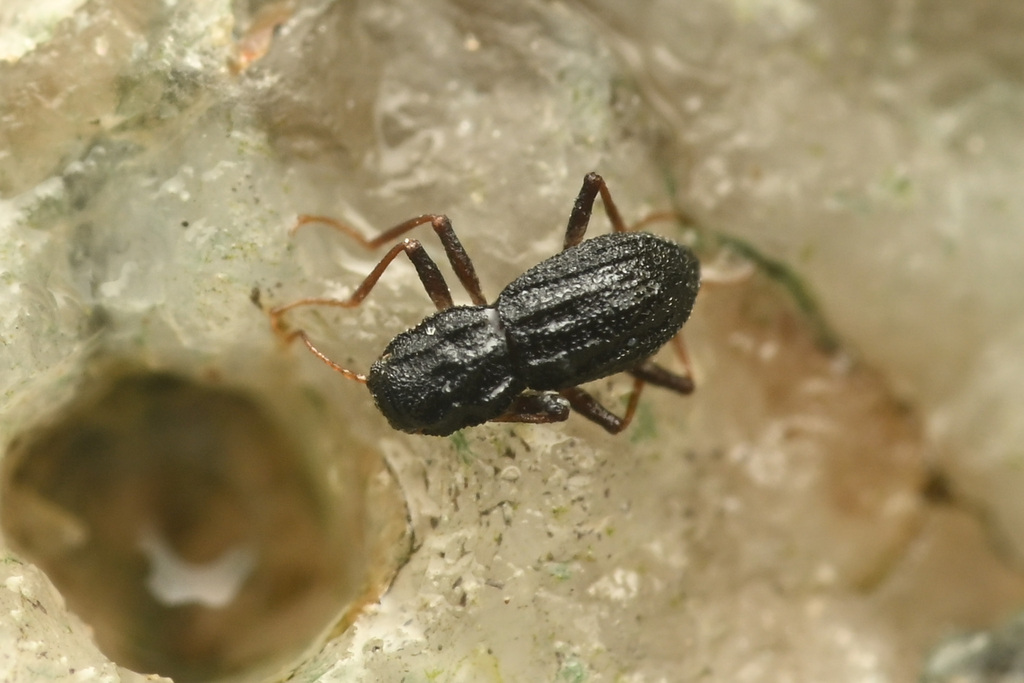
(c) Trevor Van Loon, some rights reserved (CC BY) · licence
Family: Elmidae · Class: Insecta · Order: Coleoptera
Conservation status: G1 S1
Microcylloepus formicoideus (Furnace Creek Riffle Beetle) is a California animal in the Elmidae family.
The Furnace Creek riffle beetle (Microcylloepus formicoideus) is a critically imperiled aquatic beetle endemic to a single spring system in Death Valley National Park, California. This minute beetle measures 1.29 to 1.53 mm in length, making it one of the smallest riffle beetles in North America (Shepard 1990). The species exhibits typical elmid characteristics with a streamlined, oval body adapted for life in flowing water environments. The beetle's range is extremely restricted, occurring only at travertine springs within Death Valley National Monument in Inyo County, California (Shepard 1990). Originally described from Furnace Creek, the species appears to have an even more limited current distribution than when first documented. This represents one of the most geographically constrained beetle distributions in North America, confined to spring-fed aquatic habitats within the harsh Mojave Desert environment. Microcylloepus formicoideus inhabits travertine spring systems where calcium carbonate deposits create unique microhabitats (Shepard 1990). These springs maintain relatively constant temperatures and flow rates compared to the extreme desert conditions surrounding them. The travertine formations provide substrate for biofilm development and create the specialized riffle conditions that elmid beetles require. The species likely depends on the mineral-rich water chemistry and stable thermal conditions that characterize these ancient spring systems. As with other riffle beetles, M. formicoideus likely feeds on algae, bacteria, and organic detritus scraped from rock surfaces using specialized mandibles. The larvae are presumably aquatic, developing within the spring substrate before emerging as adults. Riffle beetles typically have synchronized emergence patterns, though specific reproductive timing for this species has not been documented. Adults likely remain in close association with the spring system throughout their lifecycle, as the surrounding desert habitat would be unsurvivable. The Furnace Creek riffle beetle holds a global conservation rank of G1 (critically imperiled) and state rank of S1 in California, indicating extreme rarity and vulnerability to extinction. The species appears on California's Special Animals List, which tracks taxa at risk regardless of legal protection status (California Department of Fish and Wildlife 2016). The beetle faces significant conservation challenges due to its extremely limited range, making it vulnerable to any disturbance of its spring habitat. Threats potentially include groundwater extraction, recreational impacts, and climate change effects on spring flow regimes. The species' survival depends entirely on maintaining the integrity of Death Valley's travertine spring systems. Without federal protection under the Endangered Species Act, habitat conservation relies primarily on National Park Service management within Death Valley National Park. The beetle represents a relict species from past pluvial periods when aquatic habitats were more widespread across the region, making its conservation critical for preserving desert biodiversity.
Classification
Class: Insecta · Order: Coleoptera · Family: Elmidae
Conservation status
G1 S1
Frequently asked questions
How is Microcylloepus formicoideus classified?
Microcylloepus formicoideus belongs to class Insecta, order Coleoptera, family Elmidae.
What family does Microcylloepus formicoideus belong to?
Microcylloepus formicoideus is in the Elmidae family.
Is Microcylloepus formicoideus protected or of conservation concern?
Microcylloepus formicoideus carries the following status: G1 S1.
What is Microcylloepus formicoideus?
The Furnace Creek riffle beetle (Microcylloepus formicoideus) is a critically imperiled aquatic beetle endemic to a single spring system in Death Valley National Park, California.
Is Microcylloepus formicoideus found in California?
Yes. Microcylloepus formicoideus is recorded in California in The California Species Project's catalogue.
Related species
Other California species in the same genus, family, or bioregion.
Data from The California Species Project — 14,000+ California species with verified data from CNPS, CDFW, USFWS, and more.