Microhelia angelica
Angelica Moth
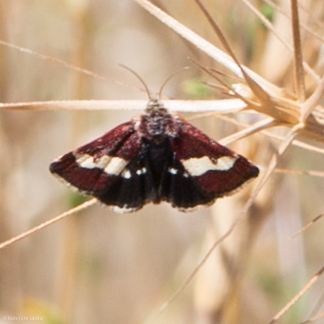
(c) Ken-ichi Ueda, some rights reserved (CC BY) · licence
Family: Noctuidae · Class: Insecta · Order: Lepidoptera
Microhelia angelica (Angelica Moth) is a California animal in the Noctuidae family.
The Angelica Moth (Microhelia angelica) is a small noctuid moth in the family Noctuidae. Adults have a wingspan of 0.8 to 1.2 cm (0.3 to 0.5 inches), making this one of the smaller members of its family (BAMONA). The species exhibits the typical moth body plan with scaled wings and feathery antennae, though specific details of coloration and wing patterns have not been well documented in available literature. This species occurs in the foothill regions surrounding the Columbia Basin in Oregon and Washington, and has also been found in the southern Cascade Range in Oregon, extending south through California (BAMONA). The range encompasses portions of the Pacific Northwest extending into California's mountainous regions. Verified sightings include Siskiyou County, California, and Lincoln County, Washington, indicating the species' distribution along the Cascade Range corridor. Microhelia angelica inhabits foothill and montane environments associated with the Columbia Basin and southern Cascade Range ecosystems. The species appears to be closely tied to areas where its host plants occur, suggesting habitat preferences for open or semi-open areas that support native Asteraceae vegetation. Specific elevation ranges and microhabitat requirements have not been thoroughly documented. The species exhibits a spring and early summer flight period (BAMONA). Caterpillars feed on flowers and seedheads of Lagophylla ramosissima, and possibly other species within the genus Lagophylla, all members of the sunflower family (Asteraceae) (BAMONA). This specialized feeding relationship suggests the moth's life cycle is closely synchronized with the blooming period of its host plants. The larvae's preference for flowers and seedheads indicates they may impact seed production of their host plants, though the ecological significance of this relationship has not been quantified. Like many noctuid moths, Microhelia angelica likely overwinters as pupae in soil or leaf litter, emerging as adults during the warmer months when host plants are flowering. Mating and oviposition behaviors have not been described in available literature. The species' relatively small size and specialized host plant relationships suggest it may have limited dispersal capabilities compared to larger, more generalist moths. Microhelia angelica currently has no federal or state conservation listing status. Population trends and conservation needs have not been assessed, reflecting the limited scientific attention given to many small moth species. The species' dependence on native Asteraceae plants, particularly Lagophylla species, suggests that habitat conversion and loss of native plant communities could pose potential threats. Climate change impacts on host plant phenology and distribution may also affect this specialized herbivore. Scientific documentation for this species remains limited. The information presented here is based on available sources including BAMONA and taxonomic databases. If you have additional verified information about this species' biology, distribution, or ecology, please contact relevant authorities to help improve this species account.
Classification
Class: Insecta · Order: Lepidoptera · Family: Noctuidae
Frequently asked questions
How is Microhelia angelica classified?
Microhelia angelica belongs to class Insecta, order Lepidoptera, family Noctuidae.
What family does Microhelia angelica belong to?
Microhelia angelica is in the Noctuidae family.
What is Microhelia angelica?
The Angelica Moth (Microhelia angelica) is a small noctuid moth in the family Noctuidae.
Is Microhelia angelica found in California?
Yes. Microhelia angelica is recorded in California in The California Species Project's catalogue.
Related species
Other California species in the same genus, family, or bioregion.
Data from The California Species Project — 14,000+ California species with verified data from CNPS, CDFW, USFWS, and more.