Microphotus angustus
California Pink Glowworm
(c) Ken-ichi Ueda, some rights reserved (CC BY) · licence
Family: Lampyridae · Class: Insecta · Order: Coleoptera
Microphotus angustus (California Pink Glowworm) is a California animal in the Lampyridae family.
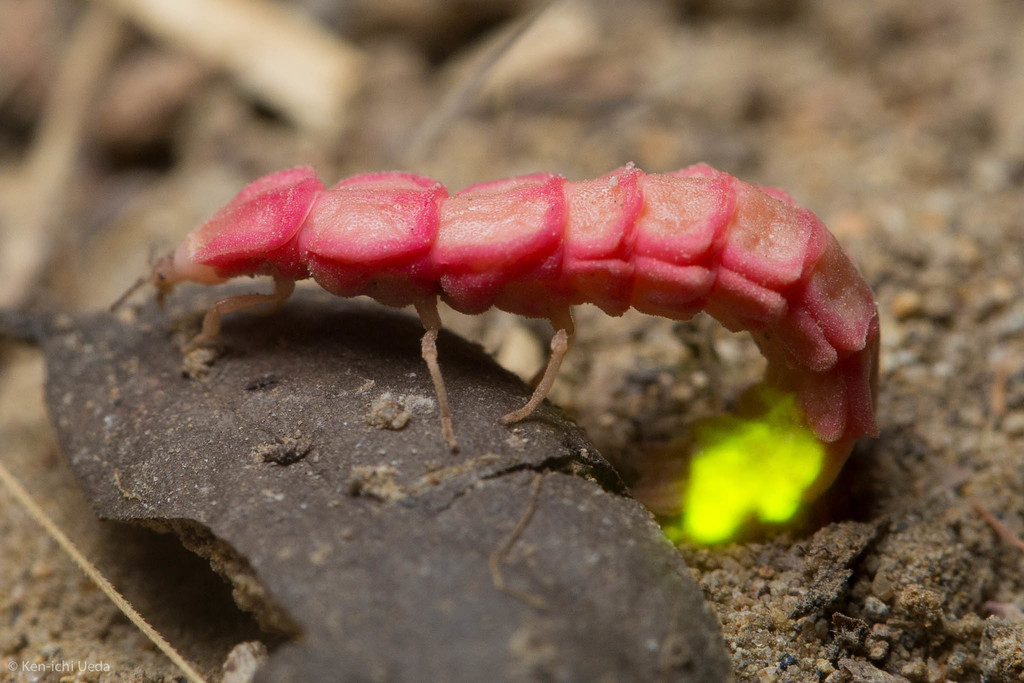
The California pink glow-worm is a small beetle in the firefly family Lampyridae, distinguished by its wingless females that produce a continuous pink glow to attract males. Adult females measure approximately 10-15 mm in length and lack functional wings, rendering them flightless. The luminescent females emit a steady pink to reddish glow from their abdominal segments, while males are smaller, winged, and typically non-luminescent or weakly luminescent. This species is distributed across the southwestern United States, with confirmed populations in California, Arizona, and possibly New Mexico (Xerces Society 2021). In California, the species occurs primarily in the southern and central regions, though specific county-level distribution records remain limited. The California pink glow-worm represents one of seven Microphotus species found in North America, with most congeners restricted to desert regions of the Southwest. The species inhabits a variety of terrestrial environments including chaparral, oak woodlands, and desert scrub habitats. Adults are typically found in areas with abundant leaf litter, rotting logs, underground burrows, and rocky substrates that provide essential microhabitat for both larvae and flightless adult females (Xerces Society 2019). These microhabitats offer protection from predators and environmental extremes while providing hunting grounds for the predaceous larvae. California pink glow-worm larvae are voracious predators that feed on soft-bodied invertebrates including snails, slugs, and earthworms. The larvae spend most of their lives in soil and leaf litter, actively hunting prey. Adult females position themselves on vegetation, rocks, or other elevated surfaces to display their glowing abdomens, which serve as mating signals visible to flying males. The species likely has a annual life cycle typical of temperate fireflies, though specific details regarding timing of reproduction, egg-laying behavior, and larval development periods have not been well documented. Males are attracted to the female's steady glow rather than responding to flashing patterns used by other firefly species. The California pink glow-worm is currently classified as Least Concern (LC) by firefly conservation assessments, indicating stable populations relative to other North American firefly species (Xerces Society 2021). However, like many firefly species, it faces potential threats from habitat loss, urban development, light pollution, and pesticide use. Light pollution poses a particular concern for glow-worms, as artificial lighting can interfere with the visual communication between males and females during mating. The species benefits from conservation of native habitat, reduction of artificial lighting in natural areas, and maintenance of leaf litter and organic debris that support prey populations. Continued monitoring and habitat protection are important for maintaining stable populations of this distinctive western firefly species.
Classification
Class: Insecta · Order: Coleoptera · Family: Lampyridae
Frequently asked questions
How is Microphotus angustus classified?
Microphotus angustus belongs to class Insecta, order Coleoptera, family Lampyridae.
What family does Microphotus angustus belong to?
Microphotus angustus is in the Lampyridae family.
What is Microphotus angustus?
The California pink glow-worm is a small beetle in the firefly family Lampyridae, distinguished by its wingless females that produce a continuous pink glow to attract males.
Is Microphotus angustus found in California?
Yes. Microphotus angustus is recorded in California in The California Species Project's catalogue.
Related species
Other California species in the same genus, family, or bioregion.
Data from The California Species Project — 14,000+ California species with verified data from CNPS, CDFW, USFWS, and more.