Micropterus punctulatus
Spotted bass
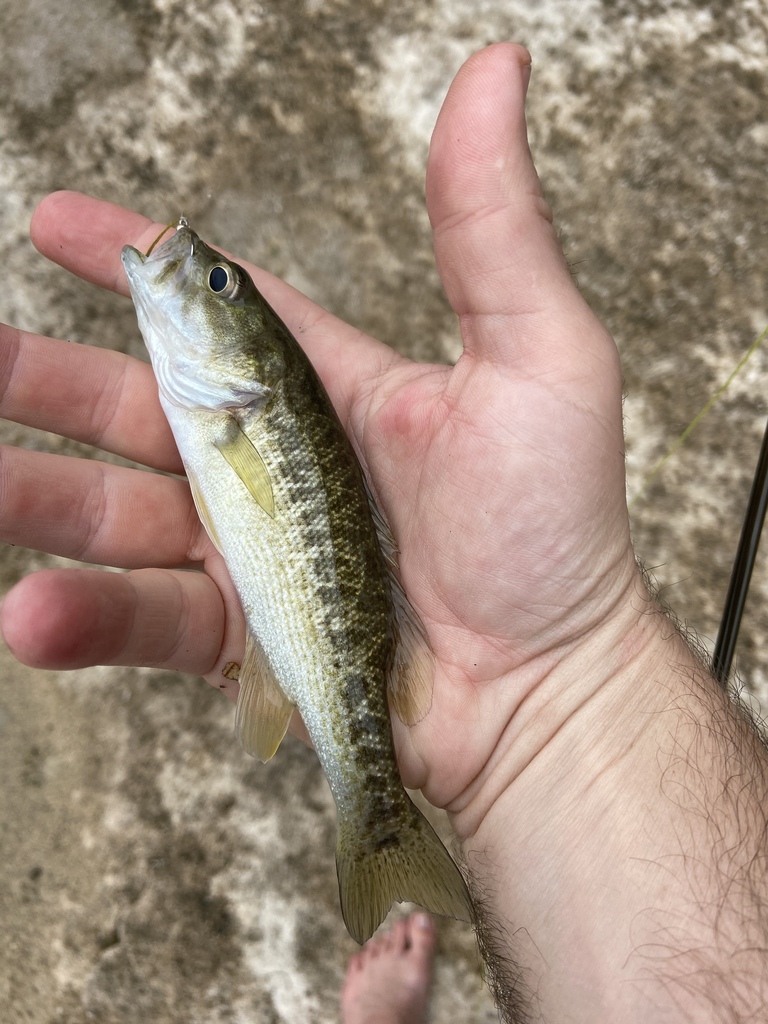
no rights reserved · CC0
Family: Centrarchidae · Class: Actinopterygii · Order: Perciformes
Micropterus punctulatus (Spotted bass) is a California animal in the Centrarchidae family.
The spotted bass is a medium-sized freshwater fish belonging to the black bass group within the sunfish family Centrarchidae. Adults typically measure 300 to 400 mm (12 to 16 inches) in total length and weigh 0.9 to 1.4 kg (2 to 3 pounds), though individuals can reach up to 500 mm (20 inches). The species is characterized by distinct rows of dark spots below the lateral line, which remain visible throughout the fish's life and distinguish it from the closely related largemouth bass. The body is laterally compressed with an olive-green to bronze coloration dorsally, transitioning to lighter yellow-green sides and a white to pale yellow belly. The dorsal fin shows a shallow notch between the spiny and soft-rayed portions, and the upper jaw extends to approximately the middle of the eye when the mouth is closed. Spotted bass are native to the Ohio River basin and Gulf Coast drainages from Texas to Florida. In California, the species was introduced and has established populations in several reservoirs and river systems, including the Colorado River, Salton Sea drainage, and select Central Valley waterways. The species has also been documented in Southern California reservoirs such as Castaic Lake and Lake Perris. These introductions occurred primarily through stocking programs and unauthorized releases during the mid-20th century. The species inhabits clear to moderately turbid waters with rocky or gravel substrates. Spotted bass prefer areas with moderate current and are commonly found around submerged structures, including fallen trees, rock formations, and artificial cover. They occupy depths ranging from shallow nearshore areas to depths exceeding 20 meters (65 feet) in reservoirs. Water temperatures between 18 and 27 degrees Celsius (64 to 81 degrees Fahrenheit) support optimal growth and reproduction. The species tolerates a wider range of water chemistry conditions than largemouth bass, including slightly higher alkalinity and lower dissolved oxygen levels. Spotted bass are carnivorous, feeding primarily on crayfish, small fish, aquatic insects, and terrestrial insects that fall into the water. Juveniles consume zooplankton, small invertebrates, and fish fry. Adults are opportunistic predators that hunt both actively and through ambush tactics. Spawning occurs from March through June when water temperatures reach 16 to 18 degrees Celsius (61 to 64 degrees Fahrenheit). Males construct circular nests in gravel or sand substrates at depths of 1 to 6 meters (3 to 20 feet). Females deposit 2,000 to 47,000 eggs depending on body size, with males providing sole parental care for eggs and fry for approximately 3 to 4 weeks. Spotted bass are not listed under federal or California endangered species legislation and are considered a stable introduced species in California waters. The species supports recreational fisheries in several California water bodies and is managed under general inland fishing regulations. Primary management concerns include potential competition with native fish species and impacts on aquatic ecosystem structure where established.
Classification
Class: Actinopterygii · Order: Perciformes · Family: Centrarchidae
Frequently asked questions
How is Micropterus punctulatus classified?
Micropterus punctulatus belongs to class Actinopterygii, order Perciformes, family Centrarchidae.
What family does Micropterus punctulatus belong to?
Micropterus punctulatus is in the Centrarchidae family.
What is Micropterus punctulatus?
The spotted bass is a medium-sized freshwater fish belonging to the black bass group within the sunfish family Centrarchidae.
Is Micropterus punctulatus found in California?
Yes. Micropterus punctulatus is recorded in California in The California Species Project's catalogue.
Related species
Other California species in the same genus, family, or bioregion.
Data from The California Species Project — 14,000+ California species with verified data from CNPS, CDFW, USFWS, and more.