Microtheoris ophionalis
Yellow-veined Moth
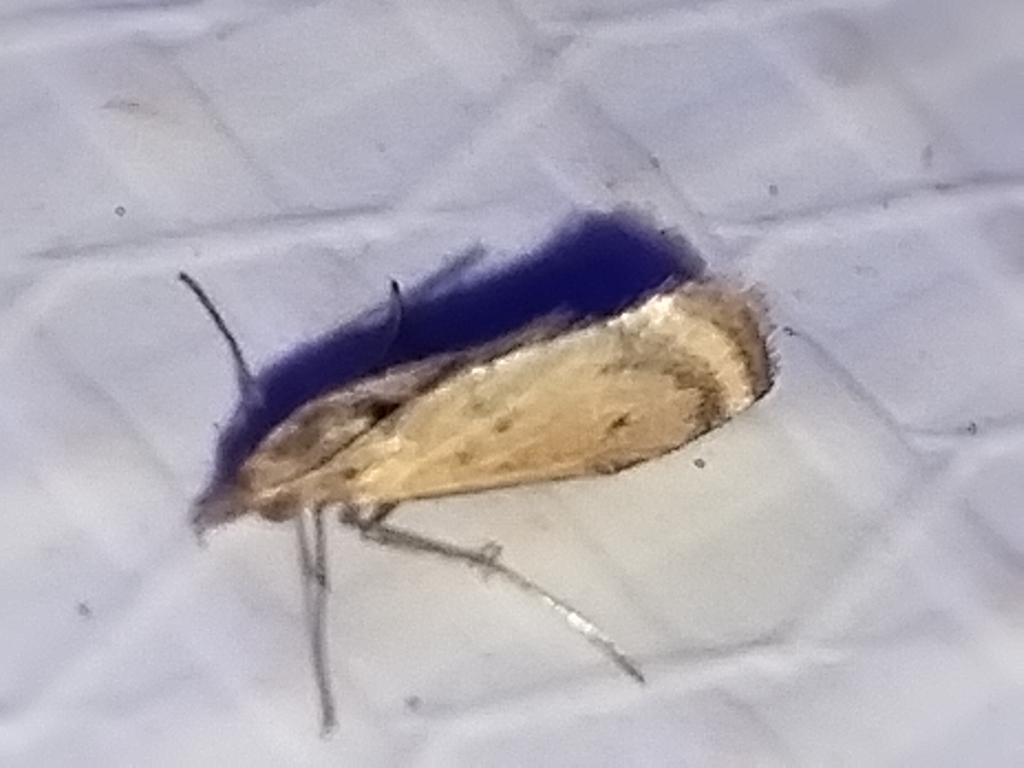
no rights reserved · CC0
Family: Crambidae · Class: Insecta · Order: Lepidoptera
Microtheoris ophionalis (Yellow-veined Moth) is a California animal in the Crambidae family.
Microtheoris ophionalis, commonly known as the yellow-veined moth, is a member of the family Crambidae described by Walker in 1859. This species exhibits the typical morphological characteristics of grass moths, with forewings displaying distinctive yellowish venation patterns that give the species its common name. Adults are relatively small, as is typical for members of this family, with narrow forewings and elongated bodies adapted for their grassland habitats. The yellow-veined moth has an extensive range spanning from southern Canada through the United States and Mexico, extending south to South America (BugGuide). Within this broad distribution, the species occurs across multiple subspecies, including M. o. occidentalis and M. o. eremica, indicating significant geographical variation. In California, this moth is found throughout suitable habitat areas, representing part of the state's diverse crambid fauna. This species inhabits grasslands, prairies, and other open areas where its larval host plants occur. The moths are typically associated with grasses and herbaceous vegetation, environments that provide both larval development sites and adult nectar sources. Like many crambid moths, yellow-veined moths are likely found from sea level to moderate elevations, adapting to various grassland ecosystems throughout their range. Adult yellow-veined moths are primarily nocturnal, coming to lights during evening hours. The species likely has multiple generations per year in warmer climates, with flight periods extending from spring through fall. Larvae are grass feeders, developing within or near the base of grass plants where they feed on stems, roots, or leaf sheaths. The larval stage likely overwinters in temperate portions of the range, with adults emerging in spring to begin the next generation cycle. Mating and egg-laying behaviors follow typical patterns for grass moths, with females depositing eggs on or near suitable host plants. The yellow-veined moth does not appear to have any special conservation designation at federal or state levels. As a widespread species ranging across much of the Americas, M. ophionalis likely maintains stable populations throughout most of its range. However, like many grassland-associated species, local populations may face pressure from habitat conversion, agricultural intensification, and urban development. The species' broad distribution and apparent ecological flexibility suggest resilience to moderate environmental changes, though specific population trends have not been well documented. Scientific documentation for this species remains limited beyond basic taxonomic and distributional information. The information presented here is based on available sources including BugGuide and iNaturalist observations. If you have additional verified information about this species' biology, distribution, or ecology, please contact us to help improve this species account.
Classification
Class: Insecta · Order: Lepidoptera · Family: Crambidae
Frequently asked questions
How is Microtheoris ophionalis classified?
Microtheoris ophionalis belongs to class Insecta, order Lepidoptera, family Crambidae.
What family does Microtheoris ophionalis belong to?
Microtheoris ophionalis is in the Crambidae family.
What is Microtheoris ophionalis?
Microtheoris ophionalis, commonly known as the yellow-veined moth, is a member of the family Crambidae described by Walker in 1859.
Is Microtheoris ophionalis found in California?
Yes. Microtheoris ophionalis is recorded in California in The California Species Project's catalogue.
Related species
Other California species in the same genus, family, or bioregion.
Data from The California Species Project — 14,000+ California species with verified data from CNPS, CDFW, USFWS, and more.