Microtus californicus
California Vole
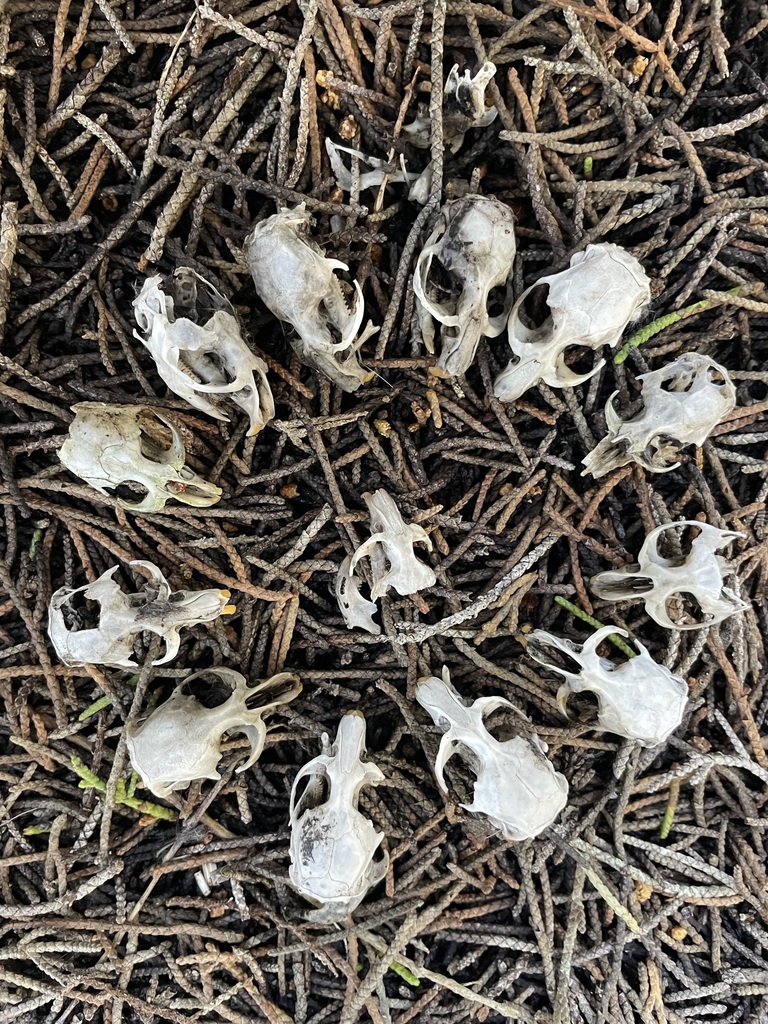
(c) Cricket Raspet, some rights reserved (CC BY) · licence
Family: Cricetidae · Class: Mammalia · Order: Rodentia
Microtus californicus (California Vole) is a California animal in the Cricetidae family.
The California vole is a small, stocky rodent with a compact body measuring 140 to 170 mm (5.5 to 6.7 inches) in total length, including a tail of 35 to 55 mm (1.4 to 2.2 inches). Adults typically weigh 35 to 65 grams (1.2 to 2.3 ounces). The dense fur is grayish-brown to dark brown on the dorsal surface, with lighter gray to buff coloration on the ventral side. The ears are small and nearly hidden in the fur, and the eyes are relatively small. The tail is bicolored, dark above and light below, and sparsely haired. The feet are equipped with strong claws adapted for digging. California voles are endemic to California and extreme southern Oregon, occupying a range that extends along the Pacific Coast from Humboldt County south to Santa Barbara County, and inland through the Central Valley to the Sierra Nevada foothills. The species occurs from sea level to approximately 1,200 meters (3,900 feet) in elevation. Historical records indicate the species was more widely distributed in coastal areas before extensive habitat conversion. This species inhabits grasslands, coastal prairies, agricultural fields, and marsh edges with dense herbaceous vegetation. California voles prefer areas with continuous ground cover and construct extensive runway systems through matted grass and surface vegetation. They are particularly associated with areas dominated by perennial grasses, sedges, and forbs. Optimal habitat includes sites with adequate moisture and dense vegetation cover that provides protection from predators and supports their herbivorous diet. California voles are primarily herbivorous, feeding on green stems, leaves, seeds, and roots of grasses and forbs. They are active throughout the year and exhibit both diurnal and nocturnal activity patterns, with peak activity during dawn and dusk hours. The species constructs complex burrow systems with multiple entrances connected by surface runways. Breeding occurs year-round in favorable conditions, with females producing multiple litters annually. Gestation period is approximately 21 days, and litter sizes range from 3 to 6 young. Sexual maturity is reached at 35 to 40 days of age. Population densities can fluctuate dramatically, with peak densities reaching 500 to 800 individuals per hectare in optimal habitat. The California vole is not federally or state listed and is considered secure throughout most of its range. However, localized populations have experienced decline due to habitat loss from urban development, agricultural intensification, and conversion of native grasslands. Coastal populations face particular pressure from residential development. The species benefits from habitat management that maintains native grassland communities and controls invasive plant species that alter vegetation structure. Climate change may affect the species through altered precipitation patterns and increased frequency of drought conditions, which could impact food availability and habitat quality.
Classification
Class: Mammalia · Order: Rodentia · Family: Cricetidae
Frequently asked questions
How is Microtus californicus classified?
Microtus californicus belongs to class Mammalia, order Rodentia, family Cricetidae.
What family does Microtus californicus belong to?
Microtus californicus is in the Cricetidae family.
What is Microtus californicus?
The California vole is a small, stocky rodent with a compact body measuring 140 to 170 mm (5.5 to 6.7 inches) in total length, including a tail of 35 to 55 mm (1.4 to 2.2 inches).
Is Microtus californicus found in California?
Yes. Microtus californicus is recorded in California in The California Species Project's catalogue.
Related species
Other California species in the same genus, family, or bioregion.
Data from The California Species Project — 14,000+ California species with verified data from CNPS, CDFW, USFWS, and more.