Microtus californicus halophilus
Monterey Vole
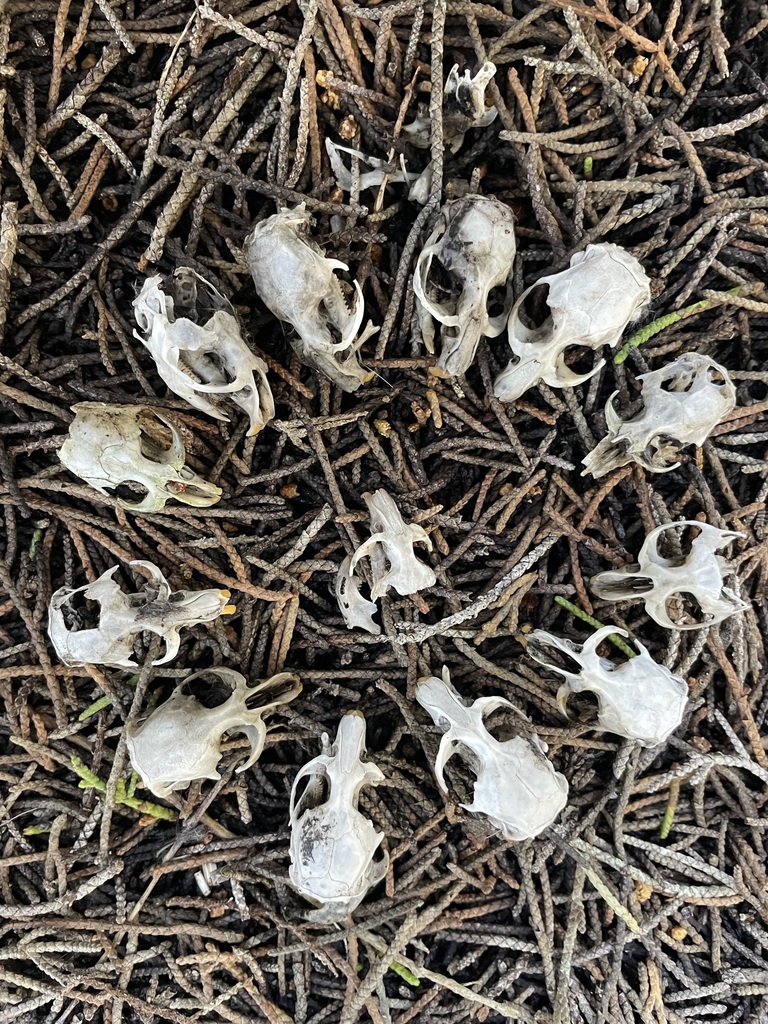
(c) Cricket Raspet, some rights reserved (CC BY) · licence
Family: Cricetidae · Class: Mammalia · Order: Rodentia
Conservation status: G5T1 S2
Microtus californicus halophilus (Monterey Vole) is a California animal in the Cricetidae family.
The Monterey vole (Microtus californicus halophilus) is a small rodent subspecies endemic to coastal California. Adults typically measure 140-170 mm (5.5-6.7 inches) in total length, with a tail length of 30-50 mm (1.2-2.0 inches). The pelage is grayish-brown dorsally with lighter underparts, and the ears are small and partially hidden in the fur. Like other California voles, this subspecies has small eyes, a blunt snout, and short legs adapted for a fossorial lifestyle. Historically, the Monterey vole occurred along the central California coast from the San Francisco Bay area south to Monterey and San Luis Obispo counties. Current distribution is severely restricted, with the subspecies now limited to scattered coastal locations primarily in Monterey County. The range has contracted significantly from historical levels, with many former populations extirpated due to habitat loss and fragmentation. This subspecies inhabits coastal salt marshes, brackish wetlands, and adjacent upland areas with dense vegetation cover. Monterey voles construct elaborate runway systems through marsh vegetation, particularly in areas dominated by pickleweed (Salicornia species) and saltgrass (Distichlis spicata). They require areas with adequate cover for protection from predators and sufficient moisture to support their herbivorous diet. The subspecies can tolerate periodic flooding, as California voles are capable swimmers that can remain underwater for up to 20 seconds. Monterey voles are primarily herbivorous, feeding on grasses, sedges, and other marsh vegetation. They are active year-round but show reduced activity during periods of extreme weather. Breeding occurs throughout the year but peaks during the wet season from February through May. The gestation period is approximately 21 days, with litters averaging 4.2 young and ranging from 1 to 9 offspring. Females can breed again as early as 15 hours after giving birth, and young are weaned after two weeks. This rapid reproductive potential allows populations to recover quickly under favorable conditions, though populations can fluctuate dramatically over 3-4 year cycles. The Monterey vole is designated as G5T1 S2, indicating it is critically imperiled as a subspecies. The primary threats include habitat loss and degradation due to coastal development, altered hydrology from urban runoff and water diversions, and invasive plant species that modify marsh structure. Sea level rise poses an emerging threat to remaining coastal marsh habitats. The subspecies serves as an important prey base for various predators including raptors, weasels, and snakes, making its conservation significant for maintaining coastal ecosystem function. Current population size and trends are poorly documented, highlighting the need for comprehensive surveys and monitoring programs to assess the subspecies' status and inform conservation strategies.
Classification
Class: Mammalia · Order: Rodentia · Family: Cricetidae
Conservation status
G5T1 S2
Frequently asked questions
How is Microtus californicus halophilus classified?
Microtus californicus halophilus belongs to class Mammalia, order Rodentia, family Cricetidae.
What family does Microtus californicus halophilus belong to?
Microtus californicus halophilus is in the Cricetidae family.
Is Microtus californicus halophilus protected or of conservation concern?
Microtus californicus halophilus carries the following status: G5T1 S2.
What is Microtus californicus halophilus?
The Monterey vole (Microtus californicus halophilus) is a small rodent subspecies endemic to coastal California.
Is Microtus californicus halophilus found in California?
Yes. Microtus californicus halophilus is recorded in California in The California Species Project's catalogue.
Related species
Other California species in the same genus, family, or bioregion.
Data from The California Species Project — 14,000+ California species with verified data from CNPS, CDFW, USFWS, and more.