Microtus californicus mohavensis
Mohave River Vole
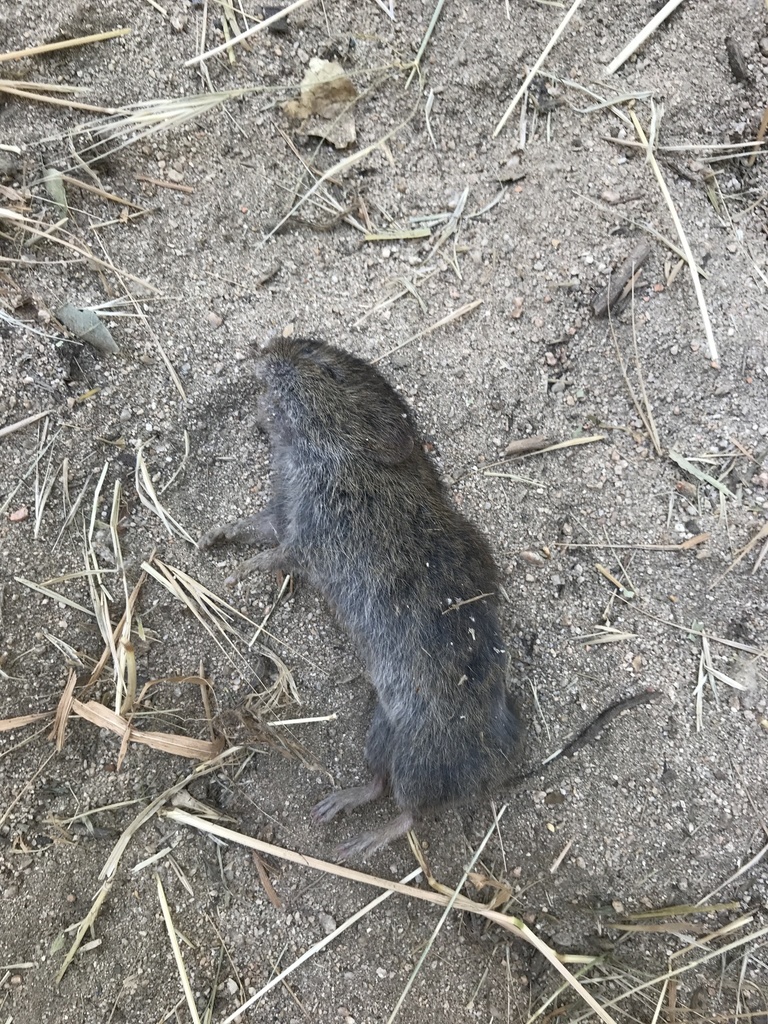
(c) Konshau Duman, some rights reserved (CC BY) · licence
Family: Cricetidae · Class: Mammalia · Order: Rodentia
Conservation status: G5T1 S1
Microtus californicus mohavensis (Mohave River Vole) is a California animal in the Cricetidae family.
The Mojave River vole is a small microtine rodent endemic to the central Mojave Desert of southeastern California. This subspecies of the California vole measures approximately 120-140 mm (4.7-5.5 inches) in total length, with adults weighing 25-45 grams (0.9-1.6 ounces). The dorsal pelage is grayish-brown with darker guard hairs, while the ventral surface is lighter gray to whitish. The tail is relatively short, measuring about 30-40% of the head-body length, and is bicolored with dark upper surfaces and lighter undersides. The ears are small and partially concealed by fur, and the eyes are relatively small compared to other vole species. Historically, the Mojave River vole inhabited spring-fed marshes and riparian habitat near Shoshone and Tecopa in extreme southeastern Inyo County, just east of Death Valley (CDFW). The subspecies has an extremely restricted range within the central Mojave Desert, making it one of California's most geographically limited mammals. Current populations are confined to highly localized and isolated wetlands in this region. This vole is closely associated with and dependent upon wetland habitats in the desert environment. The species requires dense emergent vegetation, particularly bulrush (Scirpus spp.) and sedge (Carex spp.) communities that provide both food resources and protective cover. These wetland areas are sustained by natural springs and seeps that create marshy conditions in an otherwise arid landscape. The voles construct runways and burrow systems within the dense vegetation, creating a network of trails through the marsh substrate. Mojave River voles are primarily herbivorous, feeding on green shoots, stems, and roots of marsh plants. Like other Microtus species, they are active throughout the year and exhibit both diurnal and nocturnal activity patterns. Breeding occurs from spring through fall when conditions are favorable, with females producing multiple litters per year. Litter sizes typically range from 2-6 young, with a gestation period of approximately 21 days. The species has a relatively short lifespan of 12-18 months in the wild. The Mojave River vole faces critical conservation challenges due to its extremely limited distribution and habitat requirements. Scientists estimate only about 500 individuals remain in the wild (CDFW). The subspecies is ranked G5T1 S1, indicating it is critically imperiled globally and within California. Suitable habitat has decreased significantly over time due to water diversions, groundwater pumping, and development pressures that have reduced spring flows and degraded marsh ecosystems. Climate change poses additional threats through altered precipitation patterns and increased drought frequency. The California Department of Fish and Wildlife has initiated habitat restoration efforts in the Amargosa Basin to recover this endangered subspecies through wetland enhancement and protection of remaining spring sources. The species' survival depends entirely on maintaining adequate water levels and vegetation in its few remaining habitat patches.
Classification
Class: Mammalia · Order: Rodentia · Family: Cricetidae
Conservation status
G5T1 S1
Frequently asked questions
How is Microtus californicus mohavensis classified?
Microtus californicus mohavensis belongs to class Mammalia, order Rodentia, family Cricetidae.
What family does Microtus californicus mohavensis belong to?
Microtus californicus mohavensis is in the Cricetidae family.
Is Microtus californicus mohavensis protected or of conservation concern?
Microtus californicus mohavensis carries the following status: G5T1 S1.
What is Microtus californicus mohavensis?
The Mojave River vole is a small microtine rodent endemic to the central Mojave Desert of southeastern California.
Is Microtus californicus mohavensis found in California?
Yes. Microtus californicus mohavensis is recorded in California in The California Species Project's catalogue.
Related species
Other California species in the same genus, family, or bioregion.
Data from The California Species Project — 14,000+ California species with verified data from CNPS, CDFW, USFWS, and more.