Microtus californicus stephensi
South Coast Marsh Vole
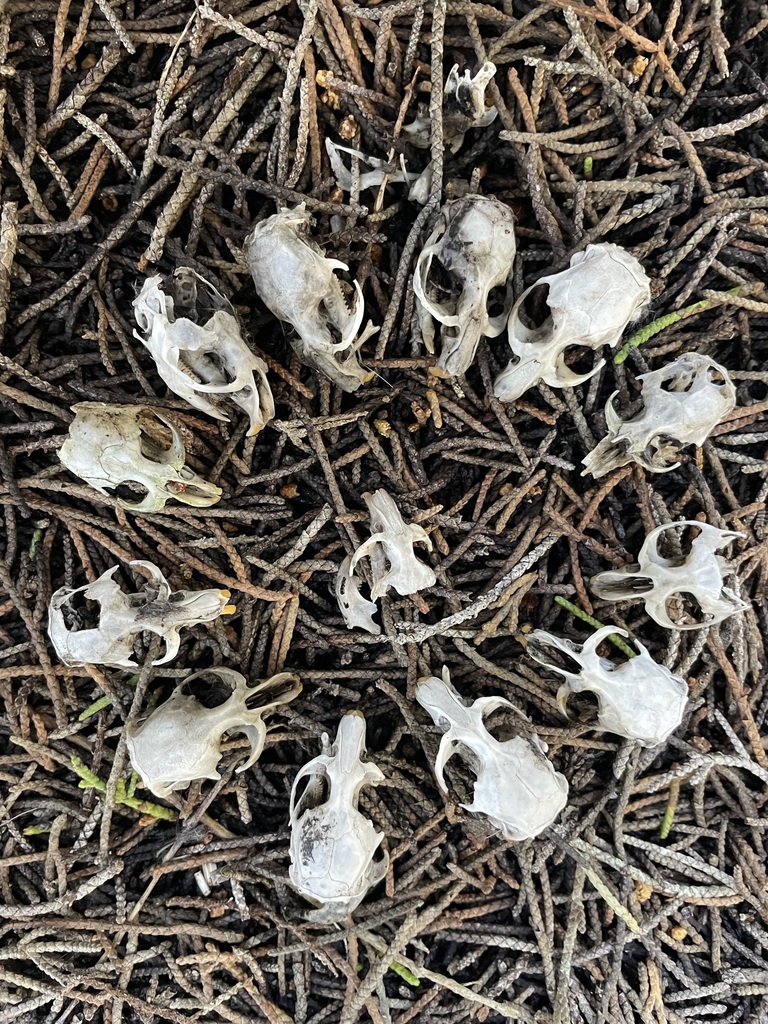
(c) Cricket Raspet, some rights reserved (CC BY) · licence
Family: Cricetidae · Class: Mammalia · Order: Rodentia
Conservation status: G5T2T3 S2
Microtus californicus stephensi (South Coast Marsh Vole) is a California animal in the Cricetidae family.
The South Coast marsh vole (Microtus californicus stephensi) is a subspecies of California vole endemic to coastal salt marshes of southern California. Adults typically measure 130-180 mm (5.1-7.1 inches) in total length, with a tail length of 35-65 mm (1.4-2.6 inches). The fur is grayish-brown dorsally with lighter underparts, and the relatively short tail distinguishes it from other small rodents in salt marsh habitats. Like other voles, it has small eyes, short rounded ears, and a compact body adapted for life in dense vegetation. Historically, the South Coast marsh vole occurred in coastal salt marshes from approximately Morro Bay south to San Diego County. Current populations are restricted to scattered remnant salt marsh fragments, with confirmed recent occurrences at Ballona Wetlands Ecological Reserve in Los Angeles County, where the species was documented as recently as 2010 (Johnston et al. 2011). The subspecies has experienced substantial range contraction due to widespread loss of coastal wetland habitat throughout southern California. The species inhabits tidal salt marshes, particularly areas dominated by pickleweed (Sarcocornia pacifica) and other halophytic vegetation. It occupies marsh elevations typically ranging from mean sea level to approximately 1.6 meters above, utilizing both low and mid-marsh zones. The voles create extensive burrow systems and runway networks through dense marsh vegetation, often incorporating driftwood and debris piles for cover and nesting sites. South Coast marsh voles are herbivorous, feeding primarily on pickleweed and other salt-tolerant marsh plants. They exhibit typical vole reproductive characteristics, with a gestation period of approximately three weeks and potential for multiple litters per year when conditions are favorable. The species constructs grass-lined nests in burrows or above ground in dense vegetation. California voles in other habitats are known to serve important ecological roles as prey species for raptors, weasels, and other predators, though the specific predator-prey relationships in salt marsh environments require further study. The South Coast marsh vole is designated as a California Department of Fish and Wildlife Species of Special Concern due to substantial habitat loss and population fragmentation. No federal listing status has been assigned. The primary threat is the historical loss of over 90% of California's coastal wetlands to urban development, agriculture, and other human activities. Remaining populations face ongoing pressures from habitat degradation, sea level rise, invasive species, and isolation effects that reduce genetic diversity and population viability. Current conservation efforts focus on salt marsh restoration and enhancement projects, though specific population monitoring for this subspecies remains limited. At Ballona Wetlands Ecological Reserve, restoration planning includes measures to protect the South Coast marsh vole during habitat enhancement activities. The species is expected to benefit from comprehensive tidal marsh restoration efforts, though temporary habitat disturbance during construction phases requires careful management to prevent local population losses. Long-term conservation success will depend on maintaining and restoring sufficient high-quality salt marsh habitat throughout the subspecies' historical range.
Classification
Class: Mammalia · Order: Rodentia · Family: Cricetidae
Conservation status
G5T2T3 S2
Frequently asked questions
How is Microtus californicus stephensi classified?
Microtus californicus stephensi belongs to class Mammalia, order Rodentia, family Cricetidae.
What family does Microtus californicus stephensi belong to?
Microtus californicus stephensi is in the Cricetidae family.
Is Microtus californicus stephensi protected or of conservation concern?
Microtus californicus stephensi carries the following status: G5T2T3 S2.
What is Microtus californicus stephensi?
The South Coast marsh vole (Microtus californicus stephensi) is a subspecies of California vole endemic to coastal salt marshes of southern California.
Is Microtus californicus stephensi found in California?
Yes. Microtus californicus stephensi is recorded in California in The California Species Project's catalogue.
Related species
Other California species in the same genus, family, or bioregion.
Data from The California Species Project — 14,000+ California species with verified data from CNPS, CDFW, USFWS, and more.