Microtus californicus vallicola
Owens Valley Vole
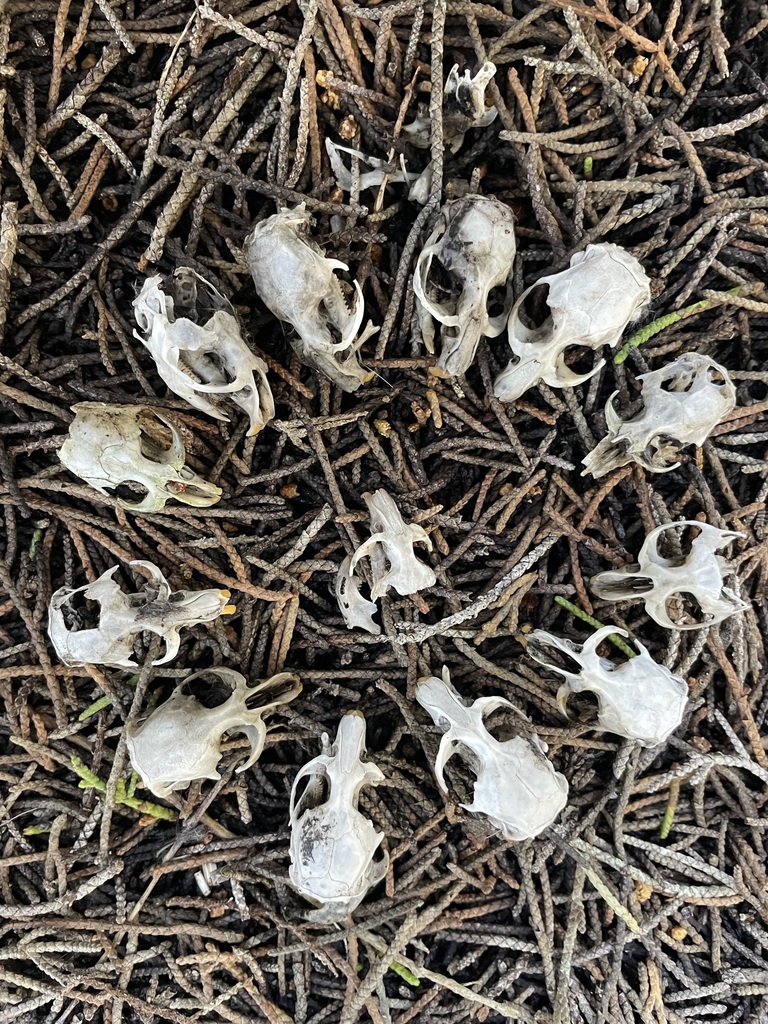
(c) Cricket Raspet, some rights reserved (CC BY) · licence
Family: Cricetidae · Class: Mammalia · Order: Rodentia
Conservation status: G5T3 S3
Microtus californicus vallicola (Owens Valley Vole) is a California animal in the Cricetidae family.
The Owens Valley vole (Microtus californicus vallicola) is a small rodent subspecies endemic to the Owens Valley of California. This subspecies represents one of the most geographically isolated populations of California vole, separated from other M. californicus populations by the Sierra Nevada mountains and Mojave Desert. Adults typically measure 140-170 mm in total length, with a tail comprising approximately one-third of the body length. The pelage is grayish-brown dorsally with lighter underparts, consistent with other California vole subspecies but adapted to the arid intermountain environment. The Owens Valley vole is restricted to the Owens Basin in Inyo County, California, extending from Fish Slough in the north to areas near Cartago in the south. This narrow north-south distribution spans approximately 160 kilometers along the valley floor. The subspecies has been geographically isolated from other California vole populations for more than 14,000 years due to Pleistocene climate change and mountain barriers (CDFW). Current confirmed populations occur at Fish Slough Ecological Reserve, along the Owens River near Black Rock, and at Cartago Springs Wildlife Area. The species occupies wetlands and lush grassy meadows where soil conditions allow for burrowing activity. Environmental characteristics of collection localities indicate a preference for areas with friable soils and abundant grasses, sedges, and herbaceous plants. These meadow habitats function as isolated islands within the surrounding xeric Mojave Desert plant communities. The voles require areas with sufficient moisture to support dense herbaceous vegetation, typically found near springs, seeps, or irrigation return flows. Like other California voles, the Owens Valley subspecies constructs networks of runways through vegetation and maintains an herbivorous diet consisting primarily of grasses and forbs. Breeding likely occurs throughout much of the year with peak activity during spring months, following patterns observed in other M. californicus populations. Recent genetic research revealed that Owens Valley voles co-exist with montane voles (Microtus montanus) at some locations, particularly Fish Slough Ecological Reserve (CDFW). The Owens Valley vole is designated as a California Species of Special Concern due to its restricted range and limited population data. The subspecies faces threats from habitat modification, water diversions affecting meadow hydrology, and grazing pressure. Natural aridity in the region limits available habitat to small, scattered wetland patches. Recent genetic analysis indicates healthy breeding populations exist throughout the subspecies' range, with roughly equal genetic richness across sites. However, the fragmented nature of suitable habitat and small population sizes make the subspecies vulnerable to local extirpations. Conservation efforts focus on protecting existing wetland habitats and maintaining hydrological conditions necessary for meadow persistence. The isolation that contributed to this subspecies' evolution now represents its primary conservation challenge, as habitat connectivity between populations remains extremely limited.
Classification
Class: Mammalia · Order: Rodentia · Family: Cricetidae
Conservation status
G5T3 S3
Frequently asked questions
How is Microtus californicus vallicola classified?
Microtus californicus vallicola belongs to class Mammalia, order Rodentia, family Cricetidae.
What family does Microtus californicus vallicola belong to?
Microtus californicus vallicola is in the Cricetidae family.
Is Microtus californicus vallicola protected or of conservation concern?
Microtus californicus vallicola carries the following status: G5T3 S3.
What is Microtus californicus vallicola?
The Owens Valley vole (Microtus californicus vallicola) is a small rodent subspecies endemic to the Owens Valley of California.
Is Microtus californicus vallicola found in California?
Yes. Microtus californicus vallicola is recorded in California in The California Species Project's catalogue.
Related species
Other California species in the same genus, family, or bioregion.
Data from The California Species Project — 14,000+ California species with verified data from CNPS, CDFW, USFWS, and more.