Microtus oregoni
Creeping Vole
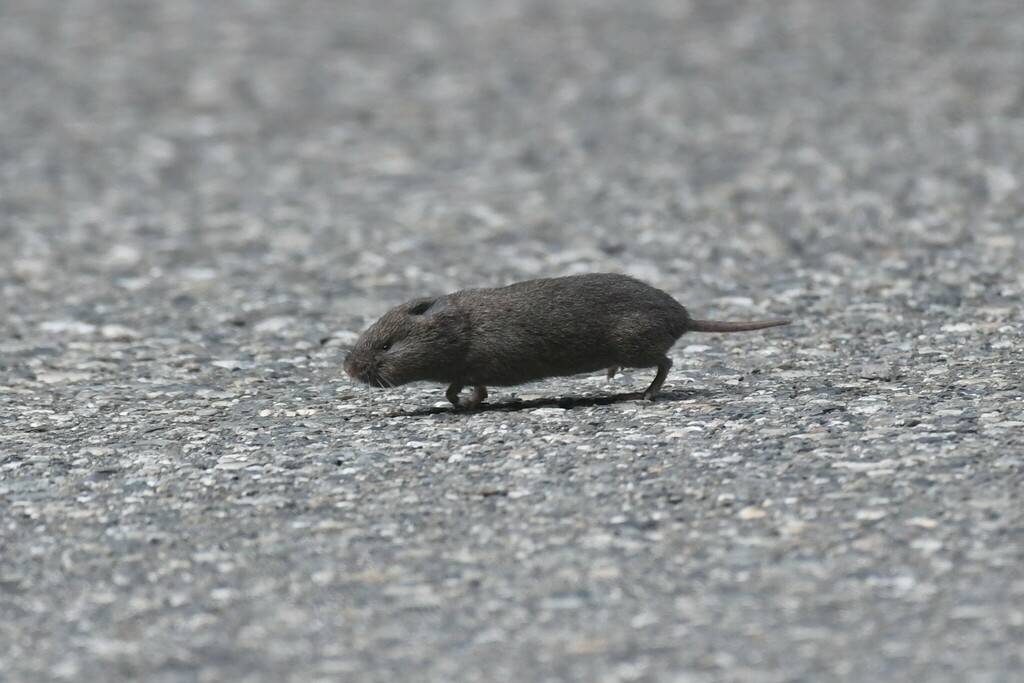
(c) Tristan Jobin, some rights reserved (CC BY) · licence
Family: Cricetidae · Class: Mammalia · Order: Rodentia
Microtus oregoni (Creeping Vole) is a California animal in the Cricetidae family.
The creeping vole is a small, short-tailed rodent endemic to the Pacific Northwest coastal region. Adults measure 95 to 115 mm (3.7 to 4.5 inches) in total length, with the tail comprising only 30 to 45 mm (1.2 to 1.8 inches). Body weight ranges from 14 to 22 grams (0.5 to 0.8 ounces). The dorsal pelage is dark brown to blackish-brown, while the ventral surface is slightly paler gray-brown. The small eyes and ears are nearly concealed by dense fur, and the short tail is sparsely haired and dark above, lighter below. Distinguished from other Microtus species by its exceptionally short tail and small size. The creeping vole's range extends along the Pacific coast from southwestern British Columbia through western Washington and Oregon to extreme northwestern California. In California, the species occurs only in Del Norte and Humboldt counties, representing the southern terminus of its distribution. Populations are restricted to coastal areas within approximately 50 kilometers (31 miles) of the ocean, typically at elevations below 300 meters (984 feet). Creeping voles inhabit dense, moist forests dominated by Douglas fir, western hemlock, and Sitka spruce. The species requires areas with thick ground cover including salmonberry, huckleberry, ferns, and dense moss layers. Populations are most abundant in old-growth and mature second-growth forests where the canopy creates consistent moisture conditions and supports lush understory vegetation. The species constructs shallow tunnel systems in the organic soil layer and leaf litter, rarely venturing onto bare ground. The diet consists primarily of green vegetation, including leaves, stems, and shoots of understory plants, mosses, and fungi. Creeping voles are active throughout the year, with peak activity occurring during crepuscular hours. Breeding occurs from March through September, with females producing two to four litters annually. Gestation lasts 21 to 23 days, and litter size ranges from two to six young, typically three to four. Young reach sexual maturity at approximately 35 to 40 days. Population densities fluctuate cyclically, with peaks occurring every three to four years. The creeping vole is not federally or state listed as threatened or endangered. However, the species faces potential conservation concerns due to its limited California range and habitat specificity. Logging activities that remove canopy cover and reduce understory complexity can eliminate suitable habitat. Climate change may affect the cool, moist conditions required by this species, particularly at the southern edge of its range in California. Habitat fragmentation from development and road construction poses additional threats to population connectivity. The species' dependence on old-growth forest characteristics makes it vulnerable to continued forest management practices that prioritize younger forest stands.
Classification
Class: Mammalia · Order: Rodentia · Family: Cricetidae
Frequently asked questions
How is Microtus oregoni classified?
Microtus oregoni belongs to class Mammalia, order Rodentia, family Cricetidae.
What family does Microtus oregoni belong to?
Microtus oregoni is in the Cricetidae family.
What is Microtus oregoni?
The creeping vole is a small, short-tailed rodent endemic to the Pacific Northwest coastal region.
Is Microtus oregoni found in California?
Yes. Microtus oregoni is recorded in California in The California Species Project's catalogue.
Related species
Other California species in the same genus, family, or bioregion.
Data from The California Species Project — 14,000+ California species with verified data from CNPS, CDFW, USFWS, and more.