Microtus townsendii
Townsend's Vole
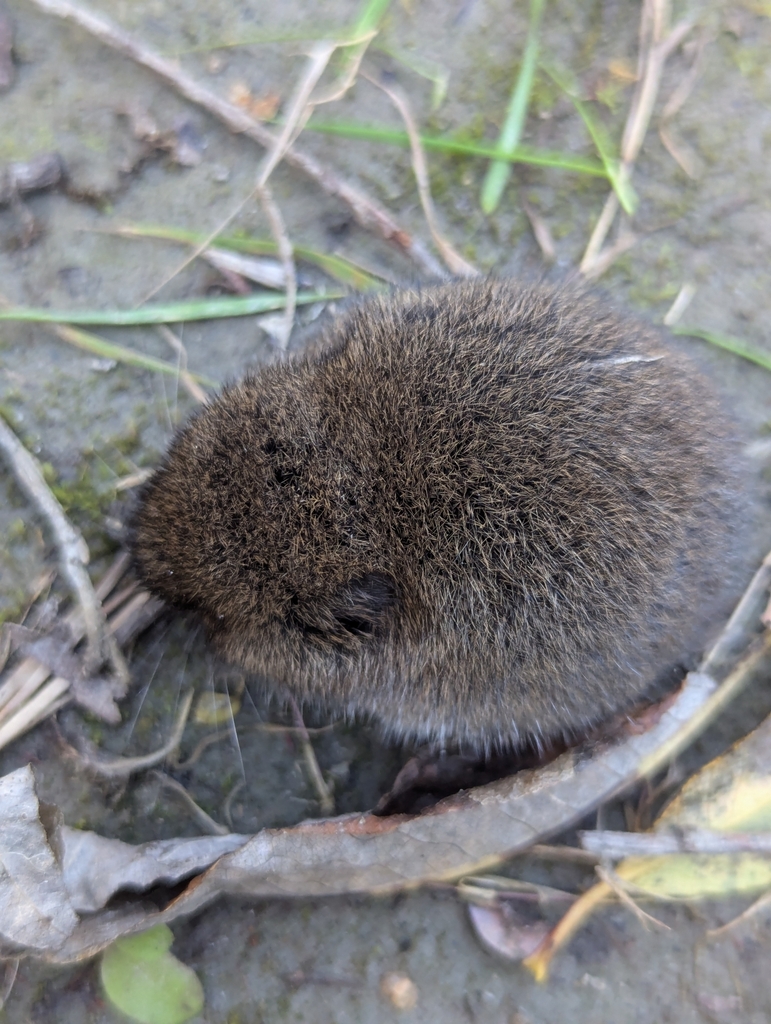
(c) Bryn, some rights reserved (CC BY) · licence
Family: Cricetidae · Class: Mammalia · Order: Rodentia
Microtus townsendii (Townsend's Vole) is a California animal in the Cricetidae family.
Townsend's vole is a medium-sized rodent with a robust, cylindrical body adapted for a fossorial lifestyle. Adults measure 140 to 200 mm (5.5 to 7.9 inches) in total length, with a relatively short tail comprising 35 to 65 mm (1.4 to 2.6 inches). Body weight ranges from 35 to 80 grams (1.2 to 2.8 ounces). The dense pelage is dark grayish-brown dorsally, grading to lighter gray ventrally. The ears are small and nearly concealed by fur, while the eyes are relatively small compared to other vole species. The tail is sparsely haired and bicolored, dark above and light below. Townsend's vole occurs along the Pacific Coast from southwestern British Columbia through western Washington and Oregon to northwestern California. In California, the species is found in coastal counties from Del Norte south to Mendocino County, with isolated populations potentially extending to Sonoma County. The distribution is closely tied to coastal prairie and wetland habitats within approximately 30 kilometers of the Pacific Ocean. The species inhabits coastal prairies, salt marshes, freshwater marshes, and adjacent grasslands. Townsend's vole shows a strong preference for areas with dense herbaceous vegetation, particularly sedges, rushes, and native grasses. Optimal habitat includes zones with high soil moisture content and areas subject to periodic flooding. The species constructs extensive runway systems through dense vegetation and creates burrows in soft, organic soils. Elevations range from sea level to approximately 150 meters (500 feet). Townsend's vole is primarily herbivorous, consuming grasses, sedges, rushes, and forbs. The diet varies seasonally, with green vegetation preferred during growing seasons and roots, bulbs, and bark utilized during winter months. The species is active year-round with peak activity during crepuscular hours. Breeding occurs from March through September, with females producing multiple litters annually. Gestation lasts approximately 21 days, and litter sizes range from 2 to 8 young, averaging 4 to 5 offspring. Sexual maturity is reached at 4 to 6 weeks of age. Townsend's vole populations have experienced significant declines throughout their range due to habitat loss and fragmentation. Conversion of coastal prairies to agriculture and urban development has eliminated substantial portions of suitable habitat. Additionally, invasive plant species alter vegetation structure and reduce habitat quality. Sea level rise and increased storm intensity associated with climate change pose emerging threats to coastal populations. The species is not federally or state listed but is considered sensitive by land management agencies. Conservation efforts focus on habitat preservation and restoration of native coastal prairie ecosystems. Several populations persist within protected areas including Point Reyes National Seashore and various state parks along the California coast.
Classification
Class: Mammalia · Order: Rodentia · Family: Cricetidae
Frequently asked questions
How is Microtus townsendii classified?
Microtus townsendii belongs to class Mammalia, order Rodentia, family Cricetidae.
What family does Microtus townsendii belong to?
Microtus townsendii is in the Cricetidae family.
What is Microtus townsendii?
Townsend's vole is a medium-sized rodent with a robust, cylindrical body adapted for a fossorial lifestyle.
Is Microtus townsendii found in California?
Yes. Microtus townsendii is recorded in California in The California Species Project's catalogue.
Related species
Other California species in the same genus, family, or bioregion.
Data from The California Species Project — 14,000+ California species with verified data from CNPS, CDFW, USFWS, and more.