Micrurapteryx salicifoliella
Willow Leafblotch Miner Moth
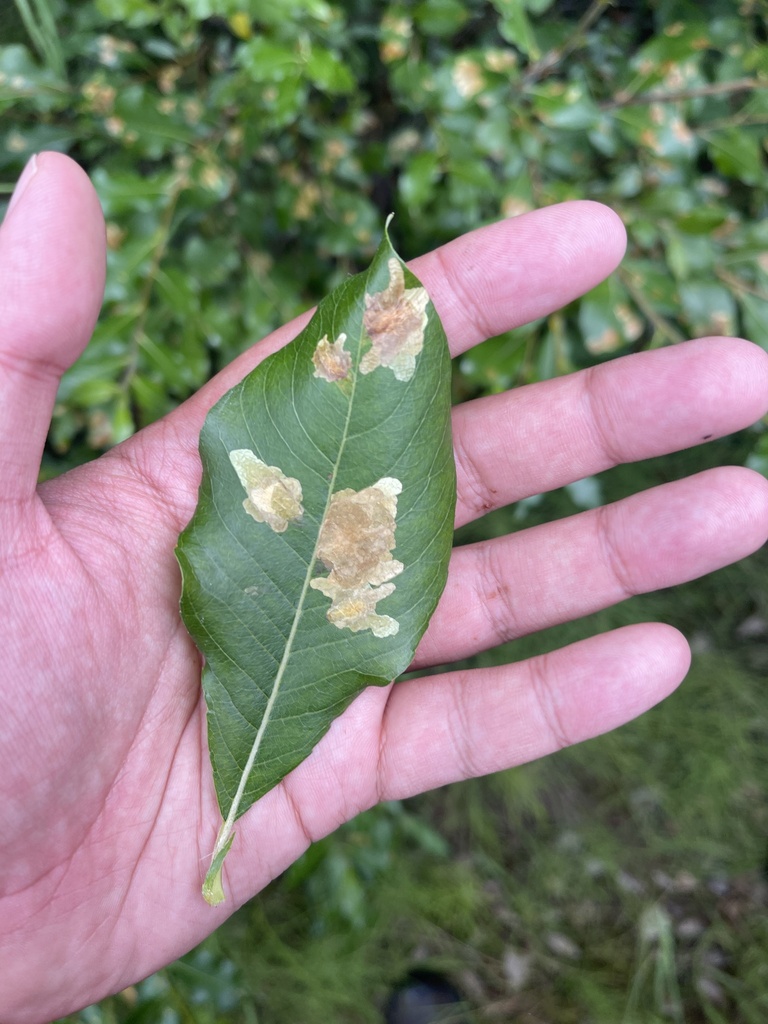
(c) Brandon Corder, some rights reserved (CC BY) · licence
Family: Gracillariidae · Class: Insecta · Order: Lepidoptera
Micrurapteryx salicifoliella (Willow Leafblotch Miner Moth) is a California animal in the Gracillariidae family.
The Willow Leafblotch Miner Moth (Micrurapteryx salicifoliella) is a small gracillariid moth with a wingspan of approximately 9 mm (0.35 inches). This microlepidopteran exhibits the characteristic narrow wings and delicate structure typical of leaf-mining moths. The forewings display a pattern that can be distinguished from the closely related Micrurapteryx occulta by having fewer white strigulae along the costal margin, though definitive identification often requires examination of genitalia or DNA analysis (BugGuide). The species occurs across a broad range in North America, with confirmed records from California and scattered populations throughout the continent extending into Alaska (BugGuide). The moth's distribution appears closely tied to the availability of suitable host plants, with documented infestations across multiple willow species in various regions. Historical records indicate the species was first described by Chambers in 1872 from North American specimens. Willow Leafblotch Miner Moths inhabit areas where willow trees (Salix species) are present, including riparian zones, wetland margins, and areas with naturally occurring or cultivated willows. The larvae create characteristic blotch mines in willow leaves, which serve as both feeding sites and developmental chambers. Research in Alaska documented infestations on ten different willow species, with varying degrees of severity depending on the specific willow species and local environmental conditions (Furniss et al. 2001). Adult moths are primarily active from July through October, with peak activity during late summer months (Moth Photographers Group). The larvae function as leaf miners, creating distinctive blotch-shaped feeding patterns within willow leaves rather than the serpentine tunnels produced by some other mining species. The mining behavior allows larvae to develop while protected within the leaf tissue, feeding on the nutritious mesophyll cells. Host plant relationships include multiple Salix species, demonstrating the moth's ability to utilize various willow taxa across its range. The species completes its development as an internal leaf feeder, with pupation likely occurring within the mine or in nearby protected locations. Currently, Micrurapteryx salicifoliella does not appear on federal or state endangered species lists. The species' broad distribution across North America and its ability to utilize multiple host plant species suggest stable populations, though specific population data and trend analyses have not been extensively documented. The moth's association with willows, which are generally common in appropriate habitats, provides some buffer against habitat-related threats. However, like many specialized herbivorous insects, the species could be vulnerable to habitat modification, pesticide applications, or climate-induced changes in willow distribution patterns. The taxonomic complexity within the Micrurapteryx genus, where some species can only be reliably distinguished through molecular or morphological analysis, may complicate accurate population assessments and conservation planning efforts.
Classification
Class: Insecta · Order: Lepidoptera · Family: Gracillariidae
Frequently asked questions
How is Micrurapteryx salicifoliella classified?
Micrurapteryx salicifoliella belongs to class Insecta, order Lepidoptera, family Gracillariidae.
What family does Micrurapteryx salicifoliella belong to?
Micrurapteryx salicifoliella is in the Gracillariidae family.
What is Micrurapteryx salicifoliella?
The Willow Leafblotch Miner Moth (Micrurapteryx salicifoliella) is a small gracillariid moth with a wingspan of approximately 9 mm (0.35 inches).
Is Micrurapteryx salicifoliella found in California?
Yes. Micrurapteryx salicifoliella is recorded in California in The California Species Project's catalogue.
Related species
Other California species in the same genus, family, or bioregion.
Data from The California Species Project — 14,000+ California species with verified data from CNPS, CDFW, USFWS, and more.