Miloderes nelsoni
Nelson's Miloderes Weevil
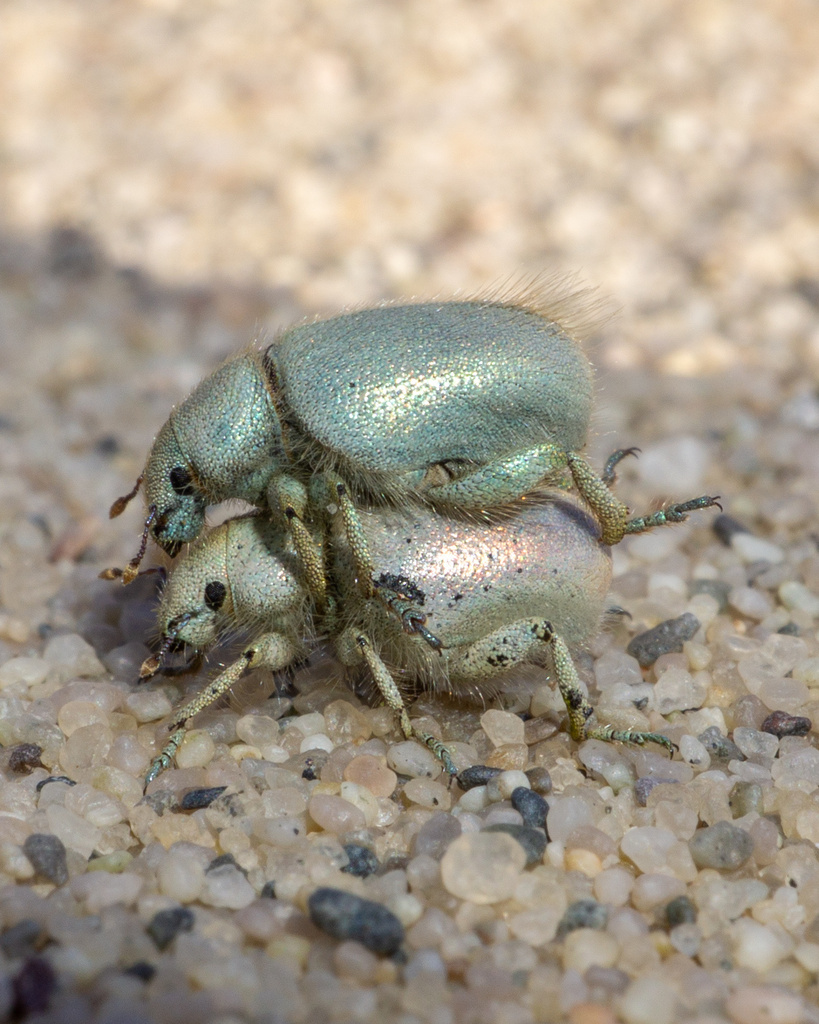
(c) Matt Berger, some rights reserved (CC BY) · licence
Family: Curculionidae · Class: Insecta · Order: Coleoptera
Conservation status: G2 S2
Miloderes nelsoni (Nelson's Miloderes Weevil) is a California animal in the Curculionidae family.
Nelson's Miloderes weevil is a small beetle in the family Curculionidae, endemic to California's desert regions. As a member of the weevil family, this species possesses the characteristic elongated snout (rostrum) typical of curculionids, though specific morphological details have not been extensively documented in the scientific literature. This species has an extremely restricted range within California, contributing to its conservation concern. The weevil is associated with specialized desert habitats, particularly sand dune systems. Based on available records, Nelson's Miloderes weevil appears to be closely tied to the Mojave Desert region, where it occupies a highly specific ecological niche. The species inhabits stabilized and partially-stabilized sand dune environments, ecosystems that are particularly vulnerable to disturbance. These dune systems represent unique habitat types within the broader desert landscape, supporting specialized communities of plants and animals adapted to sandy substrates and the associated microclimate conditions. The weevil's habitat requirements appear to be quite narrow, limiting its distribution to these specialized sand dune formations. Detailed information about Nelson's Miloderes weevil's biology, behavior, and ecological relationships remains limited in the published scientific literature. Like other weevils, this species likely feeds on plant material during both larval and adult stages, though specific host plant relationships have not been well documented. The timing of reproductive cycles, seasonal activity patterns, and population dynamics are areas where scientific knowledge is particularly lacking. Nelson's Miloderes weevil has been assigned a Global/State conservation rank of G2 S2, indicating it is imperiled both globally and within California due to rarity and vulnerability to extinction. This ranking reflects the species' restricted range, specialized habitat requirements, and small population size. The weevil appears on the U.S. Fish and Wildlife Service species tracking system, though it currently lacks federal protection under the Endangered Species Act. The primary threats to this species likely stem from habitat loss and degradation of desert dune systems. Off-road vehicle recreation poses a significant risk to stabilized sand dune habitats, as vehicle traffic can destabilize dune formations and alter the plant communities that support specialized invertebrates like Nelson's Miloderes weevil. Climate change may also impact this species through alterations to precipitation patterns and temperature regimes in desert environments. Conservation of Nelson's Miloderes weevil depends on protecting the remaining intact sand dune habitats within its range. The species' extreme habitat specificity makes it particularly vulnerable to localized disturbances. Research priorities include better documentation of the species' distribution, population status, host plant relationships, and specific habitat requirements. Scientific documentation for this species remains limited. The information presented here is based on available conservation databases and habitat assessments. Additional field studies are needed to fully understand this weevil's biology and develop effective conservation strategies for its specialized desert dune habitat.
Classification
Class: Insecta · Order: Coleoptera · Family: Curculionidae
Conservation status
G2 S2
Frequently asked questions
How is Miloderes nelsoni classified?
Miloderes nelsoni belongs to class Insecta, order Coleoptera, family Curculionidae.
What family does Miloderes nelsoni belong to?
Miloderes nelsoni is in the Curculionidae family.
Is Miloderes nelsoni protected or of conservation concern?
Miloderes nelsoni carries the following status: G2 S2.
What is Miloderes nelsoni?
Nelson's Miloderes weevil is a small beetle in the family Curculionidae, endemic to California's desert regions.
Is Miloderes nelsoni found in California?
Yes. Miloderes nelsoni is recorded in California in The California Species Project's catalogue.
Related species
Other California species in the same genus, family, or bioregion.
Data from The California Species Project — 14,000+ California species with verified data from CNPS, CDFW, USFWS, and more.