Mimoschinia rufofascialis
Rufous-banded Crambid Moth
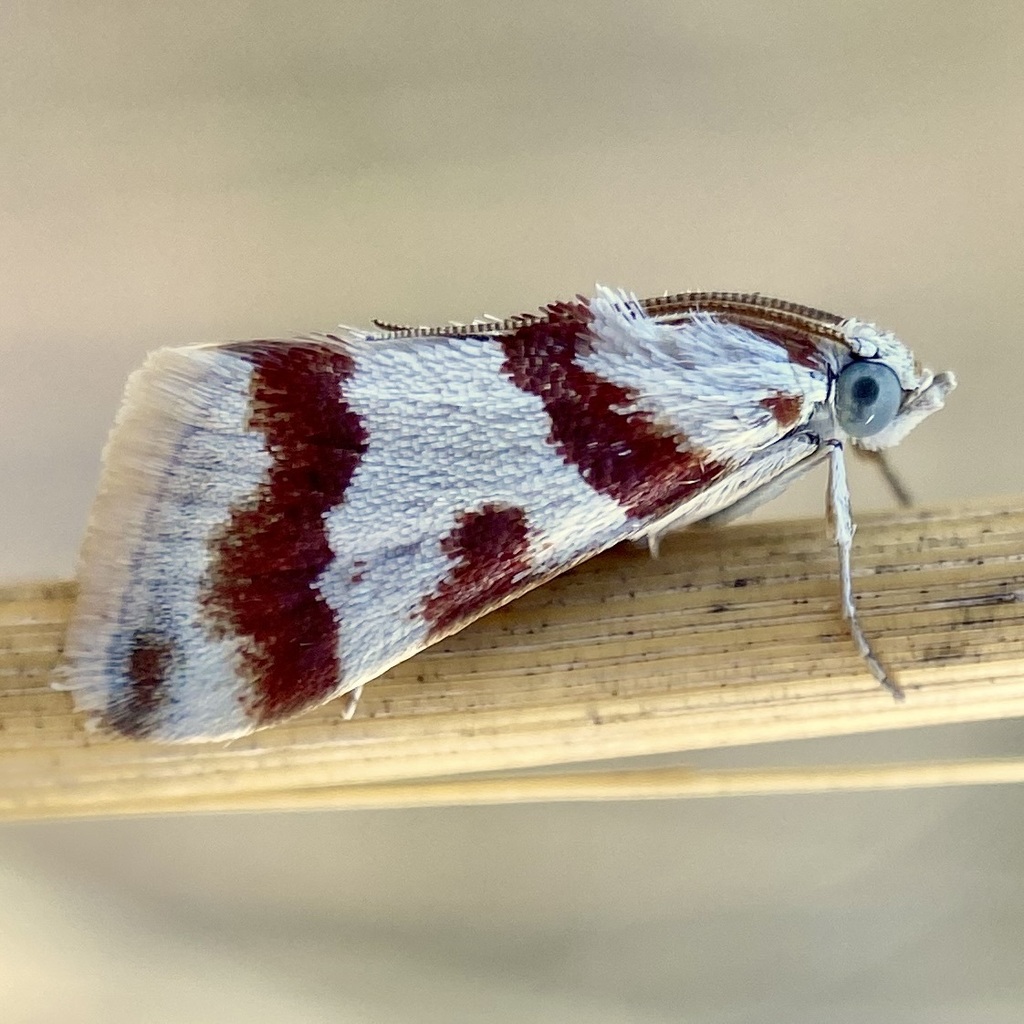
(c) Sue Carnahan, some rights reserved (CC BY) · licence
Family: Crambidae · Class: Insecta · Order: Lepidoptera
Mimoschinia rufofascialis (Rufous-banded Crambid Moth) is a California animal in the Crambidae family.
The Rufous-banded Crambid Moth (Mimoschinia rufofascialis) is a small moth in the family Crambidae, one of the largest families of Lepidoptera. This species exhibits the typical crambid moth characteristics with narrow forewings and relatively broad hindwings. The common name derives from the distinctive rufous or reddish-brown banding pattern across the wings, which serves as the primary identifying feature for field identification. Adult moths have a wingspan typically ranging from 15 to 25 millimeters (0.6 to 1.0 inches), consistent with other members of the Mimoschinia genus. The forewings display a pale ground color with prominent rufous bands, while the hindwings are generally lighter in coloration with reduced markings. The current distribution of Mimoschinia rufofascialis within California remains poorly documented in available literature. The species belongs to a genus that is primarily found in western North America, with several species endemic to California's diverse ecological regions. Without comprehensive survey data, the precise range limits and population distribution patterns require further investigation by lepidopterists and entomological researchers. Habitat requirements for this species align with typical crambid moth preferences for areas supporting their larval host plants. Many crambid moths utilize grasses and herbaceous plants as larval food sources, with adults often found in grasslands, chaparral margins, and open woodland areas. The elevation range and specific microhabitat preferences for M. rufofascialis have not been thoroughly documented in current taxonomic literature, indicating a need for focused ecological studies. The life cycle follows the standard lepidopteran pattern of complete metamorphosis through egg, larval, pupal, and adult stages. Adult flight periods for California crambid moths typically occur during warmer months, with many species showing peak activity from late spring through early fall. Larvae likely feed on specific host plants, though the exact plant associations for this species require verification through field observations and rearing studies. Adults are primarily nocturnal, attracted to artificial light sources during evening and nighttime hours. The conservation status of Mimoschinia rufofascialis remains unassessed at federal and state levels, with no current listing under the Endangered Species Act or California Endangered Species Act. This absence of formal conservation designation may reflect limited knowledge of population trends, distribution, and ecological requirements rather than actual abundance or stability. Many moth species, particularly those with restricted ranges or specialized habitat requirements, face potential threats from habitat modification, urbanization, invasive plant species displacing native host plants, and climate change effects on seasonal timing and plant community composition. The lack of comprehensive population data and ecological studies represents a significant knowledge gap for assessing conservation needs. Future research priorities should include systematic surveys to determine current distribution, population estimates, host plant identification, and habitat requirements to inform potential conservation strategies and population monitoring protocols.
Classification
Class: Insecta · Order: Lepidoptera · Family: Crambidae
Frequently asked questions
How is Mimoschinia rufofascialis classified?
Mimoschinia rufofascialis belongs to class Insecta, order Lepidoptera, family Crambidae.
What family does Mimoschinia rufofascialis belong to?
Mimoschinia rufofascialis is in the Crambidae family.
What is Mimoschinia rufofascialis?
The Rufous-banded Crambid Moth (Mimoschinia rufofascialis) is a small moth in the family Crambidae, one of the largest families of Lepidoptera.
Is Mimoschinia rufofascialis found in California?
Yes. Mimoschinia rufofascialis is recorded in California in The California Species Project's catalogue.
Related species
Other California species in the same genus, family, or bioregion.
Data from The California Species Project — 14,000+ California species with verified data from CNPS, CDFW, USFWS, and more.