Mimus polyglottos
Northern Mockingbird
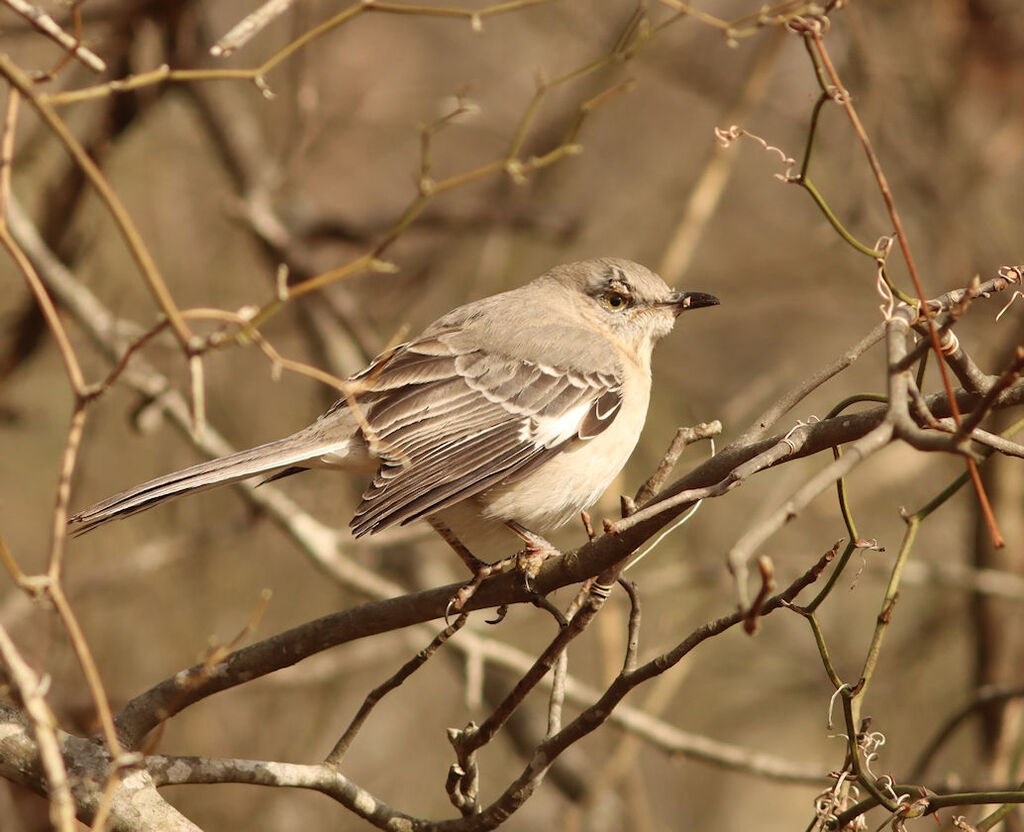
(c) hr_dragonfly, some rights reserved (CC BY) · licence
Family: Mimidae · Class: Aves · Order: Passeriformes
Mimus polyglottos (Northern Mockingbird) is a California animal in the Mimidae family.
The Northern Mockingbird is a medium-sized passerine measuring 20-28 cm (8-11 inches) in length with a wingspan of 31-35 cm (12-14 inches). Adults weigh 40-58 grams (1.4-2.0 ounces). The species displays gray-brown upperparts and pale gray to white underparts. Two prominent white wing bars are visible on each wing, and white outer tail feathers create distinctive flashing patterns during flight. Males and females appear similar, though males average slightly larger. Juveniles show more brownish plumage with spotted breasts that fade as they mature. Historically, Northern Mockingbirds were primarily restricted to the southeastern United States, but their range has expanded significantly northward and westward since the early 1900s. In California, the species first appeared in the 1940s and has since established populations throughout much of the state. They now occur from sea level to approximately 1,800 meters (6,000 feet) elevation, with breeding populations documented in the Central Valley, coastal regions, and urban areas of Southern California. The species is less common in mountainous and heavily forested regions of Northern California. Northern Mockingbirds inhabit open and semi-open environments including suburban neighborhoods, parks, agricultural areas, scrublands, and desert edges. They prefer areas with scattered trees and shrubs that provide nesting sites and perches for foraging and territorial displays. The species adapts well to human-modified landscapes and commonly nests in ornamental vegetation, hedgerows, and garden plantings. Dense forests and high-elevation coniferous habitats are generally avoided. These birds are omnivorous, consuming insects, spiders, earthworms, fruits, and berries. During breeding season, animal matter comprises approximately 60-70% of their diet, shifting to more fruits and berries during fall and winter months. Northern Mockingbirds are renowned for their vocal abilities, with males capable of learning and mimicking songs of other bird species, mechanical sounds, and even amphibian calls. Individual repertoires may include 50-200 different song types. Breeding occurs from March through August in California, with pairs producing 2-3 broods annually. Females construct cup-shaped nests 1-3 meters (3-10 feet) above ground in dense shrubs or small trees. Clutches contain 2-6 eggs, typically 3-4, which are incubated for 12-13 days. Both parents feed nestlings, which fledge after 10-15 days. Northern Mockingbirds are not federally or state listed and maintain stable populations across their expanded range. The species is classified as Least Concern by the International Union for Conservation of Nature. Population trends in California show continued expansion and establishment in suitable habitats. According to the North American Breeding Bird Survey, populations have remained relatively stable since the 1960s following initial range expansion. Primary conservation concerns are minimal, though habitat loss in some urban areas and potential impacts from pesticide use on insect prey may affect local populations. Climate change may further facilitate northward range expansion but is not considered a significant threat to the species' overall conservation status.
Classification
Class: Aves · Order: Passeriformes · Family: Mimidae
Frequently asked questions
How is Mimus polyglottos classified?
Mimus polyglottos belongs to class Aves, order Passeriformes, family Mimidae.
What family does Mimus polyglottos belong to?
Mimus polyglottos is in the Mimidae family.
What is Mimus polyglottos?
The Northern Mockingbird is a medium-sized passerine measuring 20-28 cm (8-11 inches) in length with a wingspan of 31-35 cm (12-14 inches).
Is Mimus polyglottos found in California?
Yes. Mimus polyglottos is recorded in California in The California Species Project's catalogue.
Related species
Other California species in the same genus, family, or bioregion.
Data from The California Species Project — 14,000+ California species with verified data from CNPS, CDFW, USFWS, and more.