Mniotilta varia
Black-and-white Warbler
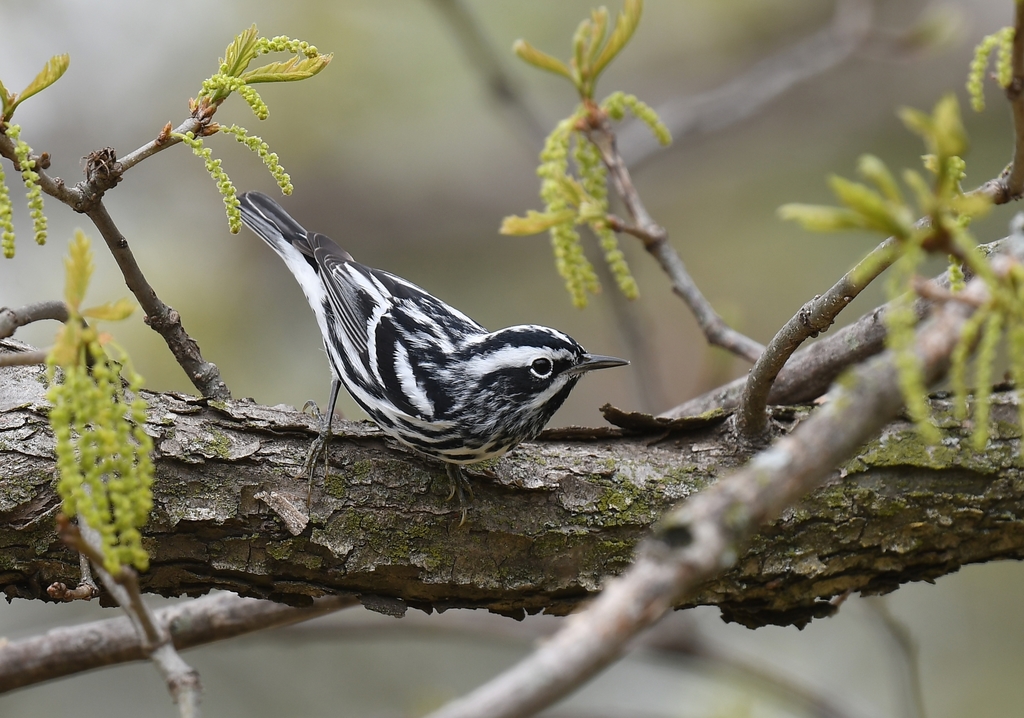
no rights reserved · CC0
Family: Parulidae · Class: Aves · Order: Passeriformes
Mniotilta varia (Black-and-white Warbler) is a California animal in the Parulidae family.
The Black-and-white Warbler is a small passerine bird measuring 11 to 13 cm (4.3 to 5.1 inches) in length with a wingspan of 17 to 22 cm (6.7 to 8.7 inches). Adults weigh between 8 to 15 grams. Males display distinctive black and white striped plumage throughout the body, with bold black stripes on the crown, back, wings, and flanks contrasting sharply with white underparts and wing bars. Females exhibit similar but more subdued striping, with grayer tones replacing the deep black markings of males. Both sexes possess a slightly decurved bill adapted for gleaning insects from bark crevices. The species breeds across eastern North America from southeastern Canada south to the Gulf Coast states. In California, Black-and-white Warblers occur primarily as uncommon migrants and occasional winter residents along the coast and in desert areas. Fall migration typically occurs from August through October, while spring passage is documented from March through May. The species is recorded most frequently in coastal counties including San Diego, Orange, Los Angeles, Ventura, Santa Barbara, and San Luis Obispo, with scattered records inland. During migration and winter in California, Black-and-white Warblers utilize a variety of habitats including riparian woodlands, oak woodlands, mixed coniferous forests, urban parks, and desert oases. The species shows particular affinity for areas with mature trees providing rough bark surfaces. Elevation records in California range from sea level to approximately 2,400 meters (7,900 feet) in mountain areas. In their breeding range, they prefer mature deciduous and mixed forests with substantial canopy cover. Black-and-white Warblers exhibit unique foraging behavior among wood-warblers, creeping along tree trunks and major branches in a manner similar to nuthatches. They systematically search bark crevices and under loose bark for insects, spiders, and other arthropods using their specialized bill. This nuthatch-like foraging strategy distinguishes them from other warbler species that typically glean from foliage or catch insects in flight. The species constructs cup-shaped nests on the ground, usually at the base of trees or stumps, concealed by vegetation or fallen logs. Breeding occurs from May through July in their eastern range, with females laying 3 to 6 white eggs marked with brown or reddish spots. Incubation lasts 10 to 12 days, performed exclusively by the female. Both parents feed nestlings, which fledge after 8 to 12 days. The species typically produces one brood per season, though second broods are occasionally documented in southern portions of the breeding range. The Black-and-white Warbler is not federally listed and maintains stable populations across most of its range according to breeding bird surveys. The species is classified as Least Concern by the International Union for Conservation of Nature. In California, it remains an uncommon but regular migrant and winter visitor with no significant conservation concerns. Primary threats include habitat loss on breeding grounds and potential impacts from climate change affecting migration timing and wintering habitat availability.
Classification
Class: Aves · Order: Passeriformes · Family: Parulidae
Frequently asked questions
How is Mniotilta varia classified?
Mniotilta varia belongs to class Aves, order Passeriformes, family Parulidae.
What family does Mniotilta varia belong to?
Mniotilta varia is in the Parulidae family.
What is Mniotilta varia?
The Black-and-white Warbler is a small passerine bird measuring 11 to 13 cm (4.3 to 5.1 inches) in length with a wingspan of 17 to 22 cm (6.7 to 8.7 inches).
Is Mniotilta varia found in California?
Yes. Mniotilta varia is recorded in California in The California Species Project's catalogue.
Related species
Other California species in the same genus, family, or bioregion.
Data from The California Species Project — 14,000+ California species with verified data from CNPS, CDFW, USFWS, and more.