Mojavia achemonalis
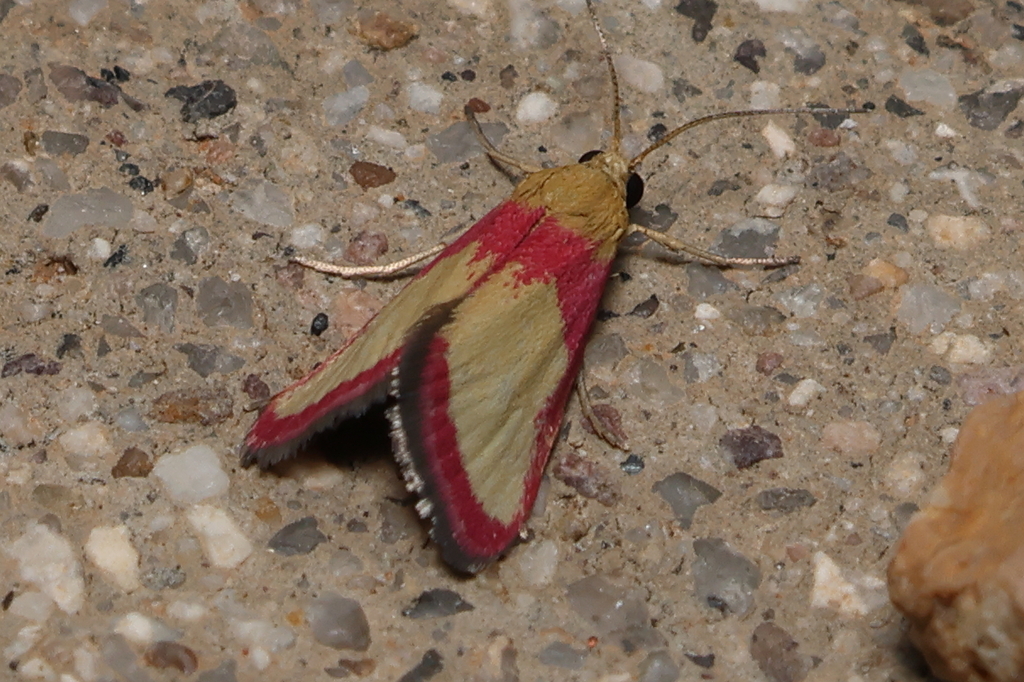
(c) Isaac Ethington, some rights reserved (CC BY) · licence
Family: Crambidae · Class: Insecta · Order: Lepidoptera
Mojavia achemonalis is a California animal in the Crambidae family.
Mojavia achemonalis is a moth species in the family Crambidae, subfamily Pyraustinae. This species represents one of the less well-documented members of the North American pyraustine fauna, with limited published information available regarding its morphological characteristics and ecological requirements. The adult moths of Mojavia achemonalis display the typical crambid body plan, with a slender build and relatively narrow forewings. Like other members of the Pyraustinae, adults possess functional mouthparts and are likely active nectar feeders. Detailed morphological descriptions including wingspan measurements, wing patterns, and coloration remain poorly documented in the accessible literature. The geographic range of Mojavia achemonalis appears to be restricted to western North America, with records suggesting occurrence in arid and semi-arid regions. The genus name Mojavia suggests an association with the Mojave Desert region, though the complete distributional range within California and adjacent states requires further documentation through systematic survey work. Habitat preferences for this species remain largely undocumented. Based on the presumed desert association suggested by the genus name, Mojavia achemonalis likely occurs in xeric environments characterized by sparse vegetation and sandy or rocky substrates. Elevation range, specific plant community associations, and microhabitat requirements have not been established through published research. The life history and ecological relationships of Mojavia achemonalis are poorly understood. Larval host plants remain unknown, though members of the subfamily Pyraustinae typically feed on herbaceous plants, with many species showing preferences for plants in families such as Asteraceae, Chenopodiaceae, or Fabaceae. Flight period, number of generations per year, and overwintering stage have not been documented. Adult behavior, including mating patterns, flight activity periods, and response to artificial lights, requires investigation. No formal conservation status has been assigned to Mojavia achemonalis at federal or state levels. The apparent rarity of records and limited distributional data suggest this species may have a restricted range or occur at low population densities. However, the lack of comprehensive survey data makes it difficult to assess population trends or conservation needs. Desert habitats in California face ongoing pressures from urban development, recreational activities, and climate change, which could potentially impact specialized desert-adapted species. The taxonomic status and systematic relationships of Mojavia achemonalis within the Pyraustinae require clarification through modern molecular and morphological analysis. Further research is needed to document basic biological parameters, establish distributional limits, identify larval host plants, and assess conservation status. Systematic surveys in appropriate desert habitats could help determine the current status and ecological requirements of this poorly known moth species.
Classification
Class: Insecta · Order: Lepidoptera · Family: Crambidae
Frequently asked questions
How is Mojavia achemonalis classified?
Mojavia achemonalis belongs to class Insecta, order Lepidoptera, family Crambidae.
What family does Mojavia achemonalis belong to?
Mojavia achemonalis is in the Crambidae family.
What is Mojavia achemonalis?
Mojavia achemonalis is a moth species in the family Crambidae, subfamily Pyraustinae.
Is Mojavia achemonalis found in California?
Yes. Mojavia achemonalis is recorded in California in The California Species Project's catalogue.
Related species
Other California species in the same genus, family, or bioregion.
Data from The California Species Project — 14,000+ California species with verified data from CNPS, CDFW, USFWS, and more.