Mola mola
Common Mola
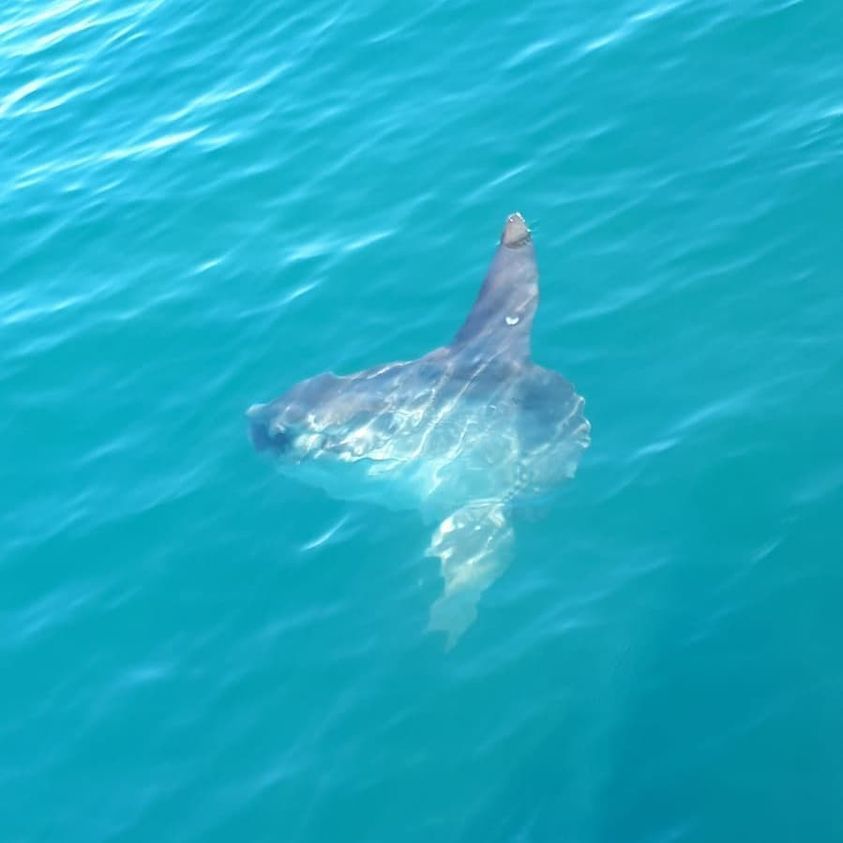
(c) Sidonio Paes, some rights reserved (CC BY) · licence
Family: Molidae · Class: Actinopterygii · Order: Tetraodontiformes
Mola mola (Common Mola) is a California animal in the Molidae family.
The Common Mola (Mola mola) is the world's largest bony fish, capable of reaching massive proportions. Adults can measure up to 3.3 meters (11 feet) in length and weigh over 2,300 kilograms (5,000 pounds). The body is laterally compressed and nearly circular when viewed from the side, lacking a true tail fin. Instead, the body terminates in a rounded structure called a clavus, formed by the convergence of the dorsal and anal fins. The skin is thick and leathery, covered with a mucus layer, and coloration ranges from silvery-gray to brown with darker mottling. Common Mola have a cosmopolitan distribution in tropical and temperate oceans worldwide. In California waters, they are found along the entire coast, from nearshore areas to the open ocean. The species ranges from surface waters to depths of approximately 600 meters (1,970 feet), though they are most commonly observed in the upper 200 meters (656 feet) of the water column. These pelagic fish inhabit open ocean environments, preferring areas where warm and cold water masses meet. They are frequently found in upwelling zones and areas with high concentrations of jellyfish, their primary prey. Common Mola are often observed near the surface, where they engage in thermoregulatory behavior by basking on their sides, allowing seabirds to remove parasites from their skin. Common Mola are primarily gelatinous zooplankton specialists, with jellyfish comprising up to 90% of their diet. They also consume salps, ctenophores, small fish, squid, and crustaceans. Despite their massive size and seemingly cumbersome appearance, these fish are capable swimmers that can dive to significant depths in pursuit of prey. Their swimming style is unique among large fish, relying primarily on undulations of their dorsal and anal fins rather than body flexion. Reproduction occurs in open ocean waters, with females capable of producing up to 300 million eggs, more than any other known vertebrate. The larval stage is dramatically different from adults, featuring large spines and a more conventional fish-like appearance. As of December 2025, the Common Mola does not hold federal or state endangered species status. However, the species faces several anthropogenic threats including ship strikes, entanglement in fishing gear, and ingestion of plastic debris, which they may mistake for jellyfish. Climate change poses additional concerns through potential alterations to jellyfish populations and ocean temperature patterns. The species is also targeted by some fisheries and is considered a delicacy in certain regions. While population trends are not well-documented due to their pelagic lifestyle, increased stranding events and bycatch reports suggest potential population pressures. The Common Mola's slow reproductive maturity and specific dietary requirements make them particularly vulnerable to ecosystem changes and human impacts.
Classification
Class: Actinopterygii · Order: Tetraodontiformes · Family: Molidae
Frequently asked questions
How is Mola mola classified?
Mola mola belongs to class Actinopterygii, order Tetraodontiformes, family Molidae.
What family does Mola mola belong to?
Mola mola is in the Molidae family.
What is Mola mola?
The Common Mola (Mola mola) is the world's largest bony fish, capable of reaching massive proportions.
Is Mola mola found in California?
Yes. Mola mola is recorded in California in The California Species Project's catalogue.
More California species
This species has no close relatives in our California data — here are other species to explore.
Data from The California Species Project — 14,000+ California species with verified data from CNPS, CDFW, USFWS, and more.