Molothrus aeneus
Bronzed Cowbird
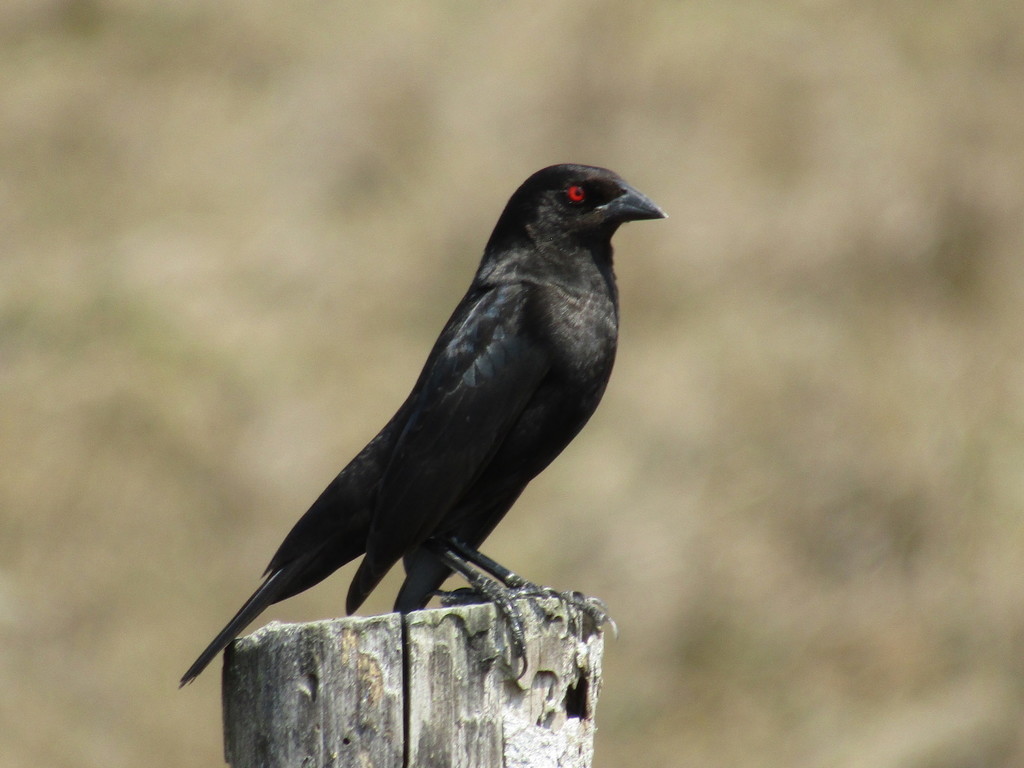
(c) Adrianh M. Orozco, some rights reserved (CC BY) · licence
Family: Icteridae · Class: Aves · Order: Passeriformes
Molothrus aeneus (Bronzed Cowbird) is a California animal in the Icteridae family.
The Bronzed Cowbird is a medium-sized blackbird measuring 18-20 cm (7.1-7.9 inches) in length with a wingspan of 30-35 cm (11.8-13.8 inches). Males are notably larger than females and display iridescent bronze-black plumage with a distinctive thick, conical bill and bright red eyes. During breeding season, males develop a pronounced neck ruff that enhances their display posture. Females are smaller and more subdued, with dull brown to grayish-brown plumage and dark eyes. Both sexes have thick necks and relatively short tails compared to other cowbird species. Historically limited to extreme southern Texas and Mexico, the Bronzed Cowbird has expanded its range northward and westward since the 1950s. The species now occurs regularly in southern Arizona, southern New Mexico, and southern California. In California, breeding populations are established in the Imperial Valley, Coachella Valley, and portions of Riverside and San Bernardino counties. The species also occurs as a vagrant in other southwestern states and has been recorded as far north as Colorado and Utah during migration periods. Bronzed Cowbirds inhabit open and semi-open landscapes including agricultural areas, riparian woodlands, desert scrub, suburban areas with scattered trees, and livestock ranches. The species shows a strong association with cattle and other grazing animals, following herds to feed on insects stirred up by their movement. They occur from sea level to approximately 1,500 meters (4,900 feet) elevation and prefer areas with a mixture of open foraging grounds and scattered trees or shrubs for perching and nesting sites. This species is an obligate brood parasite, laying eggs in the nests of other bird species rather than building their own nests. Female Bronzed Cowbirds parasitize over 100 host species, with particular preference for orioles, tanagers, cardinals, and various flycatcher species. Females lay 1-2 glossy, pale blue to greenish eggs per host nest, typically between March and August. Males establish territories and perform elaborate courtship displays involving bill-pointing, wing-spreading, and vocalizations. The species feeds primarily on seeds, grains, and insects, often foraging in flocks during non-breeding seasons. Their diet includes grasshoppers, beetles, caterpillars, and various grass and forb seeds. The Bronzed Cowbird is not federally or state listed and maintains stable populations across most of its range as of December 2025. The species has actually benefited from human activities including agriculture, livestock ranching, and urban development, which have created suitable habitat. Range expansion continues in some areas, though populations in heavily urbanized regions may face challenges from habitat fragmentation. Unlike some cowbird species, the Bronzed Cowbird has not been identified as a significant conservation threat to its host species, partly due to its relatively recent colonization of many areas and lower parasitism rates compared to Brown-headed Cowbirds.
Classification
Class: Aves · Order: Passeriformes · Family: Icteridae
Frequently asked questions
How is Molothrus aeneus classified?
Molothrus aeneus belongs to class Aves, order Passeriformes, family Icteridae.
What family does Molothrus aeneus belong to?
Molothrus aeneus is in the Icteridae family.
What is Molothrus aeneus?
The Bronzed Cowbird is a medium-sized blackbird measuring 18-20 cm (7.1-7.9 inches) in length with a wingspan of 30-35 cm (11.8-13.8 inches).
Is Molothrus aeneus found in California?
Yes. Molothrus aeneus is recorded in California in The California Species Project's catalogue.
Related species
Other California species in the same genus, family, or bioregion.
Data from The California Species Project — 14,000+ California species with verified data from CNPS, CDFW, USFWS, and more.