Mompha rufocristatella
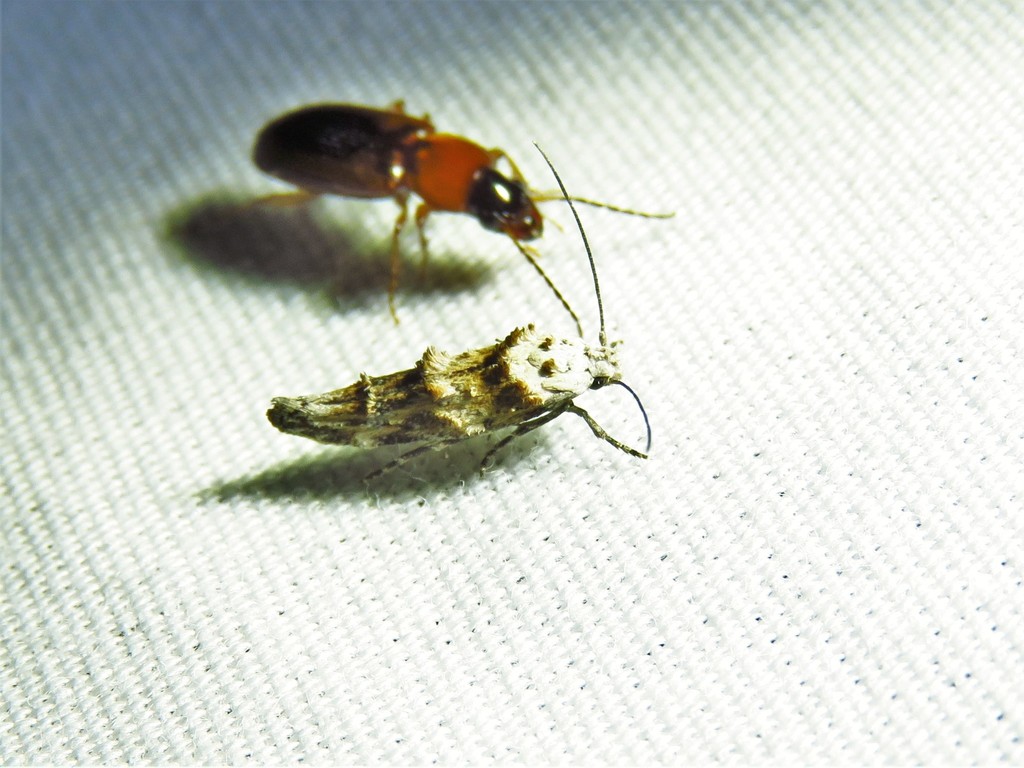
(c) Annika Lindqvist, some rights reserved (CC BY) · licence
Family: Momphidae · Class: Insecta · Order: Lepidoptera
Mompha rufocristatella is a California animal in the Momphidae family.
Mompha rufocristatella is a small moth in the family Momphidae, a group of microlepidoptera known for their association with specific host plants. This species belongs to a genus of moths whose larvae typically develop as leaf miners, gall makers, or stem borers in their host plants. Adult moths in the genus Mompha are characterized by narrow forewings with distinctive scale patterns and relatively short wingspans, typically measuring 8 to 12 millimeters across the forewings. The distribution and range of Mompha rufocristatella remains poorly documented in scientific literature. Limited collection records suggest the species may occur in western North America, but specific locality data and current range boundaries require further research. The species' presence in California has not been definitively established through recent surveys or published records. Habitat requirements for Mompha rufocristatella are not well documented, though members of the genus Mompha typically inhabit areas where their specific host plants occur. Many Mompha species are associated with plants in the families Onagraceae (evening primrose family) or Lythraceae (loosestrife family), developing in various plant tissues during their larval stage. The microhabitat preferences likely depend on the distribution and ecology of the host plant species. Like other members of the Momphidae family, Mompha rufocristatella likely has a univoltine or bivoltine life cycle, with adults emerging during specific flight periods when host plants are in suitable condition for oviposition. Larvae probably develop as internal feeders within plant tissues, creating characteristic feeding damage patterns. Adult moths are typically crepuscular or nocturnal, with peak activity occurring during evening hours. Mating likely occurs shortly after emergence, with females depositing eggs on or near suitable host plant material. The conservation status of Mompha rufocristatella is currently unknown, as comprehensive population assessments have not been conducted. The species lacks state or federal listing status as of December 2025. Many microlepidoptera species face conservation challenges due to their specialized host plant relationships, habitat fragmentation, and limited dispersal capabilities. The small size and cryptic nature of these moths makes population monitoring difficult, and many species in this group may be declining without detection. Climate change poses additional threats through potential shifts in host plant distributions and phenological mismatches between moth emergence and optimal host plant conditions. Further taxonomic and ecological research is needed to clarify the species' identity, distribution, host plant associations, and conservation needs. Comprehensive surveys in potential habitat areas would help establish current population status and inform any necessary conservation measures. The specialized nature of most Mompha species suggests that habitat protection focusing on maintaining diverse native plant communities would benefit this and related species.
Classification
Class: Insecta · Order: Lepidoptera · Family: Momphidae
Frequently asked questions
How is Mompha rufocristatella classified?
Mompha rufocristatella belongs to class Insecta, order Lepidoptera, family Momphidae.
What family does Mompha rufocristatella belong to?
Mompha rufocristatella is in the Momphidae family.
What is Mompha rufocristatella?
Mompha rufocristatella is a small moth in the family Momphidae, a group of microlepidoptera known for their association with specific host plants.
Is Mompha rufocristatella found in California?
Yes. Mompha rufocristatella is recorded in California in The California Species Project's catalogue.
Related species
Other California species in the same genus, family, or bioregion.
Data from The California Species Project — 14,000+ California species with verified data from CNPS, CDFW, USFWS, and more.