Monadenia callipeplus
Downy Sideband
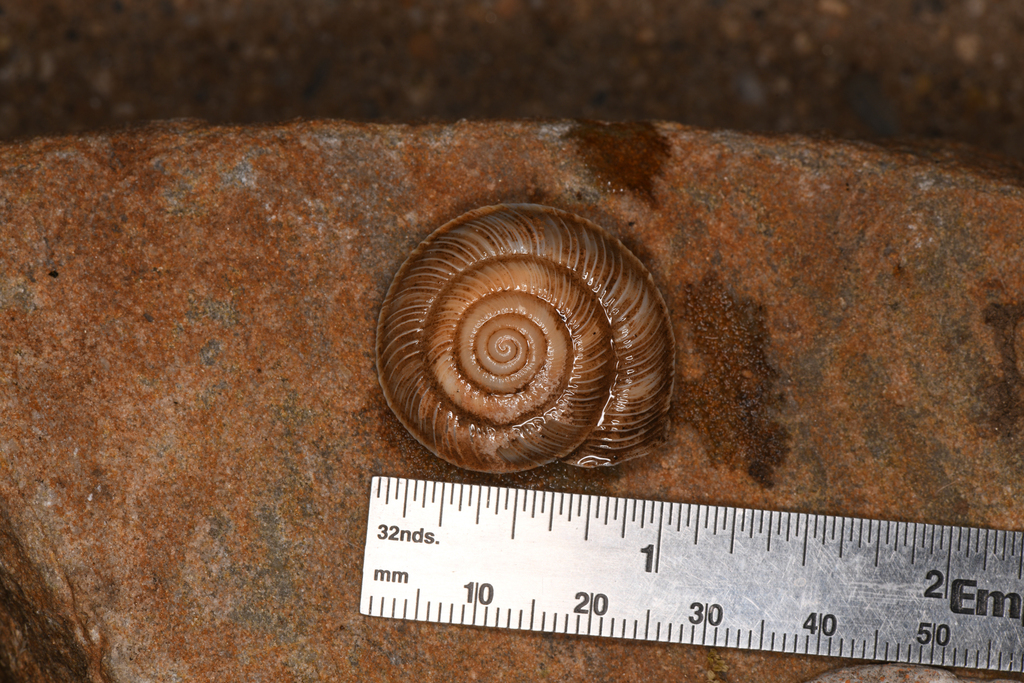
(c) Trevor Van Loon, some rights reserved (CC BY) · licence
Family: Xanthonychidae · Class: Gastropoda · Order: Stylommatophora
Conservation status: G1? S1S2
Monadenia callipeplus (Downy Sideband) is a California animal in the Xanthonychidae family.
The Downy Sideband (Monadenia callipeplus) is a terrestrial gastropod mollusk in the family Xanthonychidae. This land snail is characterized by its spiral shell with distinctive banding patterns, though detailed morphological descriptions remain limited in the scientific literature. As with other members of the genus Monadenia, the shell likely exhibits the characteristic flattened spire and wide aperture typical of sideband snails, though specific measurements and coloration patterns for M. callipeplus have not been comprehensively documented. The species is endemic to California, where it occurs within an extremely restricted range. The precise distribution boundaries and habitat requirements of the Downy Sideband remain poorly documented in current scientific literature. Historical collection records and field surveys would be necessary to establish the full extent of its occurrence within the state. Habitat preferences for Monadenia callipeplus have not been thoroughly studied or published in accessible scientific literature. Most Monadenia species typically inhabit forested environments, oak woodlands, or chaparral communities, often requiring specific moisture conditions and substrate types. These snails generally prefer areas with adequate leaf litter, fallen logs, or rocky outcrops that provide shelter and maintain appropriate humidity levels. Elevation ranges and specific vegetation associations for M. callipeplus remain undocumented. Ecological information about the Downy Sideband is extremely limited. Like other terrestrial gastropods, the species likely feeds on decaying organic matter, fungi, and algae found in its habitat. Reproductive biology, including breeding season, egg-laying behavior, and lifecycle duration, has not been documented for this species. Population dynamics, dispersal capabilities, and interactions with other species remain unknown. The conservation status of Monadenia callipeplus reflects significant concern for its persistence. The species carries a Global Rank of G1?, indicating it is critically imperiled globally with high vulnerability to extinction, though the question mark denotes some uncertainty in this assessment. The State Rank of S1S2 suggests the species is critically imperiled to imperiled in California, with very few occurrences or very steep declines making it vulnerable to extirpation from the state. These rankings place the Downy Sideband among California's most imperiled invertebrate species. The extremely limited scientific documentation of this species presents significant challenges for conservation planning and management. Primary threats likely include habitat loss and fragmentation from urban development, agriculture, and forestry practices. Climate change may pose additional risks through altered precipitation patterns and temperature regimes that could affect the moisture-dependent habitats these snails require. The species' apparent rarity and restricted distribution make it particularly vulnerable to local extinctions from environmental disturbances. Comprehensive field surveys, taxonomic studies, and ecological research are urgently needed to better understand the distribution, habitat requirements, and conservation needs of Monadenia callipeplus. Without adequate scientific information, effective conservation strategies cannot be developed or implemented for this critically imperiled California endemic species.
Classification
Class: Gastropoda · Order: Stylommatophora · Family: Xanthonychidae
Conservation status
G1? S1S2
Frequently asked questions
How is Monadenia callipeplus classified?
Monadenia callipeplus belongs to class Gastropoda, order Stylommatophora, family Xanthonychidae.
What family does Monadenia callipeplus belong to?
Monadenia callipeplus is in the Xanthonychidae family.
Is Monadenia callipeplus protected or of conservation concern?
Monadenia callipeplus carries the following status: G1? S1S2.
What is Monadenia callipeplus?
The Downy Sideband (Monadenia callipeplus) is a terrestrial gastropod mollusk in the family Xanthonychidae.
Is Monadenia callipeplus found in California?
Yes. Monadenia callipeplus is recorded in California in The California Species Project's catalogue.
Related species
Other California species in the same genus, family, or bioregion.
Data from The California Species Project — 14,000+ California species with verified data from CNPS, CDFW, USFWS, and more.