Monadenia chaceana
Siskiyou Shoulderband
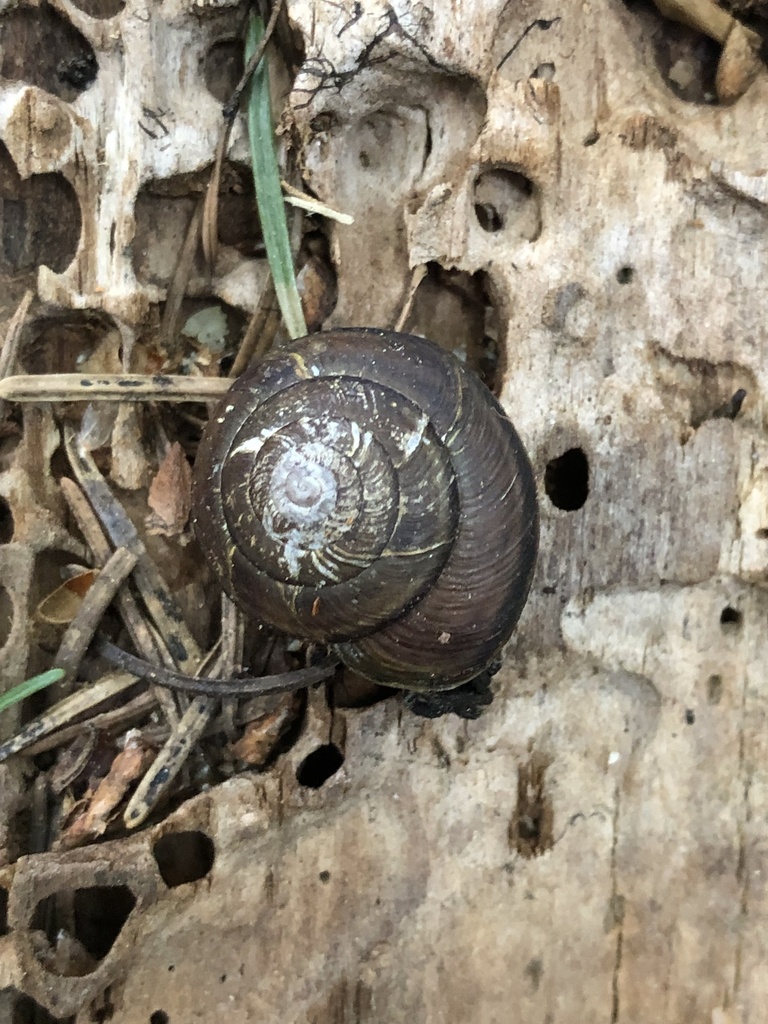
(c) Matt D'Agrosa, some rights reserved (CC BY) · licence
Family: Xanthonychidae · Class: Gastropoda · Order: Stylommatophora
Conservation status: G2G3 S2
Monadenia chaceana (Siskiyou Shoulderband) is a California animal in the Xanthonychidae family.
The Siskiyou Shoulderband (Monadenia chaceana) is a terrestrial gastropod mollusk in the family Xanthonychidae. This land snail species is characterized by its distinctive shell structure typical of the Monadenia genus, featuring a flattened, disc-shaped shell with a prominent shoulder or keel that gives the species its common name. The shell typically displays multiple whorls with a relatively wide aperture, though specific morphometric data for this species remains limited in the scientific literature. The Siskiyou Shoulderband is endemic to the Siskiyou Mountains region of northern California and southern Oregon. According to NatureServe, this species has a very restricted distribution within this montane region. The species' range appears to be associated with the complex topography and unique geological conditions of the Siskiyou Mountains, which create isolated habitat patches that support endemic mollusk communities. This species inhabits montane forest and woodland environments, particularly those associated with Douglas-fir and western hemlock forests. Based on NatureServe habitat associations, the Siskiyou Shoulderband occurs in North Pacific Maritime Dry-Mesic Douglas-fir-Western Hemlock Forest and Mediterranean California Mesic Mixed Conifer Forest ecosystems. These habitats are characterized by moderate moisture levels, complex understory vegetation, and the presence of decaying organic matter that provides both food resources and microhabitat conditions necessary for terrestrial gastropods. The species likely requires specific soil chemistry and moisture conditions, along with adequate leaf litter and woody debris for shelter and feeding. Like other members of the Xanthonychidae family, the Siskiyou Shoulderband is presumed to be a detritivore, feeding on decomposing plant material, fungi, and organic matter in the forest floor. Terrestrial snails in this family typically have relatively slow reproductive rates and limited dispersal capabilities, making them particularly vulnerable to habitat fragmentation. The species likely exhibits typical gastropod reproductive behavior, including hermaphroditic reproduction and the deposition of eggs in moist soil or leaf litter during favorable environmental conditions. The Siskiyou Shoulderband is ranked G2G3 globally and S2 in California by NatureServe, indicating it is imperiled to vulnerable globally and imperiled within the state. The species appears in the USFWS ECOS database, suggesting it may be under consideration for federal protection, though it currently lacks federal listing status. The restricted range and specific habitat requirements of this species make it particularly susceptible to threats including habitat loss from logging, development, fire suppression effects that alter forest structure, and climate change impacts on montane forest ecosystems. The fragmented nature of suitable habitat within the Siskiyou Mountains likely limits population connectivity and increases vulnerability to local extinctions. Conservation efforts for this species would benefit from habitat protection and management practices that maintain the structural diversity and moisture conditions of montane forest ecosystems.
Classification
Class: Gastropoda · Order: Stylommatophora · Family: Xanthonychidae
Conservation status
G2G3 S2
Frequently asked questions
How is Monadenia chaceana classified?
Monadenia chaceana belongs to class Gastropoda, order Stylommatophora, family Xanthonychidae.
What family does Monadenia chaceana belong to?
Monadenia chaceana is in the Xanthonychidae family.
Is Monadenia chaceana protected or of conservation concern?
Monadenia chaceana carries the following status: G2G3 S2.
What is Monadenia chaceana?
The Siskiyou Shoulderband (Monadenia chaceana) is a terrestrial gastropod mollusk in the family Xanthonychidae.
Is Monadenia chaceana found in California?
Yes. Monadenia chaceana is recorded in California in The California Species Project's catalogue.
Related species
Other California species in the same genus, family, or bioregion.
Data from The California Species Project — 14,000+ California species with verified data from CNPS, CDFW, USFWS, and more.