Monadenia fidelis leonina
A Terrestrial Snail
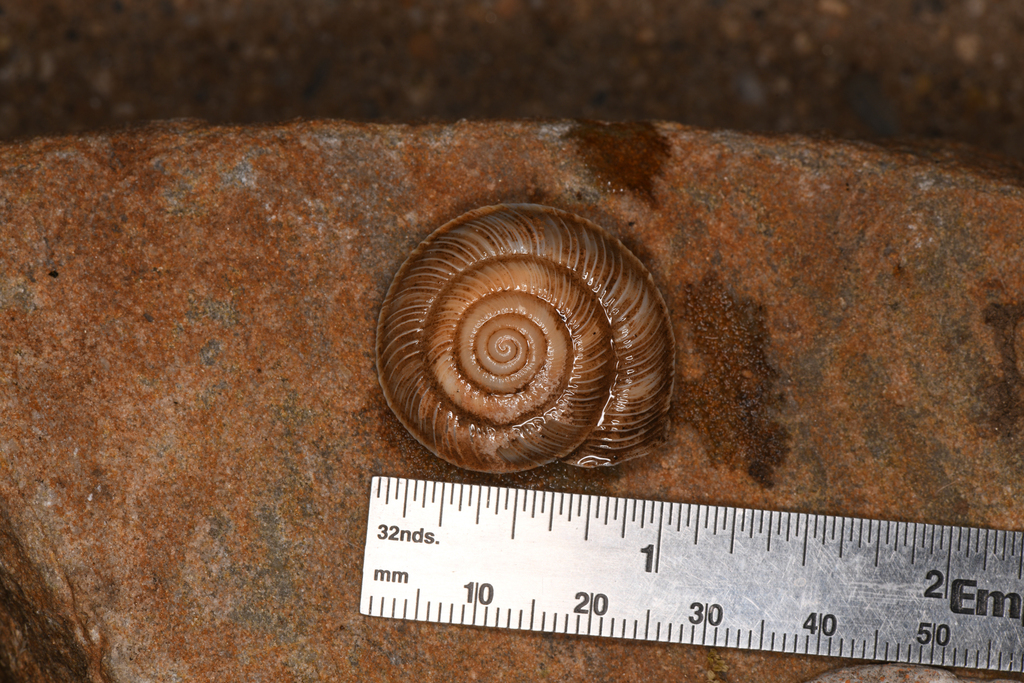
(c) Trevor Van Loon, some rights reserved (CC BY) · licence
Family: Xanthonychidae · Class: Gastropoda · Order: Stylommatophora
Conservation status: G4G5T1T2 S1S2
Monadenia fidelis leonina (A Terrestrial Snail) is a California animal in the Xanthonychidae family.
Monadenia fidelis leonina is a subspecies of terrestrial gastropod mollusk in the family Xanthonychidae. This land snail is part of the larger Monadenia fidelis species complex, which includes several subspecies distributed across the Pacific Northwest. Adult shells typically measure 15-25 mm in diameter, displaying a low-spired, heliciform shape characteristic of the genus. The shell surface exhibits a brownish to tan coloration with darker spiral bands, and the aperture is often partially obstructed by reflected lip margins. This subspecies occurs in northwestern California and southwestern Oregon (Burke 2013; NatureServe 2024). The distribution appears to be limited to specific geographic areas within this broader region, though detailed range mapping remains incomplete. The subspecies is distinguished from other M. fidelis taxa by subtle morphological characteristics and geographic isolation. Monadenia fidelis leonina inhabits forested environments, typically associated with mixed coniferous and deciduous woodlands. The snails require adequate moisture and shelter, often found beneath logs, leaf litter, and rocky debris. Limestone and calcium-rich substrates may be particularly important for shell development, as observed in related Monadenia species. The subspecies appears to prefer areas with moderate canopy cover that maintain consistent humidity levels while avoiding excessive moisture that could promote fungal infections. Like other terrestrial gastropods, M. f. leonina is primarily active during periods of high humidity, including early morning hours and following precipitation events. The species likely feeds on decomposing organic matter, fungi, and possibly living plant material. Reproduction involves the exchange of sperm between hermaphroditic individuals, with eggs deposited in shallow soil depressions or beneath protective cover. Seasonal activity patterns probably follow the typical Pacific Northwest schedule, with reduced activity during dry summer months and winter dormancy periods. The conservation status of Monadenia fidelis leonina reflects significant concern for this taxon's long-term viability. NatureServe assigns this subspecies a global rank of G4G5T1T2, indicating that while the full species (M. fidelis) is relatively secure, this particular subspecies is critically imperiled to imperiled. This species is included on the California Department of Fish and Wildlife's Special Animals List. The California rank of S1S2 suggests the subspecies faces high risk of extirpation within the state. Primary threats likely include habitat fragmentation, forest management practices, climate change effects on moisture regimes, and potentially invasive species competition. The limited distribution makes populations particularly vulnerable to localized disturbances such as wildfire, drought, or development activities. Unlike some related taxa, M. f. leonina currently lacks federal protection under the Endangered Species Act, though the precarious ranking suggests monitoring and potential conservation action may be warranted. Forest management that maintains adequate canopy cover, moisture retention, and minimizes soil compaction could benefit remaining populations.
Classification
Class: Gastropoda · Order: Stylommatophora · Family: Xanthonychidae
Conservation status
G4G5T1T2 S1S2
Frequently asked questions
How is Monadenia fidelis leonina classified?
Monadenia fidelis leonina belongs to class Gastropoda, order Stylommatophora, family Xanthonychidae.
What family does Monadenia fidelis leonina belong to?
Monadenia fidelis leonina is in the Xanthonychidae family.
Is Monadenia fidelis leonina protected or of conservation concern?
Monadenia fidelis leonina carries the following status: G4G5T1T2 S1S2.
What is Monadenia fidelis leonina?
Monadenia fidelis leonina is a subspecies of terrestrial gastropod mollusk in the family Xanthonychidae.
Is Monadenia fidelis leonina found in California?
Yes. Monadenia fidelis leonina is recorded in California in The California Species Project's catalogue.
Related species
Other California species in the same genus, family, or bioregion.
Data from The California Species Project — 14,000+ California species with verified data from CNPS, CDFW, USFWS, and more.