Monadenia fidelis pronotis
Rocky Coast Pacific Sideband
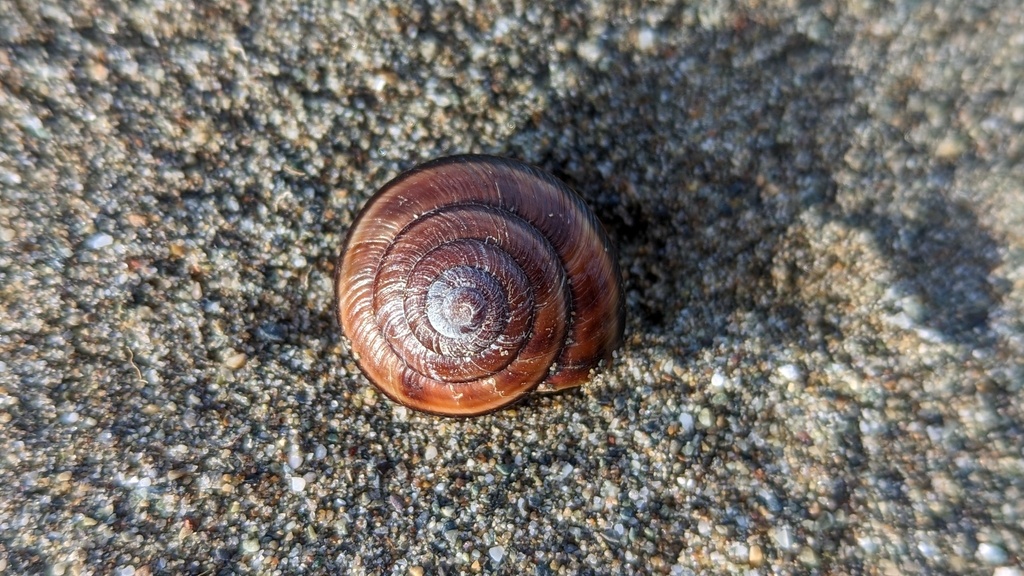
(c) Trevor Van Loon, some rights reserved (CC BY) · licence
Family: Xanthonychidae · Class: Gastropoda · Order: Stylommatophora
Conservation status: G4G5T1 S1
Monadenia fidelis pronotis (Rocky Coast Pacific Sideband) is a California animal in the Xanthonychidae family.
The Rocky Coast Pacific Sideband is a terrestrial gastropod subspecies endemic to California's coastal regions. This land snail belongs to the family Xanthonychidae and represents one of several geographically distinct subspecies within the Monadenia fidelis complex. Adult shells typically measure 15-20 mm in diameter, displaying the characteristic sideband pattern that gives the group its common name. The shell is generally brown to tan with darker spiral bands, and the aperture may show a reflected lip typical of mature Monadenia specimens. Historically, Monadenia fidelis pronotis occurred along California's rocky coastal areas, though its precise current distribution remains poorly documented. The subspecies is distinguished from other M. fidelis subspecies by its coastal habitat preferences and morphological characteristics adapted to maritime environments. Unlike inland subspecies such as M. f. minor (Dalles sideband), the Rocky Coast Pacific Sideband is restricted to near-shore terrestrial habitats influenced by coastal climate conditions. This subspecies inhabits rocky coastal environments where it takes shelter under rocks, fallen logs, and dense vegetation. The maritime climate provides the consistent moisture necessary for gastropod activity, with fog and coastal precipitation supporting year-round habitat suitability. Rocky outcrops and associated soil pockets likely provide both shelter and foraging opportunities. The species may be associated with coastal scrub vegetation, though specific plant associations have not been well documented. Like other members of the genus Monadenia, this subspecies is presumed to be herbivorous, feeding on decomposing plant matter, fungi, and possibly fresh vegetation. Activity patterns likely follow typical gastropod behavior, with increased movement during cool, moist conditions such as after rainfall or during foggy periods. Reproduction presumably occurs through hermaphroditic mating, with individuals depositing eggs in moist soil or under protective cover. Seasonal activity patterns and specific breeding timing have not been documented for this subspecies. The Rocky Coast Pacific Sideband holds a Global/State Rank of G4G5T1 S1, indicating it is critically imperiled in California (S1) and represents a very rare subspecies (T1) within a more widespread species complex (G4G5). This species is included on the California Department of Fish and Wildlife's Special Animals List. This ranking suggests extremely limited distribution and small population size. As of December 2025, the subspecies appears on the USFWS National Domestic Listing Workplan as part of the broader California Terrestrial Mollusks evaluation package, though no federal listing determination has been made. Primary threats likely include coastal development, habitat fragmentation, and climate change impacts on coastal moisture regimes. The limited range makes populations vulnerable to localized disturbances such as trampling, collection, and alterations to coastal hydrology. Scientific documentation of this subspecies remains limited, with most available information derived from taxonomic treatments and conservation status assessments rather than detailed ecological studies.
Classification
Class: Gastropoda · Order: Stylommatophora · Family: Xanthonychidae
Conservation status
G4G5T1 S1
Frequently asked questions
How is Monadenia fidelis pronotis classified?
Monadenia fidelis pronotis belongs to class Gastropoda, order Stylommatophora, family Xanthonychidae.
What family does Monadenia fidelis pronotis belong to?
Monadenia fidelis pronotis is in the Xanthonychidae family.
Is Monadenia fidelis pronotis protected or of conservation concern?
Monadenia fidelis pronotis carries the following status: G4G5T1 S1.
What is Monadenia fidelis pronotis?
The Rocky Coast Pacific Sideband is a terrestrial gastropod subspecies endemic to California's coastal regions.
Is Monadenia fidelis pronotis found in California?
Yes. Monadenia fidelis pronotis is recorded in California in The California Species Project's catalogue.
Related species
Other California species in the same genus, family, or bioregion.
Data from The California Species Project — 14,000+ California species with verified data from CNPS, CDFW, USFWS, and more.