Monadenia infumata
Redwood Sideband
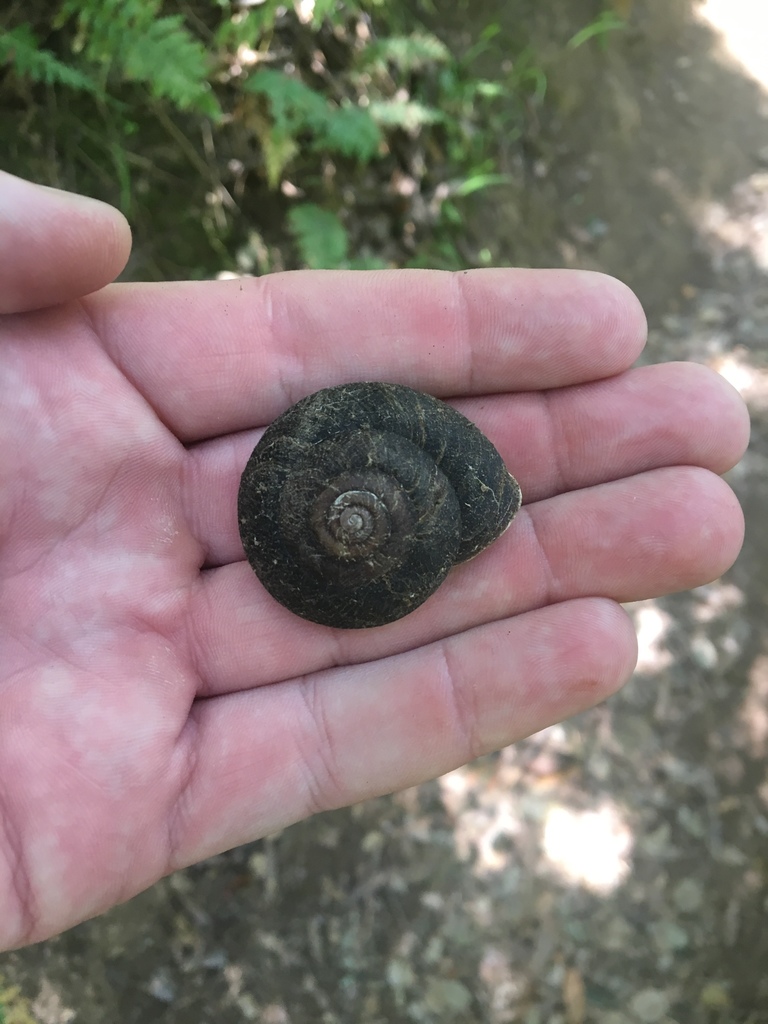
(c) Mark Wagner, some rights reserved (CC BY) · licence
Family: Xanthonychidae · Class: Gastropoda · Order: Stylommatophora
Monadenia infumata (Redwood Sideband) is a California animal in the Xanthonychidae family.
The Redwood sideband (Monadenia infumata) is a terrestrial gastropod mollusk in the family Xanthonychidae. This species represents one of several subspecies within the M. infumata complex found in California's coastal forests. The shell morphology and size characteristics vary among subspecies, with the species displaying the typical sideband snail form of a relatively flat, disc-like shell with distinct whorls. The Redwood sideband occurs in the coastal regions of northern California, where it inhabits the fog-influenced forests characteristic of the region. The species' range aligns with the distribution of coast redwood (Sequoia sempervirens) forests and associated mixed coniferous woodlands. Different subspecies of M. infumata occupy distinct geographic areas within this coastal zone, contributing to the species' overall taxonomic complexity. This species inhabits moist forest environments, particularly those dominated by coast redwood and associated tree species. The cool, humid microclimate created by coastal fog is essential for maintaining the moisture conditions required by terrestrial gastropods. These snails are typically found in the forest floor layer among leaf litter, fallen logs, and understory vegetation where humidity levels remain consistently high. The species shows preference for areas with abundant organic matter and minimal direct sunlight exposure. Like other members of the genus Monadenia, the Redwood sideband consumes plants, fungi, and detritus (Burke 2013). The species plays an ecological role in nutrient cycling within forest ecosystems through its feeding activities and decomposition processes. Reproductive behavior and seasonal activity patterns follow typical gastropod life history strategies, though specific details for this subspecies remain poorly documented in the scientific literature. The species likely exhibits the hermaphroditic reproduction characteristic of stylommatophoran snails. The conservation status of Monadenia infumata has not been formally evaluated at federal or state levels, and the species lacks specific protection under endangered species legislation. However, like many forest gastropods, populations may face pressure from habitat modification, particularly logging activities that alter forest structure and moisture regimes. Climate change impacts on coastal fog patterns could potentially affect the humid conditions essential for this species' survival. The fragmentation of old-growth redwood forests historically may have reduced available habitat, though second-growth forests can provide suitable conditions when structural complexity develops. Taxonomic relationships within the M. infumata complex require further research, as subspecies designation and geographic boundaries remain subjects of ongoing scientific investigation. The species exemplifies the high level of endemism found among California's terrestrial gastropod fauna, particularly in specialized habitats like coastal fog forests. Scientific documentation for this species remains limited, and additional research on population distribution, habitat requirements, and ecological relationships would enhance understanding of this component of California's forest biodiversity.
Classification
Class: Gastropoda · Order: Stylommatophora · Family: Xanthonychidae
Frequently asked questions
How is Monadenia infumata classified?
Monadenia infumata belongs to class Gastropoda, order Stylommatophora, family Xanthonychidae.
What family does Monadenia infumata belong to?
Monadenia infumata is in the Xanthonychidae family.
What is Monadenia infumata?
The Redwood sideband (Monadenia infumata) is a terrestrial gastropod mollusk in the family Xanthonychidae.
Is Monadenia infumata found in California?
Yes. Monadenia infumata is recorded in California in The California Species Project's catalogue.
Related species
Other California species in the same genus, family, or bioregion.
Data from The California Species Project — 14,000+ California species with verified data from CNPS, CDFW, USFWS, and more.