Monadenia infumata ochromphalus
Yellow-based Sideband
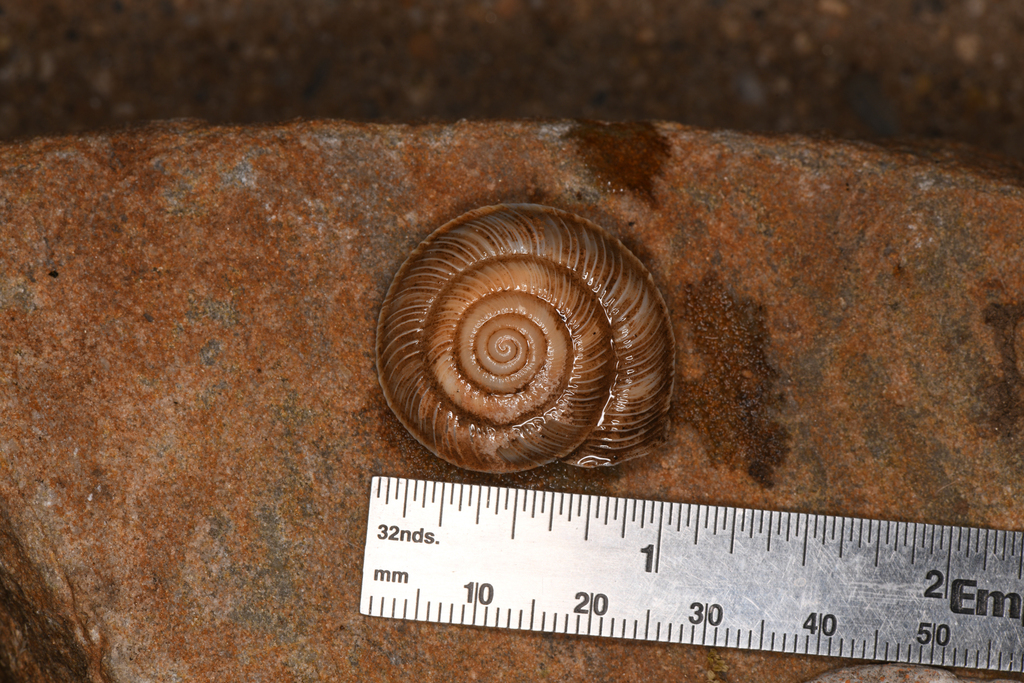
(c) Trevor Van Loon, some rights reserved (CC BY) · licence
Family: Xanthonychidae · Class: Gastropoda · Order: Stylommatophora
Conservation status: G2T1T2 S1S2
Monadenia infumata ochromphalus (Yellow-based Sideband) is a California animal in the Xanthonychidae family.
The Yellow-based Sideband (Monadenia infumata ochromphalus) is a terrestrial gastropod subspecies endemic to California. This land snail belongs to the family Xanthonychidae and represents one of several subspecies within the Monadenia infumata complex. The shell typically measures 15-25 mm in diameter and exhibits the characteristic yellow or amber-colored base that gives this subspecies its common name. The shell is broadly conical with 4-5 whorls and displays a relatively low spire compared to other Monadenia species. The Yellow-based Sideband has an extremely restricted range within California, contributing to its conservation concern. According to the California Department of Fish and Wildlife, this subspecies occurs in limited locations within the North Coast region. Recent phylogenetic analysis suggests this subspecies is closely related to M. infumata subcarinate (Redwood sideband) and other members of the subgenus Monadenia (Sullivan 2021). The species' distribution appears to be influenced by riverine segregation patterns that have shaped genetic differentiation within the broader M. infumata complex. This subspecies inhabits forested environments typical of California's coastal mountain ranges. Preferred microhabitats include areas with adequate moisture retention, leaf litter, and woody debris that provide shelter and foraging opportunities. Like other members of the subgenus Monadenia, the Yellow-based Sideband appears adapted to more mesic conditions compared to inland relatives in the subgenus Shastelix. The species requires stable humidity levels and protection from extreme temperature fluctuations. As a herbivorous gastropod, the Yellow-based Sideband feeds on decaying plant matter, fungi, and organic detritus found in the forest floor environment. Reproductive biology follows typical helicid patterns, with individuals being hermaphroditic and capable of both self-fertilization and cross-fertilization. Breeding likely occurs during optimal moisture conditions in spring and fall months. Eggs are deposited in moist soil or under protective cover, with juveniles emerging after several weeks depending on temperature and humidity conditions. The Yellow-based Sideband carries a global conservation rank of G2T1T2, indicating it is critically imperiled to imperiled at both the global and taxonomic levels. This species is included on the California Department of Fish and Wildlife's Special Animals List. The California state rank of S1S2 reflects similar conservation concern at the state level. Primary threats include habitat loss from logging, development, and land conversion activities that eliminate the moist forest floor environments essential for survival. Climate change poses additional risks through altered precipitation patterns and increased temperatures that could reduce suitable habitat. The species' extremely limited range makes it particularly vulnerable to stochastic events and human disturbances. Detailed population surveys and habitat protection measures are needed to ensure the long-term persistence of this rare California endemic subspecies.
Classification
Class: Gastropoda · Order: Stylommatophora · Family: Xanthonychidae
Conservation status
G2T1T2 S1S2
Frequently asked questions
How is Monadenia infumata ochromphalus classified?
Monadenia infumata ochromphalus belongs to class Gastropoda, order Stylommatophora, family Xanthonychidae.
What family does Monadenia infumata ochromphalus belong to?
Monadenia infumata ochromphalus is in the Xanthonychidae family.
Is Monadenia infumata ochromphalus protected or of conservation concern?
Monadenia infumata ochromphalus carries the following status: G2T1T2 S1S2.
What is Monadenia infumata ochromphalus?
The Yellow-based Sideband (Monadenia infumata ochromphalus) is a terrestrial gastropod subspecies endemic to California.
Is Monadenia infumata ochromphalus found in California?
Yes. Monadenia infumata ochromphalus is recorded in California in The California Species Project's catalogue.
Related species
Other California species in the same genus, family, or bioregion.
Data from The California Species Project — 14,000+ California species with verified data from CNPS, CDFW, USFWS, and more.