Monadenia marmarotis
Marble Sideband
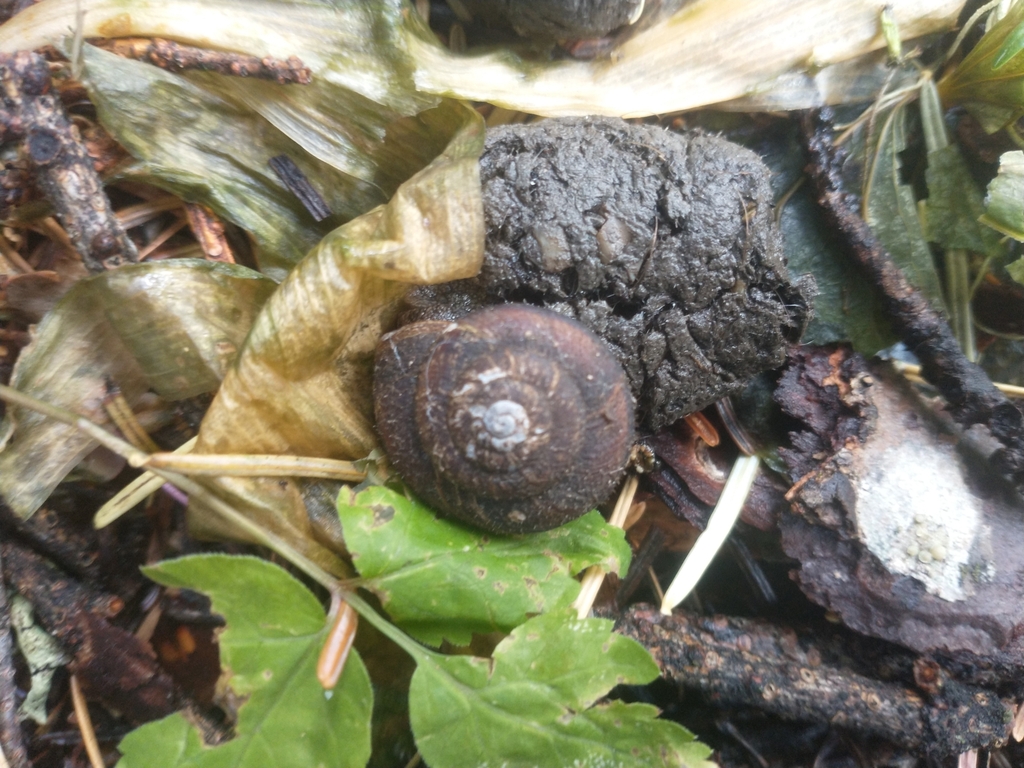
no rights reserved · CC0
Family: Xanthonychidae · Class: Gastropoda · Order: Stylommatophora
Conservation status: G1 S1
Monadenia marmarotis (Marble Sideband) is a California animal in the Xanthonychidae family.
The Marble Sideband (Monadenia marmarotis) is a terrestrial gastropod snail endemic to California. This species belongs to the family Xanthonychidae and represents one of the rarest land snails in North America. The shell displays characteristic marbled patterns that give the species its common name, though detailed morphological descriptions remain limited in the scientific literature. Monadenia marmarotis has an extremely restricted range within California. According to NatureServe, the species is endemic to the state with very limited distribution. The exact geographic boundaries of its current range have not been comprehensively documented, contributing to uncertainty about population status and habitat requirements. Historical records suggest the species may have occurred in multiple locations, but current populations appear to be highly localized. Habitat requirements for the Marble Sideband are poorly documented in available literature. Like other terrestrial gastropods, the species likely requires specific microhabitat conditions including appropriate moisture levels, soil chemistry, and vegetation structure. The species presumably inhabits areas with suitable leaf litter, decaying organic matter, and adequate shelter from environmental extremes. Specific elevation ranges, vegetation associations, and substrate preferences have not been well documented for this species. Behavioral and ecological information for Monadenia marmarotis remains extremely limited. According to NatureServe, terrestrial gastropods typically exhibit limited movement patterns, generally moving only to locate food sources or reproductive partners (NatureServe Explorer). Olfaction serves as the primary sensory mechanism for navigation and resource location in terrestrial snails. The species likely feeds on decaying plant matter, fungi, and microorganisms typical of terrestrial gastropod diets. Reproductive biology, including breeding season, egg-laying behavior, and developmental patterns, has not been documented in available scientific literature. The conservation status of the Marble Sideband reflects its extreme rarity. The species carries a global rank of G1, indicating it is critically imperiled globally, and a state rank of S1, indicating it is critically imperiled within California (NatureServe Explorer). These rankings reflect the species' very high risk of extinction due to extreme rarity, declining populations, or other factors. The species currently lacks federal listing under the Endangered Species Act and has no state listing status in California. According to iNaturalist, only 6 observations of this species have been documented, highlighting its extreme rarity and the challenges associated with locating populations in the field. Primary conservation concerns for Monadenia marmarotis likely include habitat loss and degradation, though specific threats have not been comprehensively assessed. The species' extremely limited range makes it particularly vulnerable to localized disturbances. Climate change may pose additional risks through altered precipitation patterns and temperature regimes that could affect the specific microhabitat conditions required by terrestrial gastropods. Research needs include basic biological studies, population surveys, habitat characterization, and threat assessment to inform future conservation planning.
Classification
Class: Gastropoda · Order: Stylommatophora · Family: Xanthonychidae
Conservation status
G1 S1
Frequently asked questions
How is Monadenia marmarotis classified?
Monadenia marmarotis belongs to class Gastropoda, order Stylommatophora, family Xanthonychidae.
What family does Monadenia marmarotis belong to?
Monadenia marmarotis is in the Xanthonychidae family.
Is Monadenia marmarotis protected or of conservation concern?
Monadenia marmarotis carries the following status: G1 S1.
What is Monadenia marmarotis?
The Marble Sideband (Monadenia marmarotis) is a terrestrial gastropod snail endemic to California.
Is Monadenia marmarotis found in California?
Yes. Monadenia marmarotis is recorded in California in The California Species Project's catalogue.
Related species
Other California species in the same genus, family, or bioregion.
Data from The California Species Project — 14,000+ California species with verified data from CNPS, CDFW, USFWS, and more.