Monadenia troglodytes troglodytes
Shasta Sideband
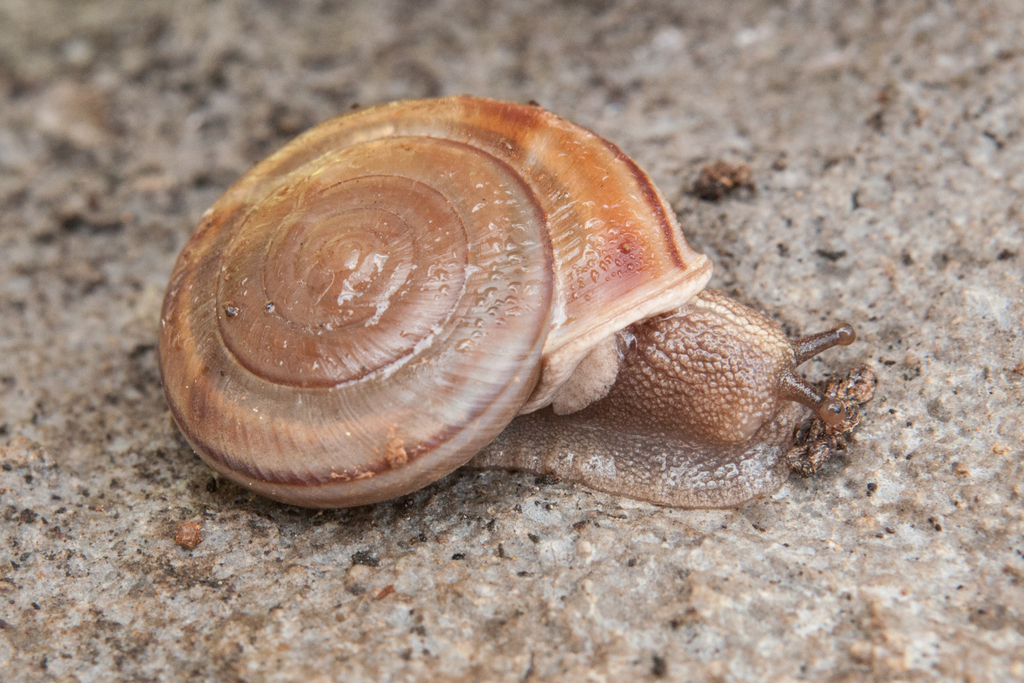
(c) Ryan Elliott, some rights reserved (CC BY) · licence
Family: Xanthonychidae · Class: Gastropoda · Order: Stylommatophora
Conservation status: G2T2 S2
Monadenia troglodytes troglodytes (Shasta Sideband) is a California animal in the Xanthonychidae family.
The Shasta sideband is a terrestrial gastropod mollusk endemic to northern California. This subspecies belongs to the family Xanthonychidae and is distinguished from other Monadenia species by its specific shell morphology and restricted geographic distribution. Adult shells typically measure 15 to 25 millimeters (0.6 to 1.0 inches) in diameter, displaying a characteristic sideband pattern that gives the species its common name. The shell exhibits a low-spired, depressed heliciform shape with a distinctive banded coloration pattern. The Shasta sideband occurs exclusively in the McCloud watershed of Shasta County, California (NatureServe 2025). According to the U.S. Fish and Wildlife Service, this species is known from only nine locations around Shasta Lake, making it extremely rare within its limited range. The subspecies represents one of the most geographically restricted terrestrial mollusks in California, with its entire known distribution confined to a small area of the southern Cascade Range. This species inhabits mixed coniferous forests and oak woodlands within the McCloud River drainage system. The elevation range and specific microhabitat requirements have not been comprehensively documented, though populations are associated with areas containing sufficient moisture and appropriate substrate conditions typical of forest floor environments. Like other Monadenia species, the Shasta sideband likely requires calcium-rich soils for shell development and leaf litter or decaying organic matter for shelter. As with most terrestrial gastropods, the Shasta sideband is presumed to be primarily herbivorous, feeding on decomposing plant material, fungi, and algae. Reproductive biology and seasonal activity patterns remain poorly studied, though the species likely follows the general Monadenia pattern of hermaphroditic reproduction with cross-fertilization preferred. Activity is probably most pronounced during cooler, wetter periods when surface moisture levels are adequate for movement and feeding. The Shasta sideband holds a global conservation rank of G2T2, indicating it is imperiled globally with a high risk of extinction due to restricted range and declining populations. This species is included on the California Department of Fish and Wildlife's Special Animals List. The subspecies currently has a state rank of S2 in California, reflecting similar conservation concerns at the state level. The U.S. Fish and Wildlife Service has included the Shasta sideband in its National Domestic Listing Workplan for fiscal years 2024-2028 as part of the California Terrestrial Mollusks package, indicating potential consideration for federal protection under the Endangered Species Act (USFWS 2024). The species faces threats from habitat modification, recreational activities around Shasta Lake, and potential impacts from climate change affecting moisture regimes in its limited range. The extreme geographic restriction of this subspecies makes it particularly vulnerable to local disturbances, and conservation efforts would benefit from detailed population monitoring and habitat protection measures within the McCloud watershed.
Classification
Class: Gastropoda · Order: Stylommatophora · Family: Xanthonychidae
Conservation status
G2T2 S2
Frequently asked questions
How is Monadenia troglodytes troglodytes classified?
Monadenia troglodytes troglodytes belongs to class Gastropoda, order Stylommatophora, family Xanthonychidae.
What family does Monadenia troglodytes troglodytes belong to?
Monadenia troglodytes troglodytes is in the Xanthonychidae family.
Is Monadenia troglodytes troglodytes protected or of conservation concern?
Monadenia troglodytes troglodytes carries the following status: G2T2 S2.
What is Monadenia troglodytes troglodytes?
The Shasta sideband is a terrestrial gastropod mollusk endemic to northern California.
Is Monadenia troglodytes troglodytes found in California?
Yes. Monadenia troglodytes troglodytes is recorded in California in The California Species Project's catalogue.
Related species
Other California species in the same genus, family, or bioregion.
Data from The California Species Project — 14,000+ California species with verified data from CNPS, CDFW, USFWS, and more.