Monadenia yosemitensis
Yosemite Sideband
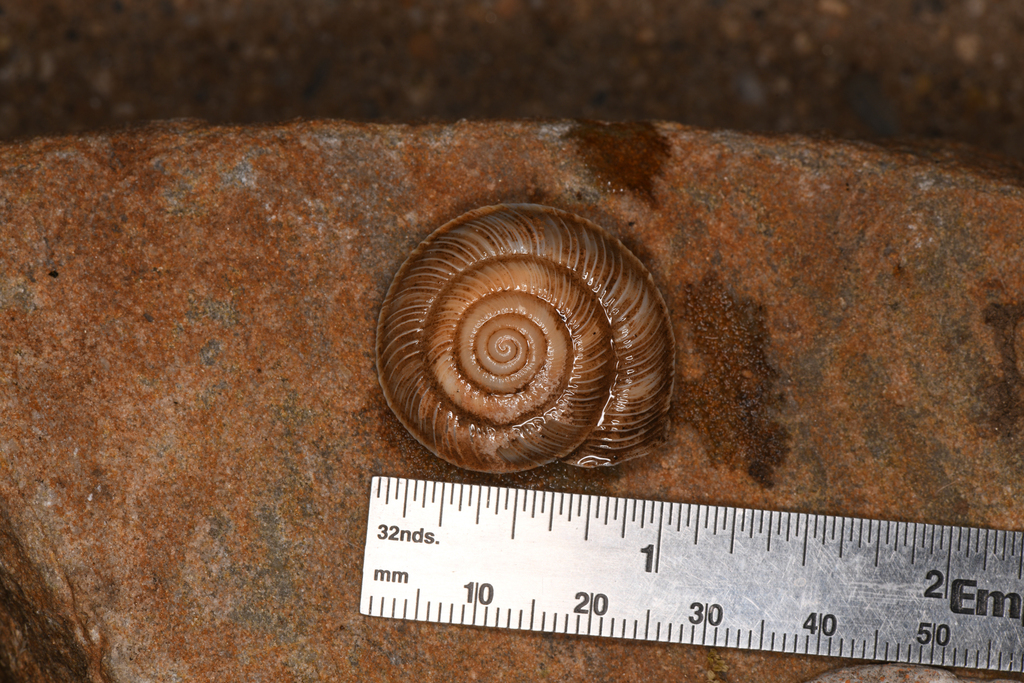
(c) Trevor Van Loon, some rights reserved (CC BY) · licence
Family: Xanthonychidae · Class: Gastropoda · Order: Stylommatophora
Conservation status: G1 S1S2
Monadenia yosemitensis (Yosemite Sideband) is a California animal in the Xanthonychidae family.
The Yosemite Sideband (Monadenia yosemitensis) is a terrestrial gastropod mollusk endemic to California. This land snail belongs to the family Xanthonychidae, which comprises medium to large-sized terrestrial snails characteristic of western North America. As with other members of the genus Monadenia, this species likely possesses a relatively large, globose shell with distinctive spiral banding patterns that give the group its common name. The species is known to occur in California, with its range apparently centered in or near the Yosemite region based on its scientific name. However, specific distributional data including precise localities, elevational range, and county-level occurrences have not been well documented in the scientific literature. The limited range is reflected in its conservation status rankings. Habitat requirements for Monadenia yosemitensis have not been thoroughly studied or documented. Other Monadenia species typically inhabit areas with adequate moisture and leaf litter, often in woodland or chaparral environments where they can find shelter under rocks, logs, or vegetation during dry periods. The species likely requires calcium-rich substrates for shell development, as is typical for terrestrial gastropods. Specific behavioral and ecological information for this species is lacking in the current literature. Like other terrestrial snails, M. yosemitensis is presumably herbivorous, feeding on decaying plant matter, fungi, and possibly living vegetation. Reproduction likely follows the typical gastropod pattern of hermaphroditic individuals depositing eggs in moist soil or leaf litter during favorable conditions. Activity patterns are probably tied to moisture availability, with increased activity during cooler, humid periods. The conservation status of Monadenia yosemitensis reflects significant concern about its persistence. The species carries a Global Heritage Rank of G1, indicating it is critically imperiled globally due to extreme rarity or factors making it especially vulnerable to extinction. The California Heritage Rank of S1S2 suggests the species is critically imperiled to imperiled within the state, with typically fewer than 20 to 100 occurrences or individuals. This ranking indicates that the species faces a high risk of extinction due to its restricted range and potentially small population size. The lack of comprehensive biological and ecological data for this species represents a significant knowledge gap that hampers effective conservation planning. Primary threats to terrestrial gastropods in California typically include habitat loss, fragmentation, drought, and invasive species, though specific threat assessments for M. yosemitensis have not been documented. The species' apparent restriction to a limited geographic area makes it particularly vulnerable to environmental changes or habitat disturbance. Detailed field surveys and taxonomic studies are needed to better understand the distribution, population status, habitat requirements, and conservation needs of this poorly known endemic species. This species is included on the California Department of Fish and Wildlife's Special Animals List.
Classification
Class: Gastropoda · Order: Stylommatophora · Family: Xanthonychidae
Conservation status
G1 S1S2
Frequently asked questions
How is Monadenia yosemitensis classified?
Monadenia yosemitensis belongs to class Gastropoda, order Stylommatophora, family Xanthonychidae.
What family does Monadenia yosemitensis belong to?
Monadenia yosemitensis is in the Xanthonychidae family.
Is Monadenia yosemitensis protected or of conservation concern?
Monadenia yosemitensis carries the following status: G1 S1S2.
What is Monadenia yosemitensis?
The Yosemite Sideband (Monadenia yosemitensis) is a terrestrial gastropod mollusk endemic to California.
Is Monadenia yosemitensis found in California?
Yes. Monadenia yosemitensis is recorded in California in The California Species Project's catalogue.
Related species
Other California species in the same genus, family, or bioregion.
Data from The California Species Project — 14,000+ California species with verified data from CNPS, CDFW, USFWS, and more.