Monochamus obtusus
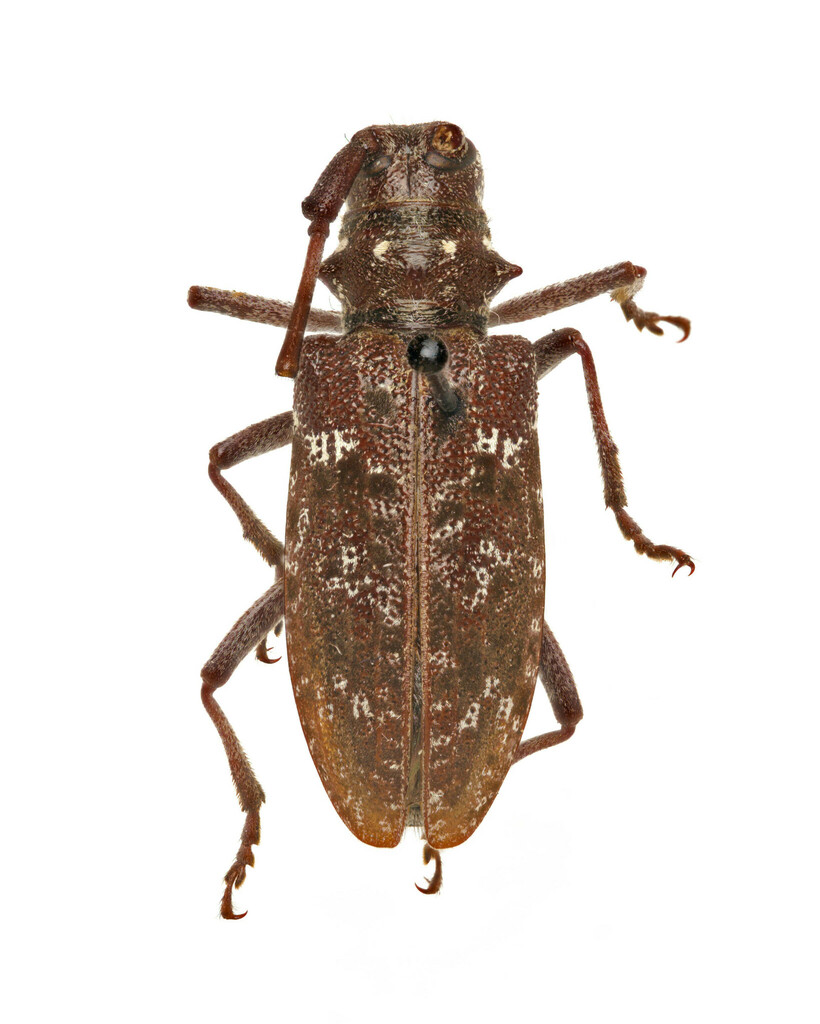
(c) Hopper Museum, some rights reserved (CC BY) · licence
Family: Cerambycidae · Class: Insecta · Order: Coleoptera
Monochamus obtusus is a California animal in the Cerambycidae family.
Monochamus obtusus is a longhorn beetle in the family Cerambycidae, subfamily Lamiinae. This species belongs to the tribe Lamiini and includes the subspecies Monochamus obtusus fulvomaculatus. As a member of the genus Monochamus, this beetle is part of a group commonly known as sawyer beetles or pine sawyers, characterized by their elongated antennae and robust build typical of wood-boring beetles. The species occurs in North America, though specific distribution records within California remain poorly documented in available databases. According to NatureServe Explorer, M. obtusus has a global conservation rank of G5 (Secure), indicating stable populations across its range. However, detailed state-level distribution data and population assessments for California are not currently available in standard wildlife databases. Like other Monochamus species, M. obtusus likely inhabits forested areas where coniferous trees provide suitable host material for larval development. Members of this genus typically utilize dead, dying, or stressed conifers as breeding sites. The larvae are wood borers that develop within the bark and sapwood of host trees, creating characteristic galleries as they feed and grow. Adult emergence typically occurs through distinctive round exit holes in the bark. Adult beetles are primarily active during warmer months when they seek mates and suitable oviposition sites. Females locate appropriate host trees through chemical cues and bore into the bark to deposit eggs. The larval stage represents the primary feeding period, during which developing beetles consume wood tissue and contribute to the natural decomposition process in forest ecosystems. Development from egg to adult typically requires one to two years, depending on environmental conditions and host tree quality. As wood-boring beetles, Monochamus species play important ecological roles as decomposers in forest ecosystems, helping break down dead and dying tree material. However, some members of this genus can also serve as vectors for plant pathogens, including nematodes that cause serious forest diseases. The pine wood nematode (Bursaphelenchus xylophilus), transmitted by certain Monochamus species, has caused significant mortality in pine forests in some regions, though the specific role of M. obtusus as a vector requires further documentation. Detailed information about M. obtusus biology, ecology, and distribution in California remains limited in scientific literature. The species does not appear on federal or state threatened and endangered species lists, consistent with its global secure status. Current research gaps include specific host tree preferences, detailed life cycle timing, distribution patterns within California, and potential interactions with forest pathogens. Enhanced survey efforts and taxonomic studies would improve understanding of this species' role in California forest ecosystems and inform forest management practices.
Classification
Class: Insecta · Order: Coleoptera · Family: Cerambycidae
Frequently asked questions
How is Monochamus obtusus classified?
Monochamus obtusus belongs to class Insecta, order Coleoptera, family Cerambycidae.
What family does Monochamus obtusus belong to?
Monochamus obtusus is in the Cerambycidae family.
What is Monochamus obtusus?
Monochamus obtusus is a longhorn beetle in the family Cerambycidae, subfamily Lamiinae.
Is Monochamus obtusus found in California?
Yes. Monochamus obtusus is recorded in California in The California Species Project's catalogue.
Related species
Other California species in the same genus, family, or bioregion.
Data from The California Species Project — 14,000+ California species with verified data from CNPS, CDFW, USFWS, and more.