Monocrepidius exsul
Pasture Wireworm
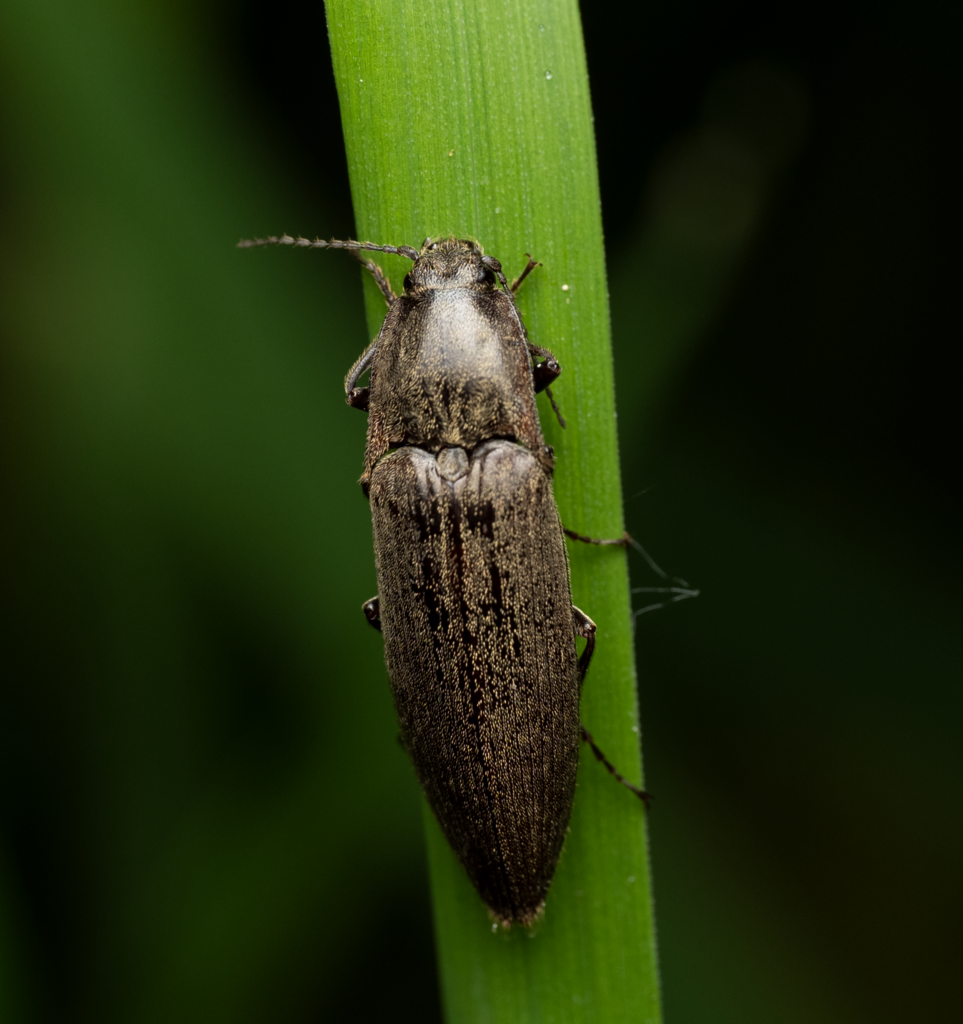
no rights reserved · CC0
Family: Elateridae · Class: Insecta · Order: Coleoptera
Monocrepidius exsul (Pasture Wireworm) is a California animal in the Elateridae family.
The Pasture Wireworm is a click beetle in the family Elateridae, subfamily Agrypninae. Adults are small to medium-sized beetles with the characteristic ability to right themselves with an audible click when placed on their backs. The species exhibits the typical elongated, somewhat flattened body form of click beetles, with relatively short antennae and legs that can be retracted against the body. Monocrepidius exsul has a complex taxonomic history and distribution pattern. According to BugGuide records, this species was previously classified under the genus Conoderus as Conoderus exsul before being reclassified to Monocrepidius. The species is documented from multiple regions including California, Texas, and extends into parts of the Pacific region. BugGuide records show occurrences in Travis County, Texas, indicating the species has a broader distribution than California alone. The species inhabits grassland and pasture environments, as suggested by its common name. Like other wireworms, the larval stage likely develops in soil environments where they feed on plant roots and organic matter. Adult beetles are typically found in areas with adequate vegetation cover and soil moisture. The relationship between adults and specific host plants has not been well documented in available literature. As with other Elateridae species, Pasture Wireworms undergo complete metamorphosis. The larval stage, known as wireworms, are elongated, hard-bodied, and yellowish-brown in color. According to research referenced on BugGuide, studies have examined the food habits of this species, particularly in agricultural contexts (Robertson 1987). Wireworm larvae are known to feed on plant roots, seeds, and decaying organic matter in soil. The duration of the larval stage can extend over multiple years, which is typical for many elaterid species. Adults are likely active during warmer months and may be attracted to lights at night. The conservation status of Monocrepidius exsul has not been formally assessed by federal or state agencies. The species does not appear on current U.S. Fish and Wildlife Service species lists or California Department of Fish and Wildlife rare species inventories. However, like many native insects, the species may face pressures from habitat modification, agricultural intensification, and pesticide use. Research on related beetle species indicates that ground-dwelling beetles can be affected by insecticide applications used in agricultural settings. Detailed ecological studies of this species remain limited. The taxonomic reclassification from Conoderus to Monocrepidius suggests ongoing systematic work on this group, but comprehensive biological and ecological data are lacking in current literature. The species' role in ecosystem functioning, specific habitat requirements, and population trends have not been thoroughly documented. Additional research is needed to better understand the distribution, life history, and conservation needs of this species in California ecosystems.
Classification
Class: Insecta · Order: Coleoptera · Family: Elateridae
Frequently asked questions
How is Monocrepidius exsul classified?
Monocrepidius exsul belongs to class Insecta, order Coleoptera, family Elateridae.
What family does Monocrepidius exsul belong to?
Monocrepidius exsul is in the Elateridae family.
What is Monocrepidius exsul?
The Pasture Wireworm is a click beetle in the family Elateridae, subfamily Agrypninae.
Is Monocrepidius exsul found in California?
Yes. Monocrepidius exsul is recorded in California in The California Species Project's catalogue.
Related species
Other California species in the same genus, family, or bioregion.
Data from The California Species Project — 14,000+ California species with verified data from CNPS, CDFW, USFWS, and more.