Monopis crocicapitella
Bird Nest Moth
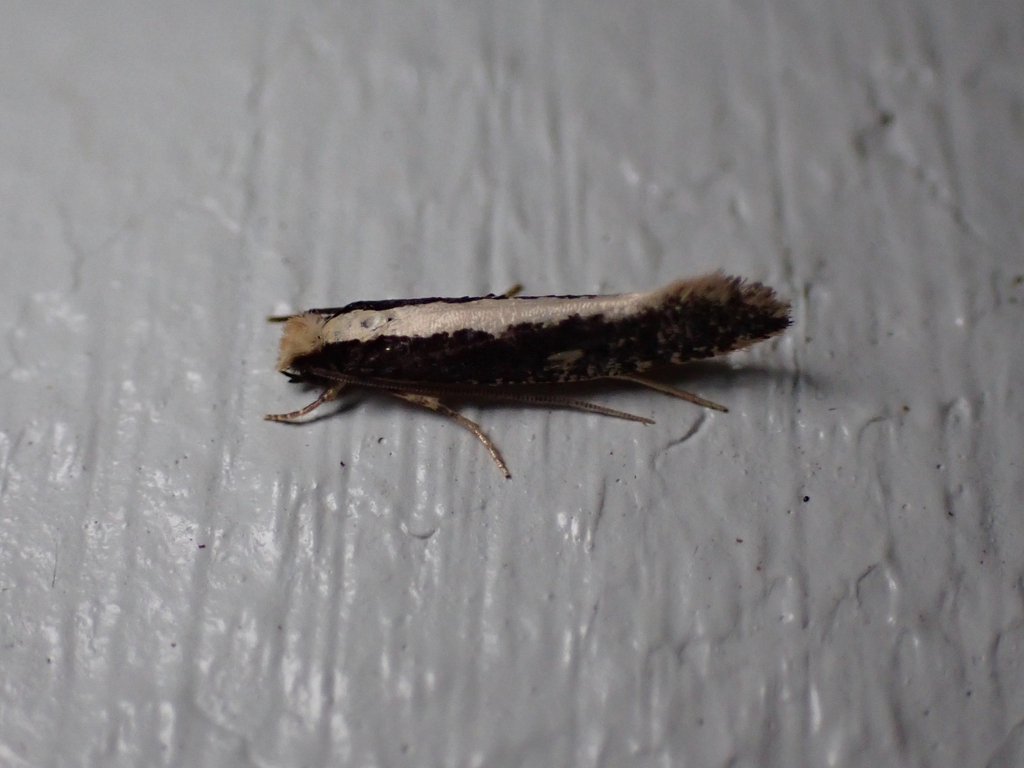
no rights reserved · CC0
Family: Tineidae · Class: Insecta · Order: Lepidoptera
Monopis crocicapitella (Bird Nest Moth) is a California animal in the Tineidae family.
The Bird Nest Moth (Monopis crocicapitella) is a small tineid moth in the family Tineidae, commonly known as clothes moths or scavenger moths. Adults typically measure 8-12 mm (0.3-0.5 inches) in wingspan, with forewings that are brownish-gray to dark brown in coloration. The forewings display a distinctive pattern of darker crossbands and lighter mottling, while the hindwings are pale gray to whitish. The head capsule is characteristically orange to reddish-brown, which corresponds to the species epithet 'crocicapitella' meaning 'saffron-headed.' Adults have thread-like antennae and long, narrow wings typical of the microlepidoptera. Monopis crocicapitella has a cosmopolitan distribution, occurring across North America, Europe, and other regions where suitable habitat exists. In California, the species can be found throughout various counties where bird nesting activity provides appropriate larval development sites. The moth's range closely follows the distribution of its primary hosts, particularly cavity-nesting birds and their associated nesting materials. This species inhabits diverse environments where birds construct nests, including urban areas, suburban gardens, parks, agricultural regions, and natural habitats with tree cavities or nest boxes. The larvae develop within bird nests, particularly those of cavity-nesting species such as woodpeckers, chickadees, nuthatches, and various songbirds. Nests in tree holes, nest boxes, building crevices, and similar protected locations provide the microhabitat necessary for larval development. Bird Nest Moth larvae are detritivores that feed on organic debris within bird nests, including feathers, dried fecal material, shed skin, food remnants, and other keratin-rich materials. This feeding behavior makes them important decomposers in the nest ecosystem. The larvae construct silken galleries within the nest material as they feed and develop through five instars. Pupation typically occurs within the nest structure in a silken cocoon. Adults emerge and mate, with females depositing eggs in or near suitable bird nests. The species likely produces multiple generations per year, with activity periods corresponding to bird nesting seasons. The reproductive cycle is closely synchronized with host bird activity. Mating occurs after adult emergence, and females locate appropriate nesting sites through chemical cues from nest materials. Development time from egg to adult varies with temperature and food quality but typically requires several weeks to complete. Monopis crocicapitella is not currently listed under federal or California endangered species legislation. The species appears to maintain stable populations throughout its range, likely benefiting from the widespread availability of bird nesting sites in both natural and human-modified environments. Urban environments may actually provide increased nesting opportunities through nest boxes and building cavities used by birds. No specific conservation concerns have been identified for this species, and its cosmopolitan distribution suggests adaptability to various environmental conditions. The moth's role as a nest decomposer may provide ecological benefits by breaking down organic matter in bird nesting sites.
Classification
Class: Insecta · Order: Lepidoptera · Family: Tineidae
Frequently asked questions
How is Monopis crocicapitella classified?
Monopis crocicapitella belongs to class Insecta, order Lepidoptera, family Tineidae.
What family does Monopis crocicapitella belong to?
Monopis crocicapitella is in the Tineidae family.
What is Monopis crocicapitella?
The Bird Nest Moth (Monopis crocicapitella) is a small tineid moth in the family Tineidae, commonly known as clothes moths or scavenger moths.
Is Monopis crocicapitella found in California?
Yes. Monopis crocicapitella is recorded in California in The California Species Project's catalogue.
Related species
Other California species in the same genus, family, or bioregion.
Data from The California Species Project — 14,000+ California species with verified data from CNPS, CDFW, USFWS, and more.