Mopalia hindsii
Hind's Chiton
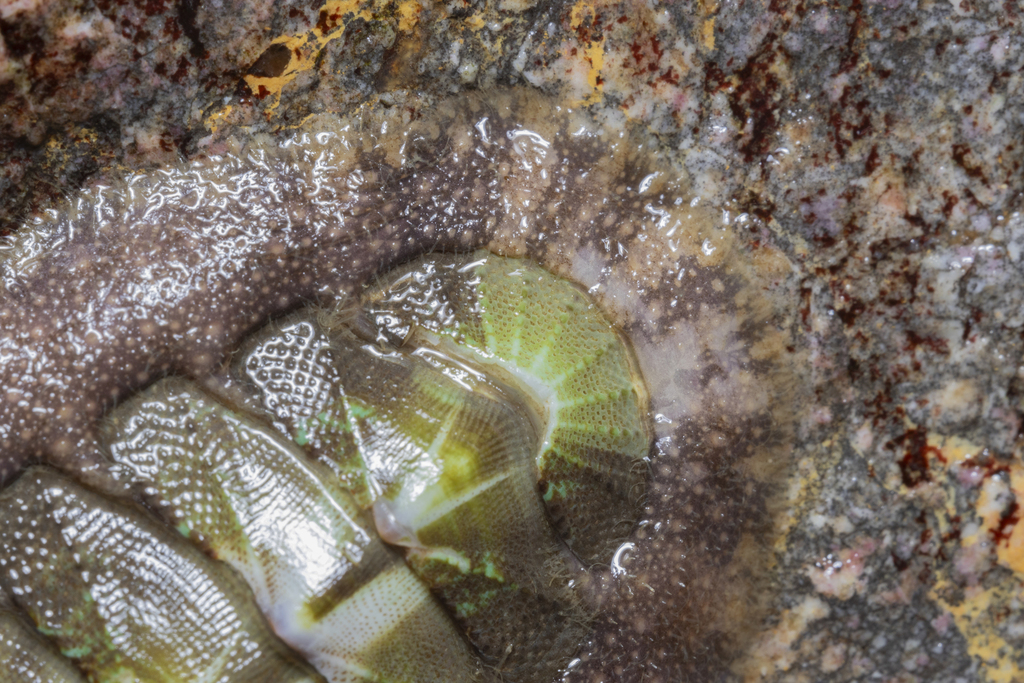
(c) Nathan, some rights reserved (CC BY) · licence
Family: Mopaliidae · Class: Polyplacophora · Order: Chitonida
Mopalia hindsii (Hind's Chiton) is a California animal in the Mopaliidae family.
Hind's chiton is a marine mollusk belonging to the class Polyplacophora, characterized by eight overlapping calcareous plates arranged along its dorsal surface. This species typically measures 25 to 50 mm (1.0 to 2.0 inches) in length, with a broadly oval body shape. The plates display variable coloration ranging from reddish-brown to greenish-gray, often with darker radiating lines or mottled patterns. The girdle surrounding the plates is covered with small scales and short bristles, distinguishing it from smooth-girdled chiton species. Like other members of the family Mopaliidae, Hind's chiton possesses a muscular foot used for locomotion and strong adhesion to rocky surfaces. Hind's chiton occurs along the Pacific coast from British Columbia south to Baja California, Mexico. In California, the species is documented from intertidal and shallow subtidal zones throughout the state's coastline. Populations are found from Humboldt County in the north to San Diego County in the south, with documented occurrences in the Channel Islands. The species shows particular abundance in central California coastal areas where suitable rocky habitat is prevalent. This species inhabits rocky intertidal zones and shallow subtidal areas to depths of approximately 20 meters (65 feet). Hind's chiton typically occurs on hard substrates including granite, sandstone, and volcanic rock surfaces where it can maintain secure attachment during tidal fluctuations. The species prefers areas with moderate to heavy wave action and is commonly found in tide pools, on rocky ledges, and beneath overhanging rocks. It often co-occurs with other intertidal mollusks, barnacles, and algae in these high-energy environments. Hind's chiton is a grazing herbivore that feeds primarily on encrusting algae, diatoms, and bacterial films scraped from rock surfaces using its radula, a ribbon-like feeding organ equipped with numerous small teeth. Feeding activity occurs primarily during high tide when the animal extends from crevices and moves across rock surfaces. Reproduction involves separate sexes with external fertilization. Spawning typically occurs during spring and early summer months when water temperatures are optimal. Females release eggs into the water column where they are fertilized by sperm from nearby males. Larvae undergo a planktonic stage before settling and metamorphosing into juvenile chitons. Hind's chiton currently has no federal or state conservation listing status and appears to maintain stable populations throughout its range as of December 2025. The species faces potential threats from coastal development, pollution, and climate change impacts including ocean acidification, which may affect shell formation. Rocky intertidal habitats are also vulnerable to human disturbance from recreational activities and collection pressure. However, the species' wide distribution and occupation of protected areas including marine sanctuaries and state parks provide some conservation buffer. Monitoring of population trends would benefit from standardized intertidal surveys, particularly in areas subject to intensive human use or environmental stressors.
Classification
Class: Polyplacophora · Order: Chitonida · Family: Mopaliidae
Frequently asked questions
How is Mopalia hindsii classified?
Mopalia hindsii belongs to class Polyplacophora, order Chitonida, family Mopaliidae.
What family does Mopalia hindsii belong to?
Mopalia hindsii is in the Mopaliidae family.
What is Mopalia hindsii?
Hind's chiton is a marine mollusk belonging to the class Polyplacophora, characterized by eight overlapping calcareous plates arranged along its dorsal surface.
Is Mopalia hindsii found in California?
Yes. Mopalia hindsii is recorded in California in The California Species Project's catalogue.
Related species
Other California species in the same genus, family, or bioregion.
Data from The California Species Project — 14,000+ California species with verified data from CNPS, CDFW, USFWS, and more.