Mopalia lignosa
Woody Chiton
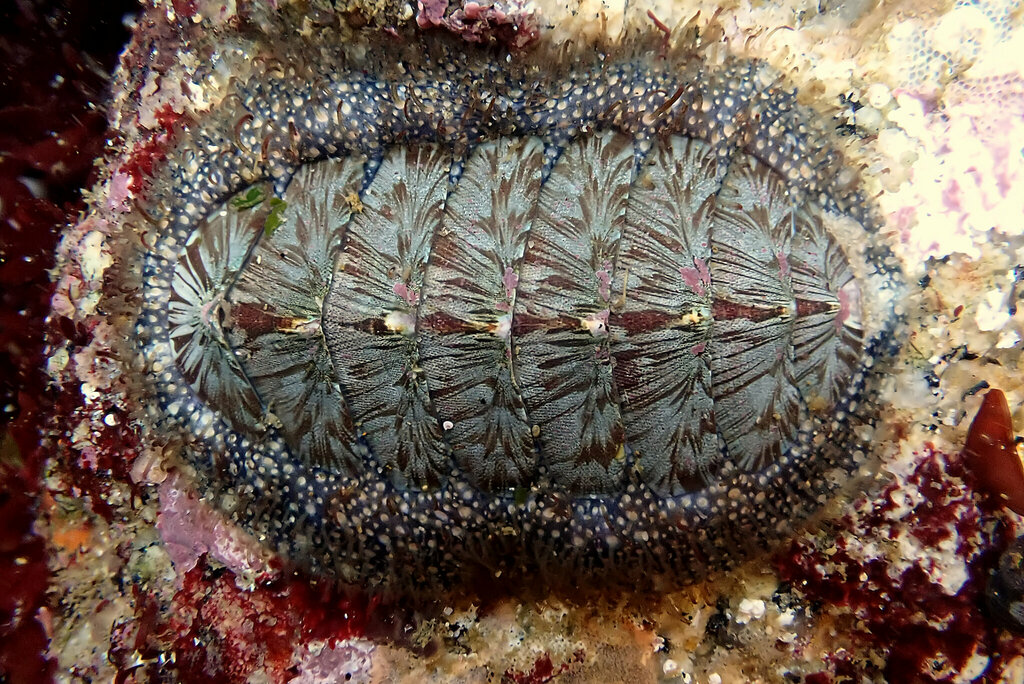
(c) Allison Gong, some rights reserved (CC BY) · licence
Family: Mopaliidae · Class: Polyplacophora · Order: Chitonida
Mopalia lignosa (Woody Chiton) is a California animal in the Mopaliidae family.
The woody chiton is a marine mollusk belonging to the class Polyplacophora, characterized by eight overlapping calcareous plates that form a protective shell along its dorsal surface. This species typically measures 25 to 75 millimeters (1.0 to 3.0 inches) in length, with a flattened, oval-shaped body that adheres closely to rock surfaces. The plates, or valves, are often brown to reddish-brown in coloration with lighter bands or markings. The girdle, a muscular band surrounding the plates, is covered with dense bristles or hairs that give the species its "woody" appearance. These bristles can vary in color from brown to gray and help distinguish Mopalia lignosa from other chiton species. Mopalia lignosa occurs along the Pacific coast from southeastern Alaska to Baja California, Mexico. In California, the species is found throughout the state's rocky intertidal zones, from the Oregon border south to the Mexican border. The species is commonly observed in marine protected areas such as Van Damme State Marine Conservation Area in Mendocino County, where it inhabits rocky reef and kelp forest environments. The woody chiton inhabits rocky intertidal and shallow subtidal zones, typically from the mid-intertidal zone to depths of approximately 17 meters (56 feet). The species demonstrates strong substrate preferences, adhering to hard surfaces including bedrock, boulders, and large cobbles. Mopalia lignosa is commonly found in areas with moderate to strong wave action and prefers surfaces with some algal growth or biofilm development. The species can tolerate varying salinity conditions and is often present in areas where freshwater inputs occur, such as near river mouths. As a grazing herbivore, the woody chiton uses its radula, a rasping feeding organ, to scrape algae, diatoms, and bacteria from rock surfaces. The species exhibits primarily nocturnal feeding behavior, becoming more active during low tide periods when aerial exposure is minimal. Reproduction occurs through broadcast spawning, with females releasing eggs and males releasing sperm into the water column for external fertilization. Spawning typically occurs during warmer months, with larvae undergoing a planktonic stage before settling and metamorphosing into juvenile chitons. The species demonstrates strong site fidelity, often returning to the same resting locations during high tide periods. Mopalia lignosa currently holds no federal or state conservation listing status, indicating stable population levels throughout its range. The species benefits from protection within California's marine protected area network, which restricts collection and habitat disturbance in designated zones. Primary threats to intertidal species like the woody chiton include habitat alteration from coastal development, pollution, ocean acidification, and increased storm intensity associated with climate change. However, the species' wide distribution range and adaptability to varying environmental conditions suggest resilience to moderate environmental changes. Monitoring of intertidal communities continues through various research programs to track population trends and ecosystem health indicators.
Classification
Class: Polyplacophora · Order: Chitonida · Family: Mopaliidae
Frequently asked questions
How is Mopalia lignosa classified?
Mopalia lignosa belongs to class Polyplacophora, order Chitonida, family Mopaliidae.
What family does Mopalia lignosa belong to?
Mopalia lignosa is in the Mopaliidae family.
What is Mopalia lignosa?
The woody chiton is a marine mollusk belonging to the class Polyplacophora, characterized by eight overlapping calcareous plates that form a protective shell along its dorsal surface.
Is Mopalia lignosa found in California?
Yes. Mopalia lignosa is recorded in California in The California Species Project's catalogue.
Related species
Other California species in the same genus, family, or bioregion.
Data from The California Species Project — 14,000+ California species with verified data from CNPS, CDFW, USFWS, and more.