Mopalia muscosa
Mossy Chiton
no rights reserved · CC0
Family: Mopaliidae · Class: Polyplacophora · Order: Chitonida
Mopalia muscosa (Mossy Chiton) is a California animal in the Mopaliidae family.
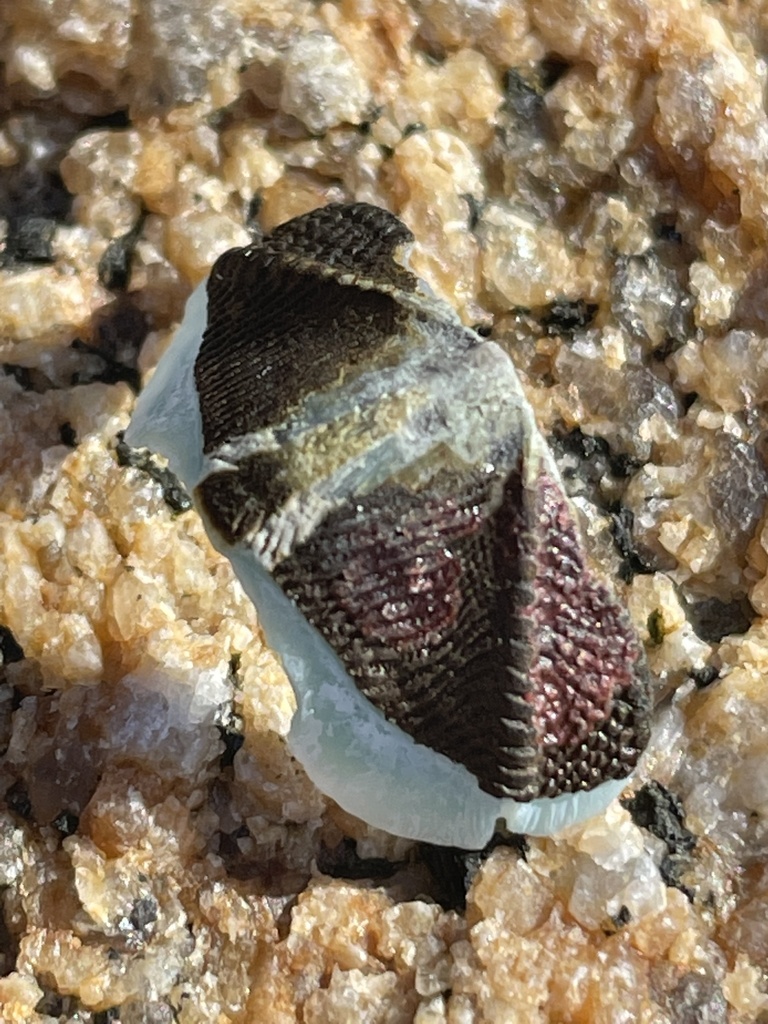
The mossy chiton is a marine mollusk belonging to the class Polyplacophora, distinguished by its eight overlapping shell plates arranged in a row along its oval, flattened body. Adults typically measure 30 to 100 millimeters (1.2 to 4 inches) in length, with the body covered by a tough, leathery girdle that extends beyond the shell plates. The girdle surface is characteristically rough and hairy, giving the species its common name, and varies in color from reddish-brown to dark green, often with lighter mottling that provides effective camouflage against algae-covered rocks. Mossy chitons inhabit the rocky intertidal zones along the Pacific coast of North America, ranging from Alaska south to Baja California, Mexico. Along the California coast, they are commonly found from the Oregon border to Point Conception, with populations documented in marine protected areas including Duxbury Reef State Marine Conservation Area near Bolinas Bay. The species occurs from the high intertidal zone down to depths of approximately 20 meters (65 feet), though it is most abundant in the mid to low intertidal zones. This species requires hard substrate environments, particularly rocky shores with crevices and tide pools that provide protection during low tide exposure. Mossy chitons prefer areas with moderate to heavy wave action and are frequently found attached to rocks covered with coralline algae, their primary food source. They occupy a variety of microhabitats including vertical rock faces, undersides of boulders, and within tide pool margins where they can remain submerged or maintain moisture during tidal cycles. Mossy chitons are herbivorous grazers that feed primarily on encrusting coralline algae, diatoms, and other microscopic algae scraped from rock surfaces using their radula, a feeding organ containing numerous tiny teeth. They are primarily nocturnal, moving actively across rock surfaces at night to feed while remaining stationary and tightly attached during daylight hours. Reproduction occurs through broadcast spawning, with separate sexes releasing gametes into the water column during spring and summer months. Fertilized eggs develop into free-swimming trochophore larvae before settling and metamorphosing into juvenile chitons. The mossy chiton currently holds no federal or state conservation status and is classified as G5 (globally secure) by NatureServe. Populations appear stable throughout most of their range, though like many intertidal species, they face potential threats from ocean acidification, which can affect shell formation, and climate change impacts on coastal ecosystems. The species benefits from protection within California's network of marine protected areas, where collecting is prohibited, helping maintain healthy populations for both ecological function and scientific study.
Classification
Class: Polyplacophora · Order: Chitonida · Family: Mopaliidae
Frequently asked questions
How is Mopalia muscosa classified?
Mopalia muscosa belongs to class Polyplacophora, order Chitonida, family Mopaliidae.
What family does Mopalia muscosa belong to?
Mopalia muscosa is in the Mopaliidae family.
What is Mopalia muscosa?
The mossy chiton is a marine mollusk belonging to the class Polyplacophora, distinguished by its eight overlapping shell plates arranged in a row along its oval, flattened body.
Is Mopalia muscosa found in California?
Yes. Mopalia muscosa is recorded in California in The California Species Project's catalogue.
Related species
Other California species in the same genus, family, or bioregion.
Data from The California Species Project — 14,000+ California species with verified data from CNPS, CDFW, USFWS, and more.