Mordella hubbsi
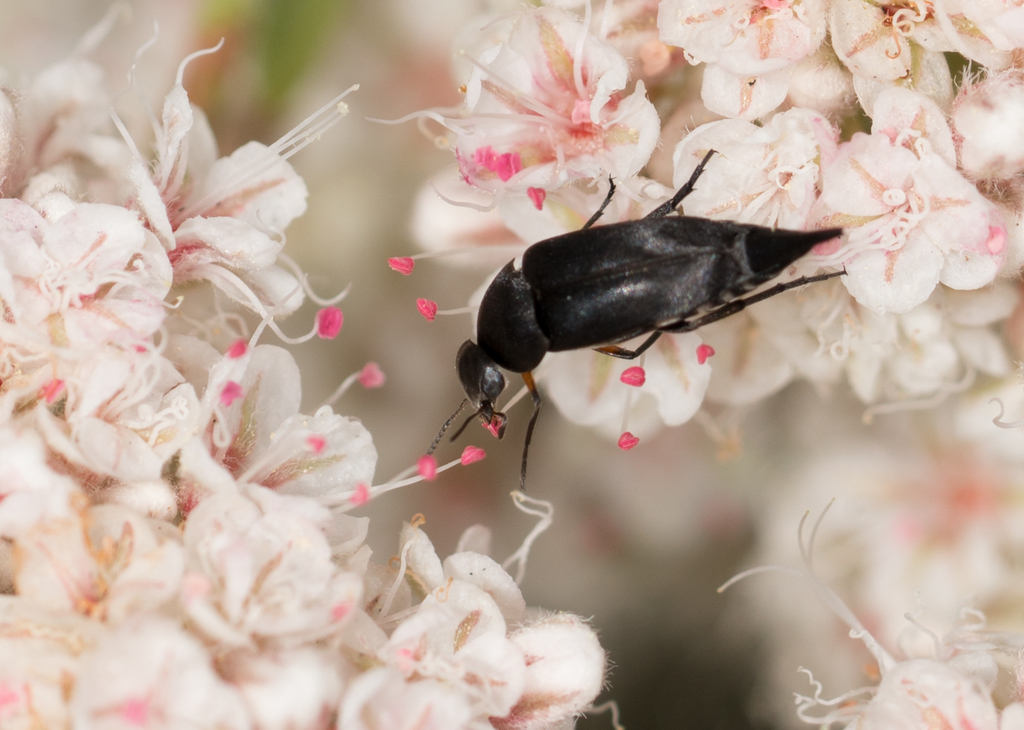
no rights reserved · CC0
Family: Mordellidae · Class: Insecta · Order: Coleoptera
Mordella hubbsi is a California animal in the Mordellidae family.
Mordella hubbsi is a small tumbling flower beetle in the family Mordellidae, described by Liljeblad in 1922. This species belongs to a diverse group of beetles characterized by their hump-backed appearance and ability to tumble when disturbed. Adults are distinguished from other black congeners by their ferruginous (rust-colored) pro- and mesofemora, providing a key diagnostic feature for field identification (BugGuide 2025). Mordella hubbsi occurs in California, with documented observations from Orange County, including records from Anaheim as recently as June 2023 (BugGuide 2025). The species appears to have a broader distribution within the state, though specific range limits have not been comprehensively documented. Like other members of the genus Mordella, this species likely occurs in areas with suitable flowering plants that serve as adult feeding sites. The habitat requirements of M. hubbsi have not been extensively studied, but observations suggest the species occurs in urban and suburban environments where flowering plants are available. Adults have been documented visiting flowers, consistent with the typical behavior of mordellid beetles. The species likely requires dead or decaying wood for larval development, as is characteristic of the family Mordellidae, though specific host materials have not been identified. Adult beetles are active during warmer months, with documented activity in June. Like other tumbling flower beetles, adults likely feed on pollen and nectar from various flowering plants. The larvae are wood borers, developing in dead or dying plant material, though the specific larval hosts for M. hubbsi remain undocumented. Adults exhibit the characteristic tumbling behavior when disturbed, rolling into a ball and dropping from their perch as a defensive mechanism. The species likely has one generation per year, with adults emerging during peak flowering periods when food resources are most abundant. Mordella hubbsi is currently ranked as G5 (Secure) by NatureServe, indicating the species is considered stable and at low risk of extinction (NatureServe 2025). The species is not federally listed and lacks formal state conservation status in California. However, like many invertebrates, comprehensive population monitoring data are lacking, making it difficult to assess long-term trends. Urban development and habitat modification could potentially impact local populations, particularly if dead wood substrates necessary for larval development are removed through landscape management practices. The species' apparent adaptation to urban environments, as evidenced by observations in developed areas of Orange County, may provide some resilience to habitat changes. Conservation efforts for this species would benefit from additional research on larval ecology, host plant relationships, and distribution patterns throughout California.
Classification
Class: Insecta · Order: Coleoptera · Family: Mordellidae
Frequently asked questions
How is Mordella hubbsi classified?
Mordella hubbsi belongs to class Insecta, order Coleoptera, family Mordellidae.
What family does Mordella hubbsi belong to?
Mordella hubbsi is in the Mordellidae family.
What is Mordella hubbsi?
Mordella hubbsi is a small tumbling flower beetle in the family Mordellidae, described by Liljeblad in 1922.
Is Mordella hubbsi found in California?
Yes. Mordella hubbsi is recorded in California in The California Species Project's catalogue.
More California species
This species has no close relatives in our California data — here are other species to explore.
Data from The California Species Project — 14,000+ California species with verified data from CNPS, CDFW, USFWS, and more.