Morone saxatilis
Striped bass
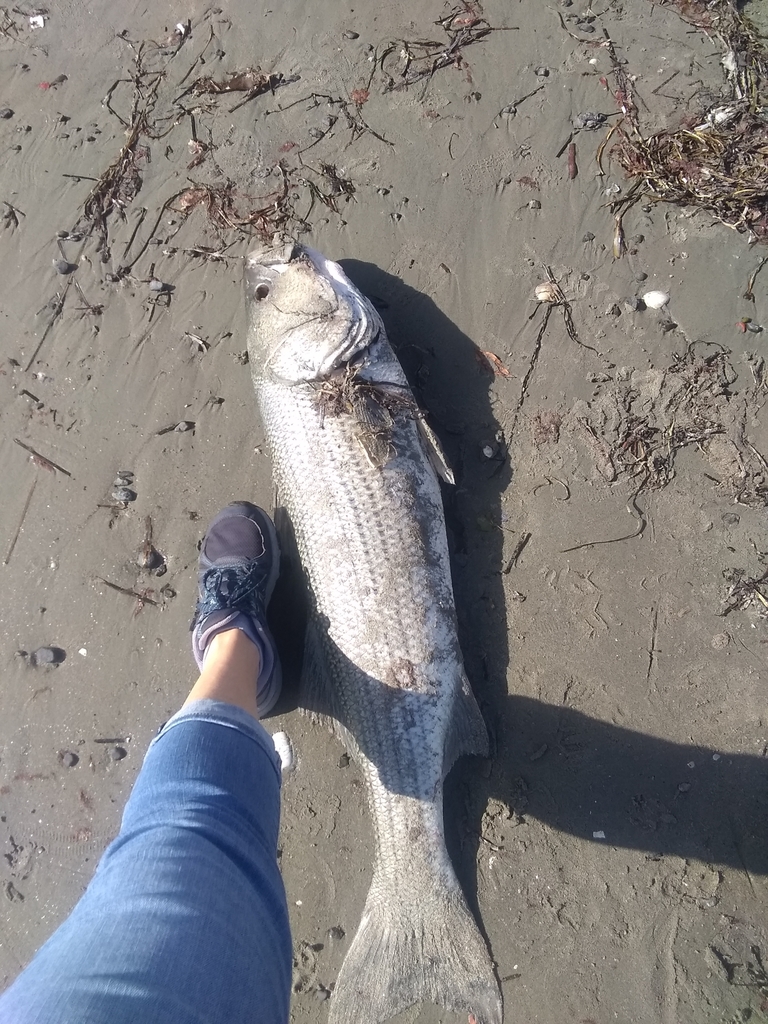
no rights reserved · CC0
Family: Moronidae · Class: Actinopterygii · Order: Perciformes
Morone saxatilis (Striped bass) is a California animal in the Moronidae family.
The striped bass is a large, anadromous fish characterized by seven to eight prominent dark horizontal stripes running along its silver-white body. Adults typically measure 61 to 122 centimeters (24 to 48 inches) in length and weigh 4.5 to 27 kilograms (10 to 60 pounds), though exceptional individuals can exceed 36 kilograms (80 pounds). The body is laterally compressed with a deeply forked tail and two separate dorsal fins. The mouth is large with a protruding lower jaw, and the gill covers feature two flat spines. Native to the Atlantic coast from the St. Lawrence River to northern Florida, striped bass were successfully introduced to California's waters in 1879. The species now inhabits the Sacramento-San Joaquin Delta, San Francisco Bay, and coastal waters from Monterey Bay to the Oregon border. California's population represents the most successful Pacific coast introduction, establishing reproducing populations primarily in the Delta system and tributaries of the Sacramento and San Joaquin rivers. Striped bass occupy a variety of aquatic habitats including estuaries, bays, coastal waters, and freshwater rivers and reservoirs. Adults prefer water temperatures between 15 to 25 degrees Celsius (59 to 77 degrees Fahrenheit) and are commonly found in areas with moderate to strong currents. During spawning season, they migrate to freshwater rivers and streams where water temperatures reach 16 to 20 degrees Celsius (61 to 68 degrees Fahrenheit). The species tolerates a wide salinity range, from pure freshwater to full-strength seawater. Striped bass are opportunistic predators that feed primarily on fish, including anchovies, sardines, herring, and smelt, as well as crustaceans and marine worms. Adults are highly migratory, moving between saltwater feeding areas and freshwater spawning grounds. Spawning occurs from April through June in California, with females releasing 20,000 to over one million eggs depending on size. Eggs are semi-buoyant and require flowing water to remain suspended during the 48 to 72-hour incubation period. Males mature at 2 to 4 years, while females reach maturity at 4 to 8 years. Striped bass are not federally or state listed in California, though populations face several conservation challenges. The Sacramento-San Joaquin Delta population has experienced significant decline since the 1960s due to water diversions, habitat loss, and altered freshwater flows. According to the California Department of Fish and Wildlife, recruitment has been poor in recent decades, with young fish survival rates significantly reduced. Primary threats include entrainment in water export facilities, reduced freshwater outflows, habitat degradation, and competition with introduced species. Water temperature increases associated with climate change pose additional risks to spawning success and juvenile survival. Despite these challenges, striped bass remain an important recreational fishery species in California, supporting both commercial and sport fishing industries in the San Francisco Bay and Delta regions.
Classification
Class: Actinopterygii · Order: Perciformes · Family: Moronidae
Frequently asked questions
How is Morone saxatilis classified?
Morone saxatilis belongs to class Actinopterygii, order Perciformes, family Moronidae.
What family does Morone saxatilis belong to?
Morone saxatilis is in the Moronidae family.
What is Morone saxatilis?
The striped bass is a large, anadromous fish characterized by seven to eight prominent dark horizontal stripes running along its silver-white body.
Is Morone saxatilis found in California?
Yes. Morone saxatilis is recorded in California in The California Species Project's catalogue.
Related species
Other California species in the same genus, family, or bioregion.
Data from The California Species Project — 14,000+ California species with verified data from CNPS, CDFW, USFWS, and more.