Motacilla alba
White Wagtail
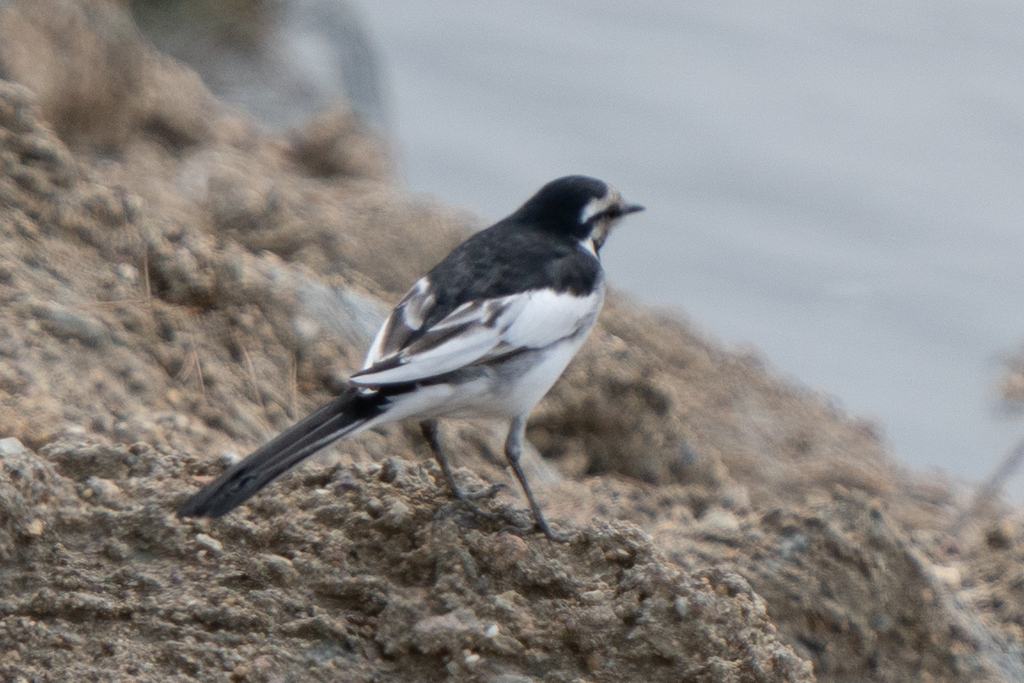
no rights reserved · CC0
Family: Motacillidae · Class: Aves · Order: Passeriformes
Motacilla alba (White Wagtail) is a California animal in the Motacillidae family.
The White Wagtail is a small passerine bird measuring 16.5 to 19 centimeters (6.5 to 7.5 inches) in length with a wingspan of 25 to 30 centimeters (9.8 to 11.8 inches). Adults weigh 17 to 25 grams (0.6 to 0.9 ounces). The species displays distinct seasonal plumage variations. Breeding males exhibit a black cap, nape, throat, and upper breast contrasting sharply with white cheeks and underparts. The back is gray, and the wings show white patches visible in flight. Non-breeding adults have reduced black markings, with gray replacing the black throat and breast. The long tail is black with white outer feathers, constantly wagged up and down in characteristic fashion. Females resemble males but show duller coloration and less extensive black markings. The White Wagtail has one of the largest distributions of any passerine, breeding across Europe, Asia, and parts of North Africa. In North America, the species occurs primarily in Alaska, with small breeding populations established in western and northern regions. California records represent vagrant individuals, typically occurring during fall and winter months along the coast and in interior valleys. Most California sightings are concentrated in the San Francisco Bay Area, Central Valley, and Southern California coastal regions, with occasional records from the Salton Sea and desert areas. White Wagtails inhabit open areas near water, including shorelines, mudflats, agricultural fields, parks, and urban environments. The species prefers areas with short vegetation or bare ground that facilitate foraging for insects. During migration and winter, birds utilize a broader range of habitats including parking lots, golf courses, and residential areas. Elevation range extends from sea level to moderate elevations, though most California records occur below 500 meters (1,640 feet). White Wagtails are primarily insectivorous, capturing flies, midges, beetles, and other small arthropods through ground gleaning and aerial sallies. The species exhibits a distinctive foraging behavior, running rapidly across open ground while pumping its tail. Breeding occurs from April through July, with females constructing cup-shaped nests in crevices, under eaves, or in vegetation near water. Clutch size ranges from four to six eggs, with an incubation period of 12 to 14 days. Young fledge after 14 to 16 days but remain dependent on parents for additional weeks. The White Wagtail is not federally listed and has no special conservation status in California, as it is not considered a resident breeding species in the state. The global population is estimated at 150 to 500 million individuals and is considered stable by the International Union for Conservation of Nature, which classifies the species as Least Concern. In California, the species remains an uncommon but regular vagrant, with records increasing slightly over recent decades. Climate change may influence future occurrence patterns, potentially expanding the species' North American range southward. The adaptable nature of White Wagtails to human-modified environments suggests continued persistence where suitable habitat exists.
Classification
Class: Aves · Order: Passeriformes · Family: Motacillidae
Frequently asked questions
How is Motacilla alba classified?
Motacilla alba belongs to class Aves, order Passeriformes, family Motacillidae.
What family does Motacilla alba belong to?
Motacilla alba is in the Motacillidae family.
What is Motacilla alba?
The White Wagtail is a small passerine bird measuring 16.5 to 19 centimeters (6.5 to 7.5 inches) in length with a wingspan of 25 to 30 centimeters (9.8 to 11.8 inches).
Is Motacilla alba found in California?
Yes. Motacilla alba is recorded in California in The California Species Project's catalogue.
Related species
Other California species in the same genus, family, or bioregion.
Data from The California Species Project — 14,000+ California species with verified data from CNPS, CDFW, USFWS, and more.