Mulsantina picta
Painted Ladybird
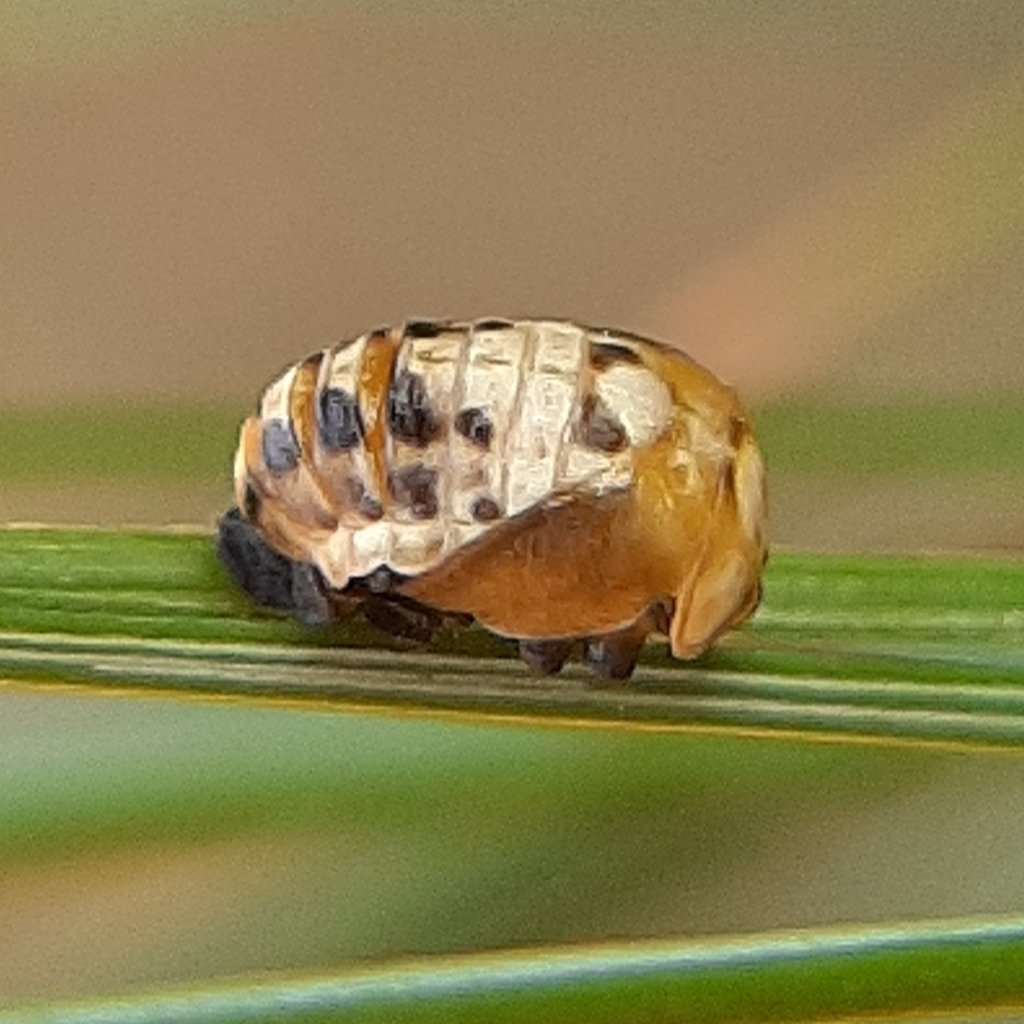
(c) Will Linnard, some rights reserved (CC BY) · licence
Family: Coccinellidae · Class: Insecta · Order: Coleoptera
Mulsantina picta (Painted Ladybird) is a California animal in the Coccinellidae family.
The Painted Ladybird is a small beetle measuring approximately 4 to 5.5 mm (0.16 to 0.22 inches) in body length. This species exhibits variable coloration patterns, with adults displaying distinctive white markings on the underside (venter) that are characteristic of the genus Mulsantina (BugGuide). The elytra may appear spotted or uniform, and spotless forms can resemble Adalia bipunctata but are distinguished by having three white spots on the face instead of two, along with different pronotal patterns (BugGuide). The species belongs to the family Coccinellidae and is one of four Mulsantina species found in North America. Mulsantina picta has the broadest distribution among North American Mulsantina species, occurring coast to coast across southern Canada and the contiguous United States, with the notable exception of Florida (BugGuide). The species is documented from multiple locations across California, including Alameda County and other regions throughout the state. This wide-ranging distribution extends from the Pacific Coast to the Atlantic, making it one of the most geographically extensive coccinellids in North America. The Painted Ladybird typically inhabits arboreal environments, preferring shrubs and trees over ground-level vegetation (BugGuide). Adults have been observed on coniferous trees, including Ponderosa Pine, where they may be found on male cones during late spring breeding periods. The species appears to favor woody vegetation across various elevations, from coastal areas to montane forests. Unlike some specialist coccinellids, this species demonstrates adaptability to diverse forest and woodland habitats. As a member of the Coccinellidae family, Mulsantina picta functions as a predatory beetle, likely feeding on soft-bodied insects such as aphids, scale insects, and other small arthropods typical of coccinellid diets. Adults are active during warmer months, with breeding activity documented in late spring and early summer. Observations from Colorado indicate mating behavior occurs in May at elevations around 6,400 feet, suggesting the species maintains reproductive activity across its altitudinal range. Like other coccinellids, adults likely overwinter in protected locations such as leaf litter, bark crevices, or under stones. Currently, Mulsantina picta does not hold federal or state listing status and appears to maintain stable populations across its extensive range. The species benefits from its generalist habitat preferences and wide distribution, which provide resilience against localized environmental changes. However, like many native coccinellids, populations may face pressure from introduced competitors such as Harmonia axyridis, which has displaced native species in some regions. The Painted Ladybird's arboreal preferences may offer some protection from ground-level habitat disturbances, though forest management practices and climate change could potentially affect long-term population stability. Conservation efforts for this species focus primarily on maintaining diverse forest ecosystems and monitoring for impacts from invasive coccinellid species that continue to establish throughout North America.
Classification
Class: Insecta · Order: Coleoptera · Family: Coccinellidae
Frequently asked questions
How is Mulsantina picta classified?
Mulsantina picta belongs to class Insecta, order Coleoptera, family Coccinellidae.
What family does Mulsantina picta belong to?
Mulsantina picta is in the Coccinellidae family.
What is Mulsantina picta?
The Painted Ladybird is a small beetle measuring approximately 4 to 5.5 mm (0.16 to 0.22 inches) in body length.
Is Mulsantina picta found in California?
Yes. Mulsantina picta is recorded in California in The California Species Project's catalogue.
Related species
Other California species in the same genus, family, or bioregion.
Data from The California Species Project — 14,000+ California species with verified data from CNPS, CDFW, USFWS, and more.