Murgantia histrionica
Harlequin Bug
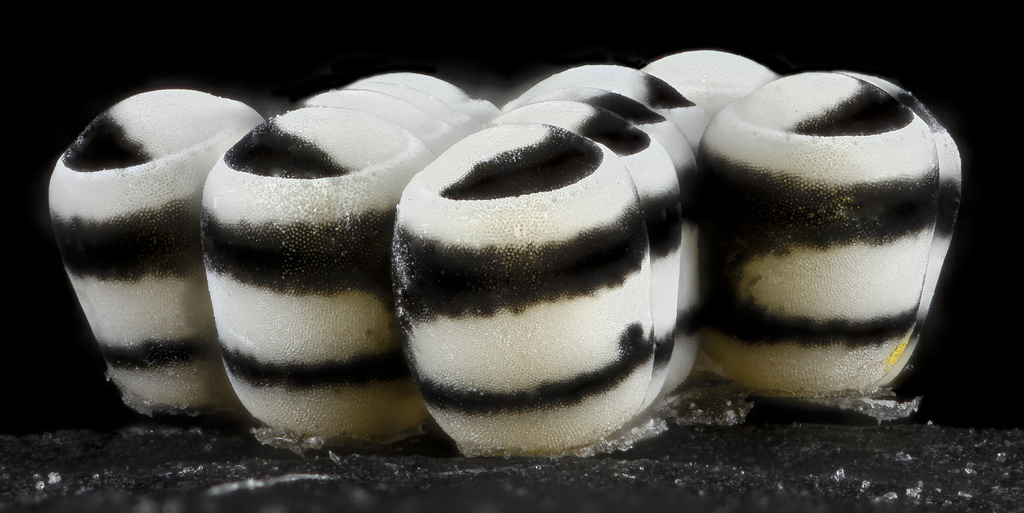
no rights reserved · CC0
Family: Pentatomidae · Class: Insecta · Order: Hemiptera
Murgantia histrionica (Harlequin Bug) is a California animal in the Pentatomidae family.
The Harlequin Bug is a small, distinctively patterned stink bug measuring 7.5 to 11.5 millimeters (0.3 to 0.45 inches) in length. The species displays bright coloration that is highly variable among individuals, typically featuring bold patterns of orange, red, yellow, and black markings arranged in geometric designs across the dorsal surface. This conspicuous coloration serves as warning coloration, advertising the bug's ability to produce defensive chemicals when threatened. The body shape is characteristic of the shield bug family, with a broad, somewhat flattened form and a triangular scutellum. Native to Mesoamerica, the Harlequin Bug has established invasive populations across much of the United States, ranging from Maine to Florida and westward to South Dakota and California (BugGuide). The species is rarely found in northern regions, with northern range limits fluctuating markedly depending on winter severity. The bug exhibits seasonal migration patterns, moving northward during spring and summer months to colonize agricultural areas. Harlequin Bugs primarily inhabit agricultural landscapes and disturbed areas where their host plants occur. The species shows strong habitat association with cultivated Brassicaceae crops, thriving in vegetable gardens, commercial farms, and areas with escaped or naturalized cruciferous plants. They are most commonly found at lower elevations and in areas with mild winter temperatures that allow for year-round survival or successful recolonization. This species is a specialized herbivore with a strong preference for plants in the Brassicaceae family. Primary host plants include horseradish, cabbage, cauliflower, collards, mustard, Brussels sprouts, turnip, kohlrabi, and radish (BugGuide). The bugs may also attack plants in other families, including tomato, potato, eggplant, and okra, though these are secondary hosts. Adults and nymphs feed by inserting their piercing-sucking mouthparts into plant tissues, extracting fluids and causing wilting, stunting, and sometimes plant death. The species overwinters as adults in protected locations, emerging in spring to mate and lay eggs on host plants. Females deposit barrel-shaped eggs in clusters on the undersides of leaves. The Harlequin Bug is not listed under federal or state conservation programs, as it is considered an agricultural pest rather than a species of conservation concern. As an invasive species, management efforts focus on control rather than protection. The bug's population dynamics are closely tied to winter temperatures, with severe winters reducing populations and mild winters allowing for population expansion. Climate change may facilitate the species' continued northward expansion and establishment in previously unsuitable regions. The species' agricultural impacts make it a target for integrated pest management programs, though its cryptic egg-laying behavior and mobility can make control challenging.
Classification
Class: Insecta · Order: Hemiptera · Family: Pentatomidae
Frequently asked questions
How is Murgantia histrionica classified?
Murgantia histrionica belongs to class Insecta, order Hemiptera, family Pentatomidae.
What family does Murgantia histrionica belong to?
Murgantia histrionica is in the Pentatomidae family.
What is Murgantia histrionica?
The Harlequin Bug is a small, distinctively patterned stink bug measuring 7.5 to 11.5 millimeters (0.3 to 0.45 inches) in length.
Is Murgantia histrionica found in California?
Yes. Murgantia histrionica is recorded in California in The California Species Project's catalogue.
Related species
Other California species in the same genus, family, or bioregion.
Data from The California Species Project — 14,000+ California species with verified data from CNPS, CDFW, USFWS, and more.