Mustela frenata inyoensis
Inyo Long-tailed Weasel
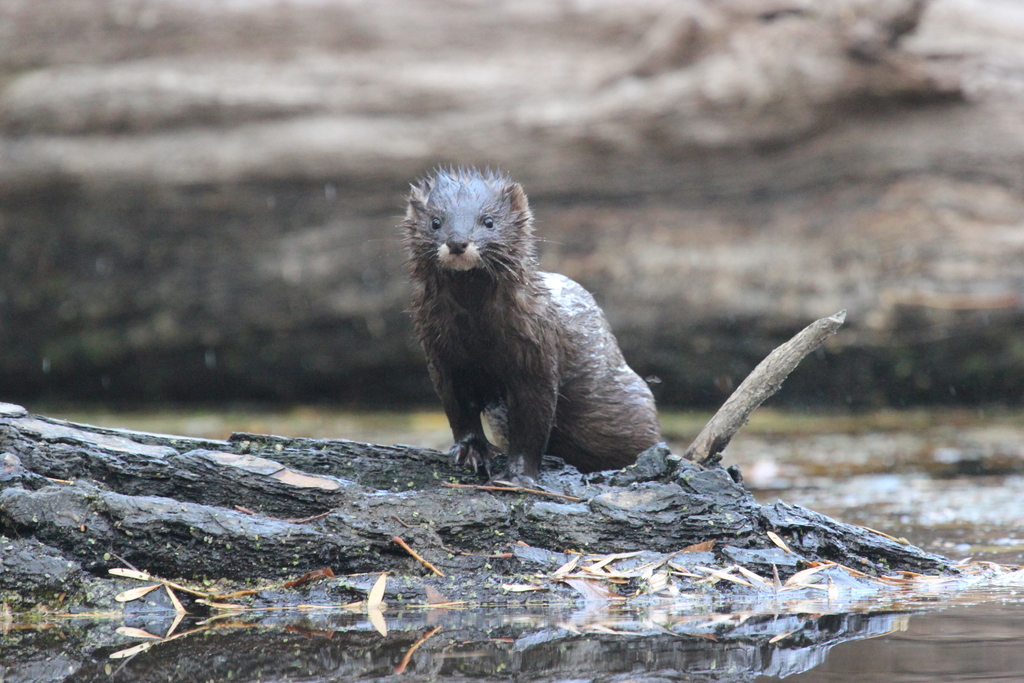
(c) Алина Урусова, some rights reserved (CC BY) · licence
Family: Mustelidae · Class: Mammalia · Order: Carnivora
Conservation status: G5T2Q S2
Mustela frenata inyoensis (Inyo Long-tailed Weasel) is a California animal in the Mustelidae family.
The Inyo long-tailed weasel is a subspecies of the long-tailed weasel (Mustela frenata) endemic to the Inyo Mountains region of eastern California. Adults typically measure 20 to 35 cm (8 to 14 inches) in body length, with males significantly larger than females. The tail adds an additional 10 to 20 cm (4 to 8 inches) to their total length. The species exhibits seasonal coat color changes, with brown to reddish-brown fur during summer months and white winter pelage, while retaining a distinctive black-tipped tail year-round. The body is elongated and cylindrical, typical of mustelids, with short legs and small rounded ears. The Inyo long-tailed weasel occurs exclusively in the Inyo Mountains of Inyo County, California, representing one of the most geographically restricted subspecies of long-tailed weasel in North America. This isolated population is separated from other long-tailed weasel populations by the Owens Valley to the west and expansive desert habitats to the east. The subspecies' range encompasses approximately 200 square kilometers of montane habitat within the Inyo Mountains. This subspecies inhabits rocky montane environments at elevations ranging from approximately 1,500 to 3,000 meters (4,920 to 9,840 feet). Preferred habitats include talus slopes, rocky outcrops, and pinyon-juniper woodlands. The species requires areas with adequate rock crevices and brush piles for denning sites, similar to other long-tailed weasel populations that utilize abandoned burrows, hollow logs, and natural rock formations. Water sources appear important for habitat suitability, as long-tailed weasels are frequently observed near water features. The Inyo long-tailed weasel is primarily nocturnal and crepuscular, with peak activity occurring from dusk until dawn. The species is largely solitary except during breeding season, typically occurring from late spring to early summer. Home ranges of males may overlap with those of females, but same-sex territories rarely intersect. The subspecies is highly carnivorous, feeding primarily on small mammals including rodents, pikas, and ground squirrels. Hunting behavior involves rapid pursuit through rocky terrain, with the weasel's elongated body allowing access to prey refugia among rocks and crevices. Communication includes chirping sounds when threatened and low trilling vocalizations during social interactions. The Inyo long-tailed weasel holds a Global/State Rank of G5T2Q S2, indicating the subspecies is imperiled in California with a high risk of extinction. The 'Q' qualifier suggests taxonomic uncertainty requiring further research. Primary conservation concerns include the subspecies' extremely limited geographic range, which makes the population vulnerable to stochastic events and habitat degradation. Climate change poses a significant threat through potential upslope habitat shifts and altered prey availability. The isolated nature of this population limits genetic exchange with other weasel populations, potentially reducing adaptive capacity. Current population size and trends remain poorly documented, highlighting the need for comprehensive surveys and monitoring programs to assess the subspecies' conservation status and develop appropriate management strategies.
Classification
Class: Mammalia · Order: Carnivora · Family: Mustelidae
Conservation status
G5T2Q S2
Frequently asked questions
How is Mustela frenata inyoensis classified?
Mustela frenata inyoensis belongs to class Mammalia, order Carnivora, family Mustelidae.
What family does Mustela frenata inyoensis belong to?
Mustela frenata inyoensis is in the Mustelidae family.
Is Mustela frenata inyoensis protected or of conservation concern?
Mustela frenata inyoensis carries the following status: G5T2Q S2.
What is Mustela frenata inyoensis?
The Inyo long-tailed weasel is a subspecies of the long-tailed weasel (Mustela frenata) endemic to the Inyo Mountains region of eastern California.
Is Mustela frenata inyoensis found in California?
Yes. Mustela frenata inyoensis is recorded in California in The California Species Project's catalogue.
Related species
Other California species in the same genus, family, or bioregion.
Data from The California Species Project — 14,000+ California species with verified data from CNPS, CDFW, USFWS, and more.