Mustela frenata xanthogenys
San Joaquin Long-tailed Weasel
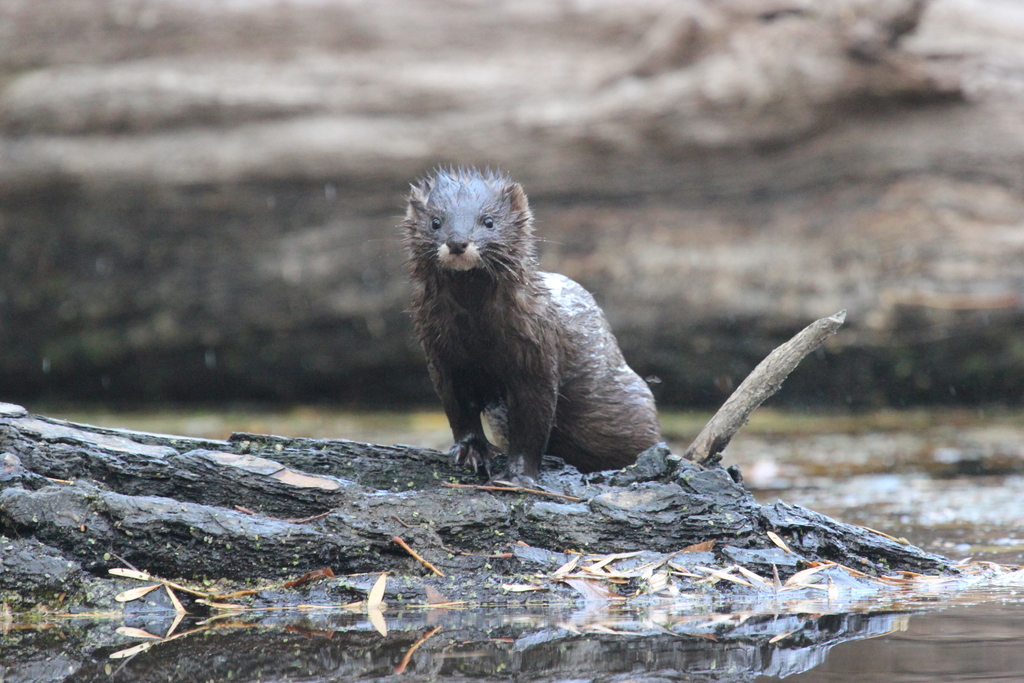
(c) Алина Урусова, some rights reserved (CC BY) · licence
Family: Mustelidae · Class: Mammalia · Order: Carnivora
Conservation status: G5T2T3 S3
Mustela frenata xanthogenys (San Joaquin Long-tailed Weasel) is a California animal in the Mustelidae family.
The San Joaquin long-tailed weasel (Neogale frenata xanthogenys) is a subspecies of the long-tailed weasel endemic to California's Central Valley and adjacent foothills. Recent taxonomic studies have reclassified long-tailed weasels from the genus Mustela to Neogale based on molecular phylogenetic analyses. Adults measure 280-420 mm (11-16.5 inches) in total length, with males typically larger than females. The tail comprises approximately one-third of the total body length. The subspecies displays the characteristic weasel body plan with an elongated, slender form, short legs, and small rounded ears. During summer months, the pelage is brown dorsally with yellowish-white underparts, while winter coats turn entirely white except for a black-tipped tail in northern populations. Historically, the San Joaquin long-tailed weasel ranged throughout the San Joaquin Valley floor and surrounding foothills from Kern County north to San Joaquin County. Current distribution is severely fragmented, with confirmed populations restricted to isolated habitat patches in the southern and central portions of the historical range. The subspecies occurs primarily in Kern, Tulare, Kings, Fresno, and Merced counties, with scattered records from adjacent areas. The subspecies inhabits open grasslands, agricultural edges, and shrubland communities typical of the San Joaquin Valley. San Joaquin long-tailed weasels are found in open upland areas with abundant small mammal prey and avoid habitats with dense vegetation such as riparian woodlands (USFWS 2019). They require areas with nearby water sources and utilize rock piles, brush piles, hollow logs, or abandoned burrows of other animals for denning sites. Elevation ranges from near sea level to approximately 300 meters (1,000 feet). San Joaquin long-tailed weasels are primarily nocturnal and crepuscular, being most active from dusk until dawn. They are solitary hunters specializing in small mammals, particularly ground squirrels, pocket gophers, and voles. Their elongated body shape allows them to pursue prey into burrow systems. Breeding occurs once annually, typically in spring, with litters of 4-8 young born after a gestation period of approximately 10 months, including delayed implantation. Home ranges vary by sex and habitat quality, with males maintaining larger territories that may overlap with multiple female ranges. The San Joaquin long-tailed weasel receives a global rank of G5T2T3, indicating the subspecies is imperiled to vulnerable despite the species' overall stability (NatureServe 2025). Primary threats include habitat conversion to intensive agriculture, urban development, and habitat fragmentation throughout the Central Valley. The subspecies has experienced substantial population declines and range reduction since the mid-20th century due to loss of native grassland ecosystems. Rodenticide use in agricultural areas poses additional mortality risks through secondary poisoning. Currently, no formal recovery plan exists, though habitat protection and restoration efforts on national wildlife refuges provide some conservation benefit.
Classification
Class: Mammalia · Order: Carnivora · Family: Mustelidae
Conservation status
G5T2T3 S3
Frequently asked questions
How is Mustela frenata xanthogenys classified?
Mustela frenata xanthogenys belongs to class Mammalia, order Carnivora, family Mustelidae.
What family does Mustela frenata xanthogenys belong to?
Mustela frenata xanthogenys is in the Mustelidae family.
Is Mustela frenata xanthogenys protected or of conservation concern?
Mustela frenata xanthogenys carries the following status: G5T2T3 S3.
What is Mustela frenata xanthogenys?
The San Joaquin long-tailed weasel (Neogale frenata xanthogenys) is a subspecies of the long-tailed weasel endemic to California's Central Valley and adjacent foothills.
Is Mustela frenata xanthogenys found in California?
Yes. Mustela frenata xanthogenys is recorded in California in The California Species Project's catalogue.
Related species
Other California species in the same genus, family, or bioregion.
Data from The California Species Project — 14,000+ California species with verified data from CNPS, CDFW, USFWS, and more.