Mycteria americana
Wood Stork
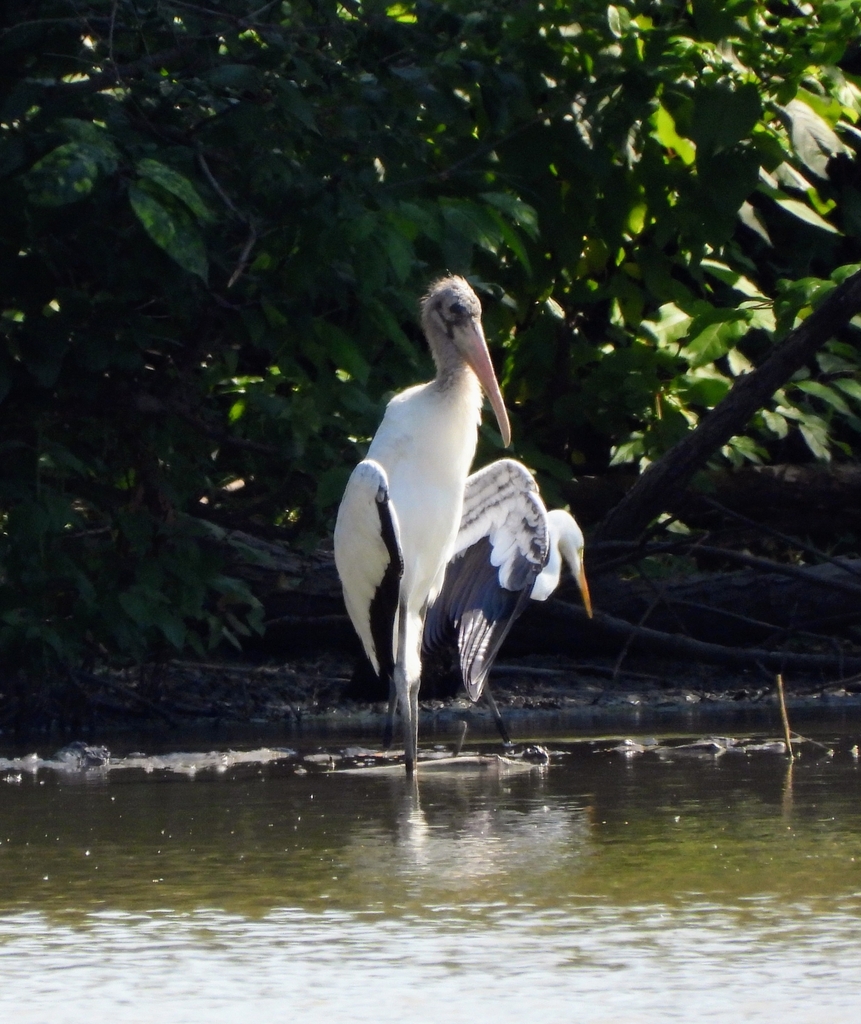
no rights reserved · CC0
Family: Ciconiidae · Class: Aves · Order: Ciconiiformes
Conservation status: G4 S1
Mycteria americana (Wood Stork) is a California animal in the Ciconiidae family.
The Wood Stork is North America's only native stork, standing approximately 50 inches tall with a wingspan of 60 to 65 inches (USFWS ECOS). Adults display primarily white plumage with distinctive black primary and secondary flight feathers. The head and neck are unfeathered and dark gray to black, with a thick, slightly downturned bill adapted for tactile feeding. Juveniles show more grayish plumage and yellowish bills that darken with age. Historically, Wood Storks bred regularly in California, but the species has experienced significant range contraction. The species is now considered extremely rare in the state, with a Global/State Rank of G4 S1, indicating global security but extreme rarity in California. Current California occurrences are primarily vagrant individuals, typically appearing in the Salton Sea region and along the Colorado River. The breeding range is now concentrated in the southeastern United States, from South Carolina to Florida and west to Texas, with some populations extending into Mexico, Central America, and South America. Wood Storks inhabit freshwater environments including marshes, swamps, lagoons, ponds, and flooded fields (NatureServe Explorer). Shallow depressions in marshes become particularly important during drought conditions when prey becomes concentrated in remaining water bodies. The species requires water depths of 6-24 inches for optimal foraging, with receding water levels that concentrate fish populations being especially critical for successful feeding and breeding. Wood Storks employ a unique tactile foraging strategy, using their sensitive bills to detect prey in murky water. They feed primarily on fish, but also consume frogs, reptiles, crustaceans, and insects (Birds of the World). The species exhibits both solitary and group feeding behaviors, sometimes forming single-file feeding lines. Wood Storks breed colonially, often nesting within one meter of adjacent nests in cypress swamps or mangrove islands. Breeding timing is closely tied to water levels, with nesting initiated when receding waters concentrate fish prey sufficiently to support chick rearing. The Wood Stork was federally listed as endangered in 1984 due to significant population declines linked to habitat loss and altered hydrology in the southeastern United States. Extensive wetland drainage and water management practices disrupted the natural wet-dry cycles essential for the species' feeding ecology. However, conservation efforts and habitat restoration have supported population recovery. In 2014, the species was downlisted from endangered to threatened status following documented population increases. In California, the Wood Stork's extreme rarity reflects the broader pattern of range contraction from historical breeding areas. The species' dependence on specific hydrological conditions and concentrated prey resources makes it particularly vulnerable to habitat modification and climate variability. Any California sightings represent significant ornithological events and should be reported to eBird and local birding organizations.
Classification
Class: Aves · Order: Ciconiiformes · Family: Ciconiidae
Conservation status
G4 S1
Frequently asked questions
How is Mycteria americana classified?
Mycteria americana belongs to class Aves, order Ciconiiformes, family Ciconiidae.
What family does Mycteria americana belong to?
Mycteria americana is in the Ciconiidae family.
Is Mycteria americana protected or of conservation concern?
Mycteria americana carries the following status: G4 S1.
What is Mycteria americana?
The Wood Stork is North America's only native stork, standing approximately 50 inches tall with a wingspan of 60 to 65 inches (USFWS ECOS).
Is Mycteria americana found in California?
Yes. Mycteria americana is recorded in California in The California Species Project's catalogue.
More California species
This species has no close relatives in our California data — here are other species to explore.
Data from The California Species Project — 14,000+ California species with verified data from CNPS, CDFW, USFWS, and more.