Myelopsis subtetricella
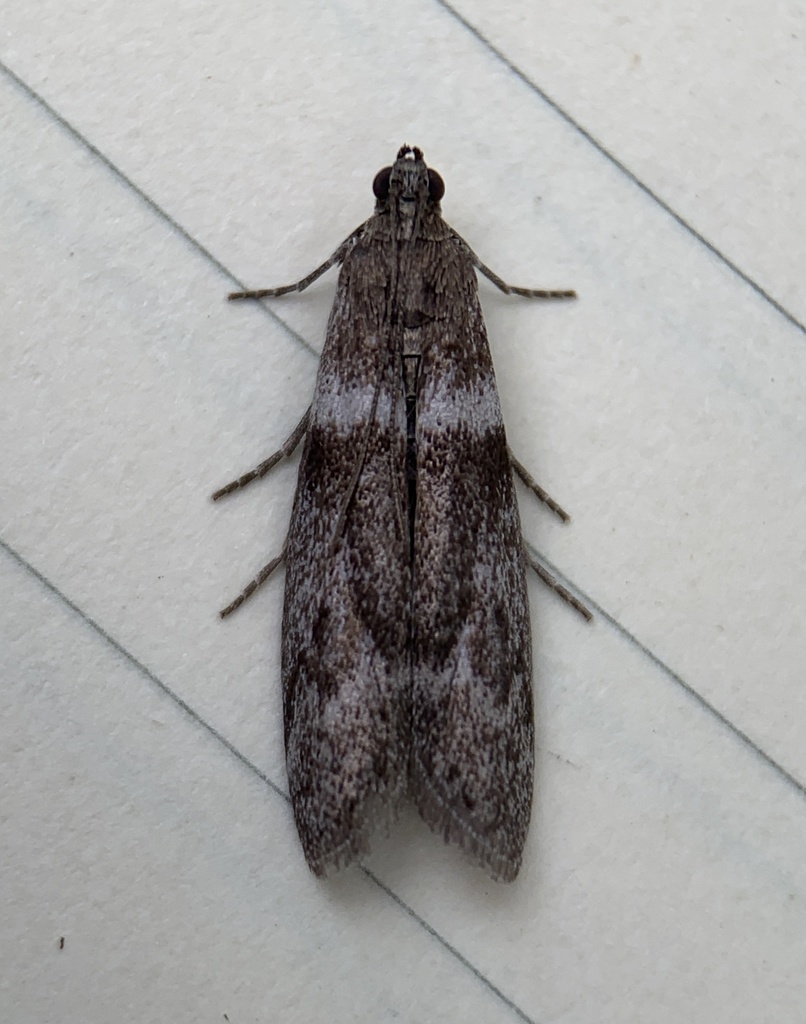
(c) Thomas Irvine, some rights reserved (CC BY) · licence
Family: Pyralidae · Class: Insecta · Order: Lepidoptera
Myelopsis subtetricella is a California animal in the Pyralidae family.
Myelopsis subtetricella is a small moth in the family Pyralidae, commonly known as snout moths. This species belongs to a group of microlepidoptera characterized by their relatively small size and specialized feeding habits. Adult moths typically measure 8 to 12 millimeters (0.3 to 0.5 inches) in wingspan, with forewings displaying muted brown and gray coloration that provides effective camouflage against tree bark. The forewings often exhibit subtle darker markings and lighter patches, while the hindwings are generally paler. Like other pyralids, adults possess prominent labial palps that project forward from the head, giving the family its common name of snout moths. Myelopsis subtetricella has an extensive distribution across North America, ranging from Canada through the United States as far south as Southern California and Florida. This broad geographic range suggests the species is well-adapted to diverse climatic conditions, from temperate regions in the north to subtropical areas in the southern portions of its range. The species occurs across multiple biogeographic provinces, indicating considerable ecological flexibility. The habitat requirements of M. subtetricella are closely tied to the presence of oak trees, as larvae depend on acorns for development. The species is found in oak woodlands, mixed deciduous forests, and oak-dominated ecosystems throughout its range. In California, this includes oak woodlands in the Coast Ranges, Sierra Nevada foothills, and Transverse Ranges where various oak species produce the acorns necessary for larval survival. Adults may be found near host trees during the flight season, particularly in areas with abundant acorn production. Larvae of Myelopsis subtetricella have been documented feeding on acorns from various oak species. The caterpillars likely bore into fallen acorns or those still attached to trees, consuming the nutritious nutmeat within. This feeding behavior places the species among the specialized acorn-feeding insects that form an important component of oak woodland ecosystems. Adult moths are presumed to be active during warmer months, though specific flight periods may vary across the species' extensive range. Like many pyralids, adults are likely nocturnal and may be attracted to artificial lights. Myelopsis subtetricella currently lacks formal conservation status designations at federal or state levels. The species' broad distribution across North America suggests stable populations, though local abundance may fluctuate with acorn production cycles, which vary annually and among oak species. Oak woodland habitats face ongoing pressures from urban development, agricultural conversion, and climate change, particularly in California where oak ecosystems support high biodiversity. However, the species' wide geographic range likely provides resilience against localized habitat loss. Long-term monitoring would be valuable to assess population trends, particularly given the ecological importance of oak-acorn food webs and their vulnerability to environmental changes affecting acorn production patterns.
Classification
Class: Insecta · Order: Lepidoptera · Family: Pyralidae
Frequently asked questions
How is Myelopsis subtetricella classified?
Myelopsis subtetricella belongs to class Insecta, order Lepidoptera, family Pyralidae.
What family does Myelopsis subtetricella belong to?
Myelopsis subtetricella is in the Pyralidae family.
What is Myelopsis subtetricella?
Myelopsis subtetricella is a small moth in the family Pyralidae, commonly known as snout moths.
Is Myelopsis subtetricella found in California?
Yes. Myelopsis subtetricella is recorded in California in The California Species Project's catalogue.
Related species
Other California species in the same genus, family, or bioregion.
Data from The California Species Project — 14,000+ California species with verified data from CNPS, CDFW, USFWS, and more.