Myiarchus cinerascens
Ash-throated Flycatcher
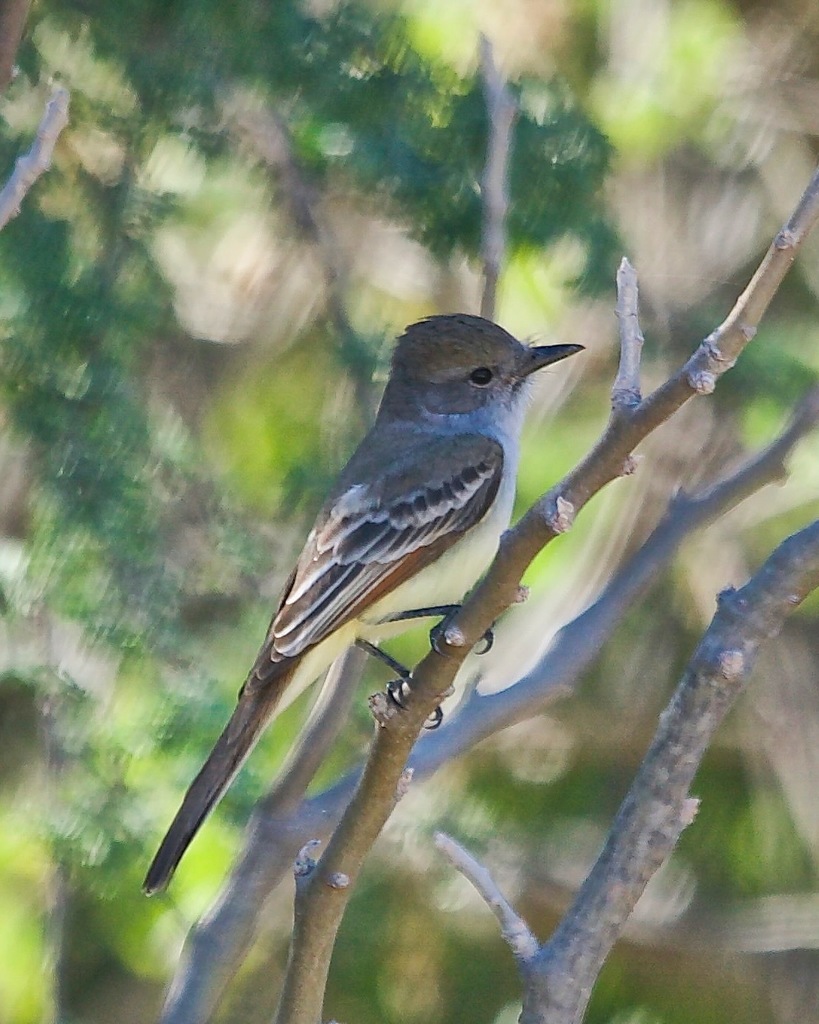
(c) Bill Levine, some rights reserved (CC BY) · licence
Family: Tyrannidae · Class: Aves · Order: Passeriformes
Myiarchus cinerascens (Ash-throated Flycatcher) is a California animal in the Tyrannidae family.
The Ash-throated Flycatcher is a medium-sized passerine bird measuring 19-21 cm (7.5-8.3 inches) in length with a wingspan of 30-32 cm (11.8-12.6 inches). Adults weigh 23-34 grams (0.8-1.2 ounces). The species displays a distinctive pale gray-brown head and back, with a whitish throat that may show a subtle ashy tinge. The breast is pale gray, transitioning to pale yellow on the belly and undertail coverts. Wings and tail are rufous-brown, with the tail showing rufous inner webs that create flash patterns during flight. The bill is relatively large and broad, typical of flycatchers, with a dark upper mandible and pale lower mandible. The Ash-throated Flycatcher ranges from the western United States south through Mexico to Guatemala and Honduras. In California, the species breeds throughout most of the state except for the northwestern coastal forests and high Sierra Nevada elevations. The breeding range extends from sea level to approximately 2,400 meters (7,900 feet) elevation. During winter, California populations migrate south, with some individuals remaining in southern California and Baja California. The species returns to breeding grounds from March through April. This flycatcher inhabits arid and semi-arid environments, including desert scrub, chaparral, oak woodlands, pinyon-juniper forests, and riparian woodlands. The species requires cavities for nesting and is commonly found in areas with scattered trees, particularly where natural cavities or old woodpecker holes are available. In desert regions, it frequents washes and areas with larger shrubs or small trees such as palo verde, mesquite, and desert ironwood. Ash-throated Flycatchers are insectivorous, catching prey primarily through sallying flights from exposed perches. Their diet consists of beetles, flies, moths, caterpillars, wasps, and other flying insects, with occasional small fruits consumed during fall migration. Breeding occurs from April through July, with peak activity in May and June. Females construct cup-shaped nests in tree cavities, nest boxes, or other enclosed spaces, laying 3-5 cream-colored eggs with brown and purple markings. Incubation lasts 14-16 days, performed solely by the female. Both parents feed nestlings, which fledge after 14-18 days. The species typically produces one brood per season, though second broods may occur in favorable conditions. The Ash-throated Flycatcher is not federally or state listed and maintains stable populations throughout most of its range. According to the North American Breeding Bird Survey, populations have remained relatively stable with slight increases in some regions from 1966-2019. The species benefits from its adaptability to various habitat types and its use of artificial nest structures. Primary conservation concerns include habitat loss from urban development and agricultural conversion in some areas, particularly in riparian zones. Climate change may affect future distribution patterns, potentially shifting suitable habitat to higher elevations and latitudes.
Classification
Class: Aves · Order: Passeriformes · Family: Tyrannidae
Frequently asked questions
How is Myiarchus cinerascens classified?
Myiarchus cinerascens belongs to class Aves, order Passeriformes, family Tyrannidae.
What family does Myiarchus cinerascens belong to?
Myiarchus cinerascens is in the Tyrannidae family.
What is Myiarchus cinerascens?
The Ash-throated Flycatcher is a medium-sized passerine bird measuring 19-21 cm (7.5-8.3 inches) in length with a wingspan of 30-32 cm (11.8-12.6 inches).
Is Myiarchus cinerascens found in California?
Yes. Myiarchus cinerascens is recorded in California in The California Species Project's catalogue.
Related species
Other California species in the same genus, family, or bioregion.
Data from The California Species Project — 14,000+ California species with verified data from CNPS, CDFW, USFWS, and more.