Myiodynastes luteiventris
Sulphur-bellied Flycatcher
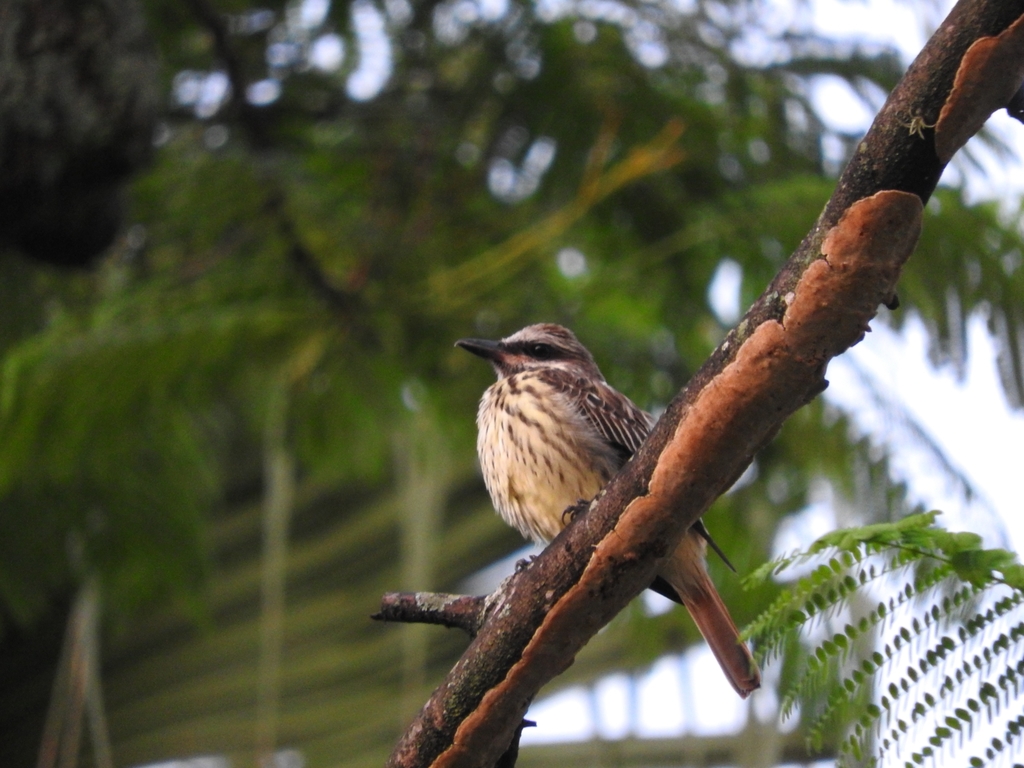
(c) Victor De la Cruz, some rights reserved (CC BY) · licence
Family: Tyrannidae · Class: Aves · Order: Passeriformes
Myiodynastes luteiventris (Sulphur-bellied Flycatcher) is a California animal in the Tyrannidae family.
The Sulphur-bellied Flycatcher is a large tyrant flycatcher measuring 19-22 cm (7.5-8.7 inches) in length with a wingspan of approximately 33 cm (13 inches). Adults display distinctive streaked plumbing throughout, with bold black streaks on a white to pale yellow background covering the head, back, and underparts. The belly shows a characteristic sulphur-yellow wash that gives the species its common name. A prominent white eyebrow stripe contrasts with dark ear patches, while the bill is broad and dark with a slightly hooked tip typical of flycatchers. The tail appears rusty-brown with darker barring, and the wings show two pale wing bars. This species breeds primarily in montane pine-oak and sycamore-walnut woodlands from southeastern Arizona through Central America to northern Argentina. In California, the Sulphur-bellied Flycatcher is considered a vagrant, with scattered records primarily from the southeastern desert regions and Colorado River Valley. Most California observations occur during late spring and early fall migration periods, typically in May and August through September. The species has been documented in Imperial, Riverside, and San Bernardino counties, with additional reports from coastal areas during exceptional vagrant events. During the breeding season, Sulphur-bellied Flycatchers inhabit mature deciduous and mixed deciduous-coniferous forests, particularly favoring riparian woodlands with sycamores, cottonwoods, and oaks. They prefer areas with large trees for nesting and open understory for foraging. In their core range, they occupy elevations from 1,200 to 2,400 meters (4,000 to 8,000 feet). California vagrant records typically occur in desert oases, riparian areas, and migrant traps with sufficient tree cover. Sulphur-bellied Flycatchers are primarily insectivorous, employing typical flycatcher hunting techniques including hawking insects from exposed perches and gleaning prey from foliage. Their diet consists mainly of beetles, flies, moths, caterpillars, and other flying insects, supplemented with small fruits during migration and winter. The species is known for its distinctive loud, squeaky calls described as "kee-see-deer" or similar vocalizations. Breeding occurs from May through August, with females constructing cup-shaped nests in tree forks or horizontal branches. Clutch size typically ranges from 2-4 eggs, with an incubation period of approximately 16-17 days. The Sulphur-bellied Flycatcher is not federally or state-listed in California, reflecting its status as a rare vagrant rather than a breeding resident. The species undertakes one of the longest migrations of any North American tyrant flycatcher, traveling from breeding grounds in western North America to wintering areas in South America. Climate change and habitat modification in both breeding and wintering ranges may affect migration patterns and vagrant occurrence frequency. The species' rarity in California makes population trend assessment difficult, though it remains stable throughout its primary range according to breeding bird surveys.
Classification
Class: Aves · Order: Passeriformes · Family: Tyrannidae
Frequently asked questions
How is Myiodynastes luteiventris classified?
Myiodynastes luteiventris belongs to class Aves, order Passeriformes, family Tyrannidae.
What family does Myiodynastes luteiventris belong to?
Myiodynastes luteiventris is in the Tyrannidae family.
What is Myiodynastes luteiventris?
The Sulphur-bellied Flycatcher is a large tyrant flycatcher measuring 19-22 cm (7.5-8.7 inches) in length with a wingspan of approximately 33 cm (13 inches).
Is Myiodynastes luteiventris found in California?
Yes. Myiodynastes luteiventris is recorded in California in The California Species Project's catalogue.
Related species
Other California species in the same genus, family, or bioregion.
Data from The California Species Project — 14,000+ California species with verified data from CNPS, CDFW, USFWS, and more.