Myliobatis californica
Bat Ray
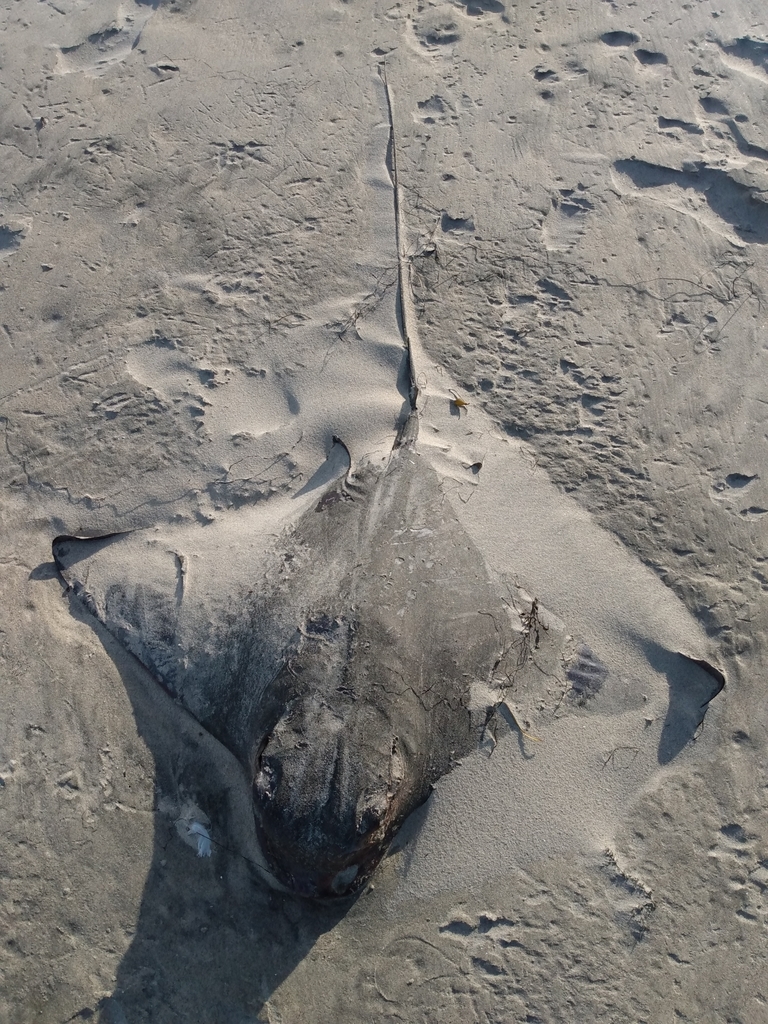
(c) kwalks146, some rights reserved (CC BY) · licence
Family: Myliobatidae · Class: Chondrichthyes · Order: Myliobatiformes
Myliobatis californica (Bat Ray) is a California animal in the Myliobatidae family.
The bat ray is a large cartilaginous fish characterized by a distinctive diamond-shaped disc and long, whip-like tail. Adults can reach disc widths of up to 1.8 meters (6 feet) and weights exceeding 91 kilograms (200 pounds). The dorsal surface is typically dark brown to black, while the ventral surface is white or pale. The species lacks a venomous spine, distinguishing it from stingrays, and possesses crushing teeth adapted for feeding on hard-shelled prey. Bat rays occur along the Pacific coast from Oregon to the Gulf of California, Mexico, with California waters representing a significant portion of their range. They are commonly found in bays, estuaries, and nearshore coastal waters throughout California, from shallow intertidal zones to depths of approximately 46 meters (150 feet). According to California Department of Fish and Wildlife data, the species is particularly abundant in San Francisco Bay, Monterey Bay, and southern California coastal waters. The species inhabits sandy and muddy substrates in shallow marine environments, including bays, estuaries, and kelp beds. Bat rays prefer areas with soft bottoms where they can easily excavate prey and are frequently observed in eelgrass beds and over sandy flats. They demonstrate strong site fidelity to specific foraging areas and may aggregate in large numbers during feeding or mating periods. Bat rays are benthic foragers that use their flattened disc to excavate prey from sandy and muddy substrates. Their diet consists primarily of clams, oysters, crabs, worms, and small fish. The species creates distinctive feeding pits in soft sediments while hunting for buried invertebrates. Reproduction is ovoviviparous, with females giving birth to live young after a gestation period of approximately 12 months. Litter sizes typically range from 2 to 12 pups, with larger females producing more offspring. Mating occurs during warmer months, and females may not reproduce annually. Bat rays are not currently listed under federal or state endangered species acts and are considered a species of least concern. However, they face pressure from commercial and recreational fishing, habitat degradation, and water quality issues in estuarine environments. The species is caught both as target fish and bycatch in various fisheries throughout California waters. Their slow reproductive rate makes them vulnerable to overfishing pressure. Climate change and coastal development may impact critical nursery habitats in shallow bays and estuaries. Population monitoring is conducted through various fisheries surveys, but comprehensive population assessments are limited. The species' ecological role as both predator and prey makes it an important component of California's marine ecosystems.
Classification
Class: Chondrichthyes · Order: Myliobatiformes · Family: Myliobatidae
Frequently asked questions
How is Myliobatis californica classified?
Myliobatis californica belongs to class Chondrichthyes, order Myliobatiformes, family Myliobatidae.
What family does Myliobatis californica belong to?
Myliobatis californica is in the Myliobatidae family.
What is Myliobatis californica?
The bat ray is a large cartilaginous fish characterized by a distinctive diamond-shaped disc and long, whip-like tail.
Is Myliobatis californica found in California?
Yes. Myliobatis californica is recorded in California in The California Species Project's catalogue.
More California species
This species has no close relatives in our California data — here are other species to explore.
Data from The California Species Project — 14,000+ California species with verified data from CNPS, CDFW, USFWS, and more.